

A small-plane crash forced Beijing to expose how its security state controls airspace
The answer starts with a private aircraft that got into sensitive Beijing airspace, then cascaded into security and governance questions.
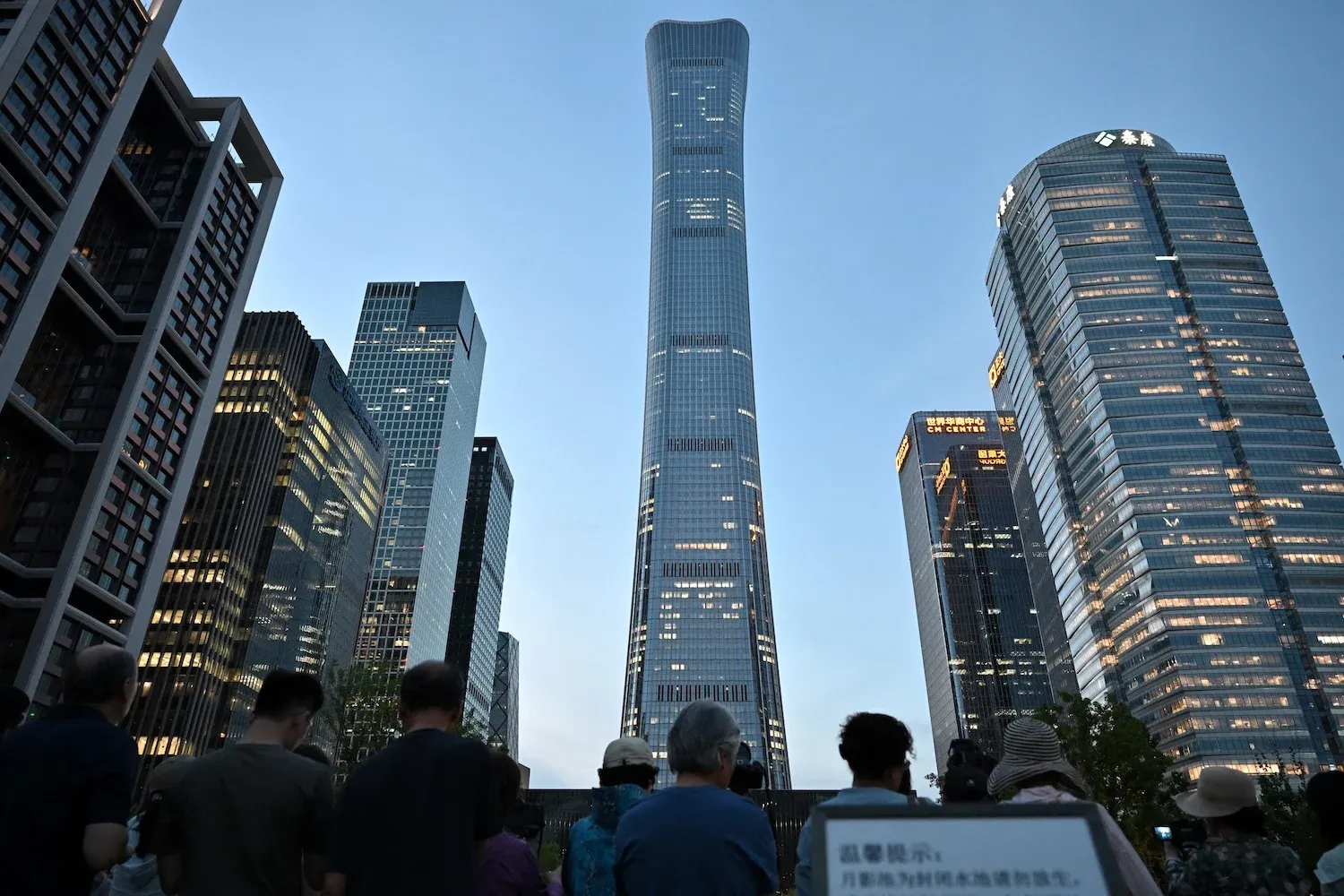
Foreign Policy reports on how a small-plane crash tested China's security state after a private aircraft entered Beijing's sensitive airspace. For decision-makers, it is a reminder that in high-surveillance systems, aviation security can quickly become a leadership and legitimacy stress test.
Foreign Policy frames a deceptively simple question with high political and operational weight: how did a private aircraft enter Beijing's sensitive airspace? The piece is about a small-plane crash, but the underlying story is bigger than the wreck. It is about what the incident reveals when the system that is supposed to prevent surprises cannot fully prevent them.
The lede matters because the trigger is not a random one-off. Beijing airspace is not “anywhere.” It is a space with dense concentrations of security assets, layered restrictions, and reputational stakes that reach far beyond the aircraft itself. Foreign Policy is essentially asking executives and strategists to treat the crash as a stress test: when a private plane managed to get into those sensitive boundaries, it forced the security state to respond, and it exposed weak points that are usually hidden.
To understand why this is consequential for decision-makers, zoom out for a moment. Civil aviation security is not just about preventing accidents. It is also about managing information, controlling access, and demonstrating competence. When a private aircraft crosses into restricted airspace, the incident becomes a governance event. Even if the crash itself is the immediate event, the deeper concern is the chain that allowed the incursion: detection, tracking, classification, and response. Those are exactly the elements that define how a surveillance-heavy state operates under real-time pressure.
In markets and organizations, executives constantly worry about two things: who noticed the problem and how fast they escalated it. Aviation security follows the same logic, except the “escalation” is often a matter of national capability rather than internal process. If the system fails to prevent a sensitive-airspace breach, boards and senior leaders usually have to ask how accountability works across agencies and operators. The crash forces a comparison between what security frameworks promise and what happens when the unexpected arrives at speed.
There is also a regulatory dimension. Airspace restrictions are typically communicated through rules, notices, and routing requirements that depend on coordination among aviation authorities, air traffic management, and operators. In normal circumstances, the system catches deviations early. An incursion into sensitive Beijing airspace suggests the system either lacked sufficient friction for a small private aircraft, underestimated the risk, or experienced a breakdown in how information was shared and acted upon. Foreign Policy’s reporting, by centering the “how” of the entry, signals that the story is not only about a crash. It is about the security-state plumbing around that crash.
Now connect this to incentives. Security states and highly regulated environments often prioritize public assurance. That does not automatically mean they are weaker. In fact, they can be very strong. But the combination of high surveillance, complex bureaucracy, and strict access can create blind spots. When systems rely on multiple layers, a failure in one layer can be masked by assumptions in another. An incident like this also tends to trigger internal reviews, tighter enforcement, and operational changes, because otherwise the political cost of the breach sticks.
For executives and board members at companies that depend on China’s regulatory environment, the second-order implication is straightforward: security and governance events can spill into operational risk. Aviation is not just transportation. It is a channel for movement, logistics, and high-level access. When the security apparatus is forced into public scrutiny, it often leads to stricter controls and more oversight not only for high-profile actors, but across the broader ecosystem. That can increase compliance burden and raise friction for legitimate activity.
For investors and strategic planners, the lesson is not “avoid China.” It is “watch the chain.” When a private aircraft can enter Beijing’s sensitive airspace and then crash, it tells you something about how prevention, detection, and response functions when a real-world deviation occurs. The strategic stakes are that these kinds of incidents shape policy, enforcement posture, and internal accountability, all of which influence how quickly the system adapts and how predictable it becomes for outsiders.
In other words, the crash is the headline. The real story is the security state being tested in public, under time pressure, with sensitive airspace as the stage. For leaders, the question to carry is simple: if a system designed to stop surprises allows this one to slip in, what other assumptions might be hiding in plain sight?
This story's Key Insights and Take-aways are locked.
Create a free account to unlock Executive Actions for one credit.
Register to UnlockAlways free for Executives Club members. Join the Club
More in Politics

Zinedine Zidane ends Deschamps era: signs four-year France deal until 2030 World Cup Tuesday
A new Les Bleus chapter starts Tuesday, with Zidane replacing Didier Deschamps after 2012.

NHS data: England’s poorest kids face 40% higher respiratory hospital admissions in 2024/25
A new NHS England analysis ties deprivation to lung admissions, sharpening scrutiny on air pollution as a public health risk.
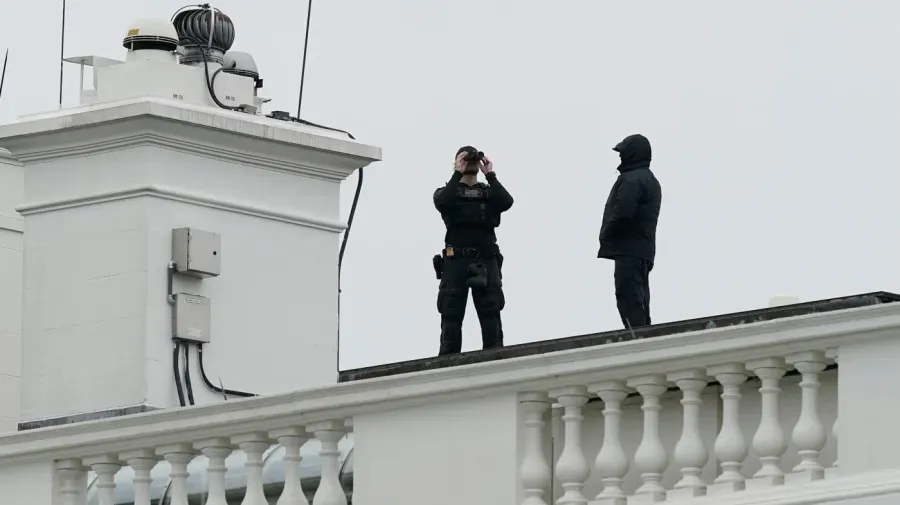
Secret Service Director Sean Curran: 10,000+ threat investigations opened in 2026
Curran says this year is up 40% versus last year, pushing the threat picture “off the charts” for protectees and agencies.