

Secret Service Director Sean Curran: 10,000+ threat investigations opened in 2026
Curran says this year is up 40% versus last year, pushing the threat picture “off the charts” for protectees and agencies.
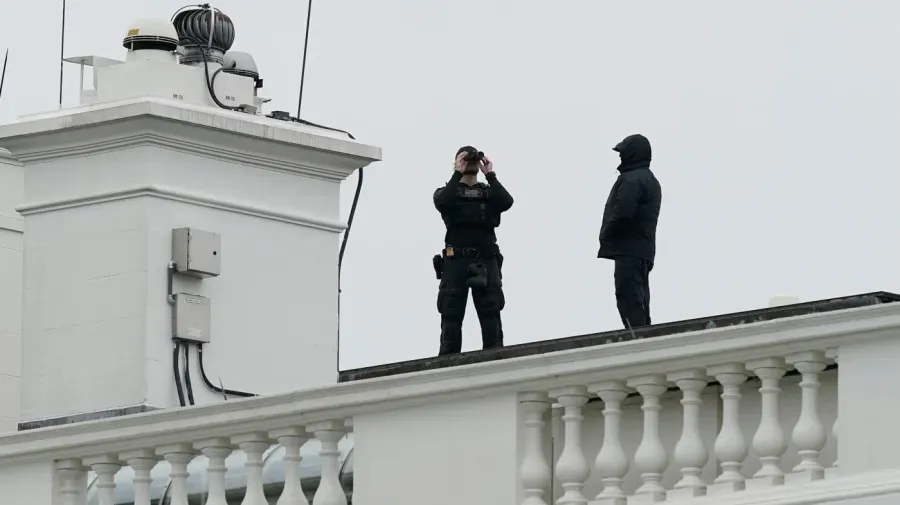
Secret Service Director Sean Curran told reporters Wednesday the agency has opened more than 10,000 investigations this year into threats against protectees. He said the count is up 40% compared to last year, describing the environment as volatile.
U.S. Secret Service Director Sean Curran said Wednesday that the agency has opened more than 10,000 investigations in 2026 into threats against protectees. He also described the situation as a sharp acceleration, telling reporters the number is up 40% compared to last year.
Curran’s bottom line is blunt: compared to 2025, the 2026 threat number is “off the charts,” and he attributes it to a broader “volatil[e]” environment. The key word for executives and operators is not just volume, it is operational strain. When threat investigations jump by 40%, agencies do not just add paperwork. They rebalance staffing, triage risk, and change how protectees move, communicate, and show up in public life.
The Secret Service mandate is protecting specific people, not managing general public safety. But when investigations spike, the effects ripple into the systems around those protectees: security planning, event logistics, venue coordination, and how quickly information flows between agencies. For decision-makers outside government, it is a reminder that protection is not a one-time checkbox. It is an ongoing process that has to scale with the threat environment, and scaling has costs and tradeoffs.
There is also a governance angle. In agencies and in the organizations that coordinate with them, risk is not just assessed, it is operationalized. A 40% rise in investigations implies more demands on investigative capacity, more cases to assess for credibility and immediacy, and more time pressure when decisions must be made quickly. That kind of load can create delays if resources are fixed, which is why the “environment has become very volatile” framing matters. Volatility changes patterns. It shifts how often the unexpected happens, and it can stress the playbooks organizations were comfortable using last year.
For boards, leadership teams, and investors watching adjacent industries, this is part of a larger reality: security and compliance are increasingly tied to real-time signals, not static policies. When threat investigations accelerate, it changes what “good enough” looks like. It increases the chances that partners, vendors, and hosts will be asked for more documentation, tighter controls, and quicker coordination windows. Even if the organization is not the one under investigation, the ecosystem around protectees tends to become more demanding.
It also matters for communications and transparency. Curran’s remarks were made directly to reporters, and the figures he provided are specific: more than 10,000 investigations opened in 2026, plus the 40-percent rise compared to last year. That kind of publicly stated pace becomes a reference point for internal planning. It can influence how quickly agencies justify additional staffing, how they prioritize casework, and how they benchmark performance year to year.
On the ground, more investigations can mean more protective measures, such as adjustments to travel planning and event security posture. When the threat number is described as “off the charts,” that language is doing work. It signals that decision-makers see a level of risk that is not merely higher, but qualitatively different. In volatile settings, the cost of being too slow is not abstract. It is measured in missed signals, delayed escalation, and higher operational friction at the exact moment protectees are most visible.
The second-order implication is that this volatility can spill into other domains that depend on predictable risk levels. Planning cycles become shorter. Contingency budgets grow more relevant. Coordination costs rise because more cases mean more updates and more cross-agency alignment. For executives running events, political-facing operations, high-visibility brands, or critical public programs, the lesson is straightforward: threat environments can change fast, and the organizations that handle it best will be the ones that can scale coordination, not just scale intent.
Curran’s comments put a spotlight on a simple and consequential truth: the Secret Service is handling more threats than last year, by a margin of 40%, and the agency describes the overall environment as volatile. If you lead in a role that touches protectees, public-facing operations, or security-critical partnerships, this is a live operating condition, not a distant policy debate.
This story's Key Insights and Take-aways are locked.
Create a free account to unlock Executive Actions for one credit.
Register to UnlockAlways free for Executives Club members. Join the Club
More in Politics

LA County: DOJ's 20,000 'noncitizen' voter list is 'unreliable,' includes U.S.-born
Preliminary review by Los Angeles County election officials finds errors in the federal list, raising the stakes for voter roll integrity ahead of November.

Trump's $1.5B Pentagon chip investment lands in North Carolina
A $1.5 billion defense infusion for North Carolina chipmaking signals a new era of Pentagon-backed reshoring - here's what it means for the industry.

Nigeria confirms first Ebola case in Abuja, a woman just off a Uganda flight
Health Minister Muhammad Ali Pate says the patient flew in from Uganda, putting Africa's latest outbreak on Nigeria's doorstep.