
A YouTuber dissected the iPhone Duo and thinks he found crackgate's cause
CuriousHagi's teardown of Apple's foldable reveals a gear-like hinge that may explain why screens crack in the same spot within hours.
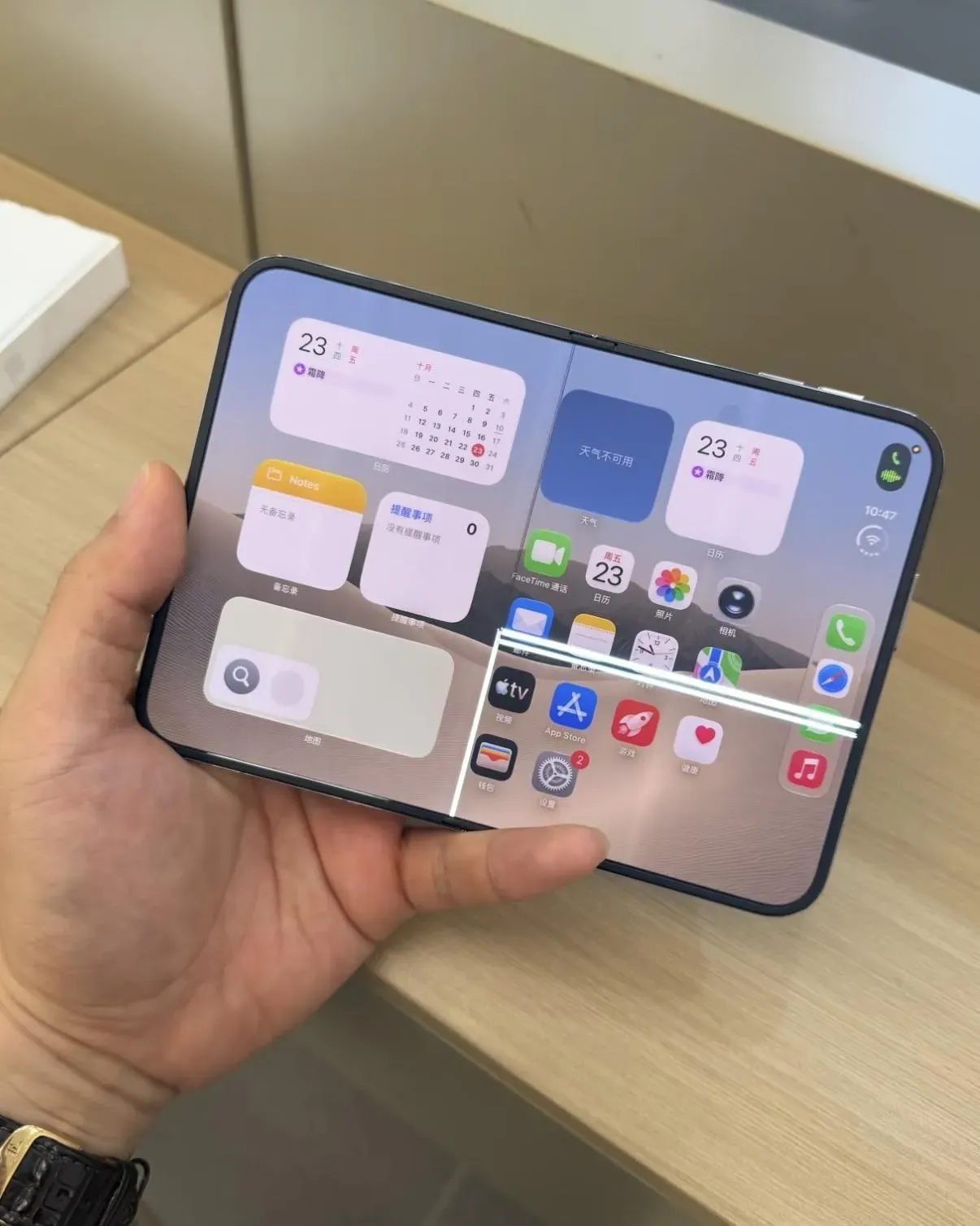
YouTuber CuriousHagi dissected Apple's iPhone Duo after reproducing the cracked-screen failure and identified a complex hinge assembly as the likely culprit. For Apple and the foldable market, the finding raises questions about durability engineering and the risks of rushing a new form factor.
YouTuber CuriousHagi has a new theory for crackgate, and it points straight at the iPhone Duo's hinge. After reproducing the cracked screen during durability testing, he pulled the phone apart and found a hinge assembly that is far more intricate than a typical foldable mechanism: a gear-like central hinge paired with two different types of linking hinges. That complexity, he believes, is where the failure begins, and the source of the audible crack that users report before their screens break.
The reports have been piling up on social media and the iPhone Duo subreddit, with some users saying their phones failed after just a few hours of use. The pattern is consistent: the hinge seems to catch on something, then emits a cracking sound, and the screen breaks. Tellingly, the cracks all appear in the same location, which suggests a systemic design flaw rather than random user mishandling. CuriousHagi's teardown is the first public attempt to trace that flaw to a specific mechanical component.
The hinge is the most stressed part of any foldable phone. It must withstand tens of thousands of folds, tolerate dust and debris, and keep the screen tension just right. Apple's design, according to the source, uses a gear-like central hinge and two different types of linking hinges, a setup that may be over-engineered for a first-generation product. The interaction between those parts could create a pinch point or a misalignment that, under the right conditions, causes the hinge to catch and transfer force into the display.
For Apple, this is a high-stakes moment. The iPhone Duo is the company's first foldable, and it carries the weight of Apple's reputation for polish and reliability. A widespread hardware flaw, especially one that appears within hours of unboxing, is the kind of problem that can define a product launch for all the wrong reasons. It also invites comparisons to earlier foldable missteps from competitors, who have spent years refining their hinge mechanisms after their own early failures.
The financial implications are significant. Warranty replacements, repair programs, and potential recalls are expensive, and they hit margins at a time when hardware revenue growth is already under pressure. Beyond the direct costs, there is the softer but equally damaging effect on consumer trust. Foldables are still a hard sell for many buyers because of durability concerns; crackgate could reinforce that skepticism and slow adoption of the entire category.
For executives and product leaders, the lesson is not just about hinges. It is about the danger of introducing mechanical complexity without exhaustive real-world testing. Standard drop tests and lab simulations may not capture the way a hinge behaves after a few hours of normal use, especially when dust or pocket lint gets involved. The iPhone Duo's failure pattern suggests that the design may not have been stress-tested for the messy, unpredictable conditions of everyday life.
The social media dimension adds another layer of urgency. Complaints on Reddit and other platforms can snowball into a narrative that is hard to reverse, regardless of how small the actual failure rate is. Companies launching new hardware need to monitor these channels in real time and respond with transparency, not silence. A quick acknowledgment and a clear repair plan can contain the damage; a slow response can turn a fixable issue into a brand crisis.
For competitors like Samsung and Google, crackgate is a reminder that being first is less important than being reliable. They have already weathered their own foldable durability scandals and have iterated on hinge designs accordingly. Apple's stumble could give them an opening to highlight their maturity in the category. For consumers, the takeaway is simpler: wait for the teardowns and the long-term reviews before buying a first-generation foldable, no matter how shiny the marketing is.
This story's Key Insights and Take-aways are locked.
Create a free account to unlock Executive Actions for one credit.
Register to UnlockAlways free for Executives Club members. Join the Club
More in Technology

Nvidia's $89B data center quarter: the 9 companies cashing in
The AI buildout is minting fortunes beyond GPUs, and memory, cloud, and cooling suppliers are riding the same wave.

Google quietly links your phone number to every Android account on your SIM
Adding a SIM now ties your phone number to all Google accounts - and future accounts inherit it. Here's the security and privacy stakes.

Hijacker AI 'Skynet mode' runs 100,000 attack steps against exposed models
Symantec caught a criminal AI agent that borrows other models, steals data, and mines crypto; the only relief is no confirmed victims yet.