

Aether & Iron cut 66% of scope after a supervisor “killed” the plan
Seismic Squirrel says only 33% shipped, and the rest became a backlog of lore for future updates and sequels.
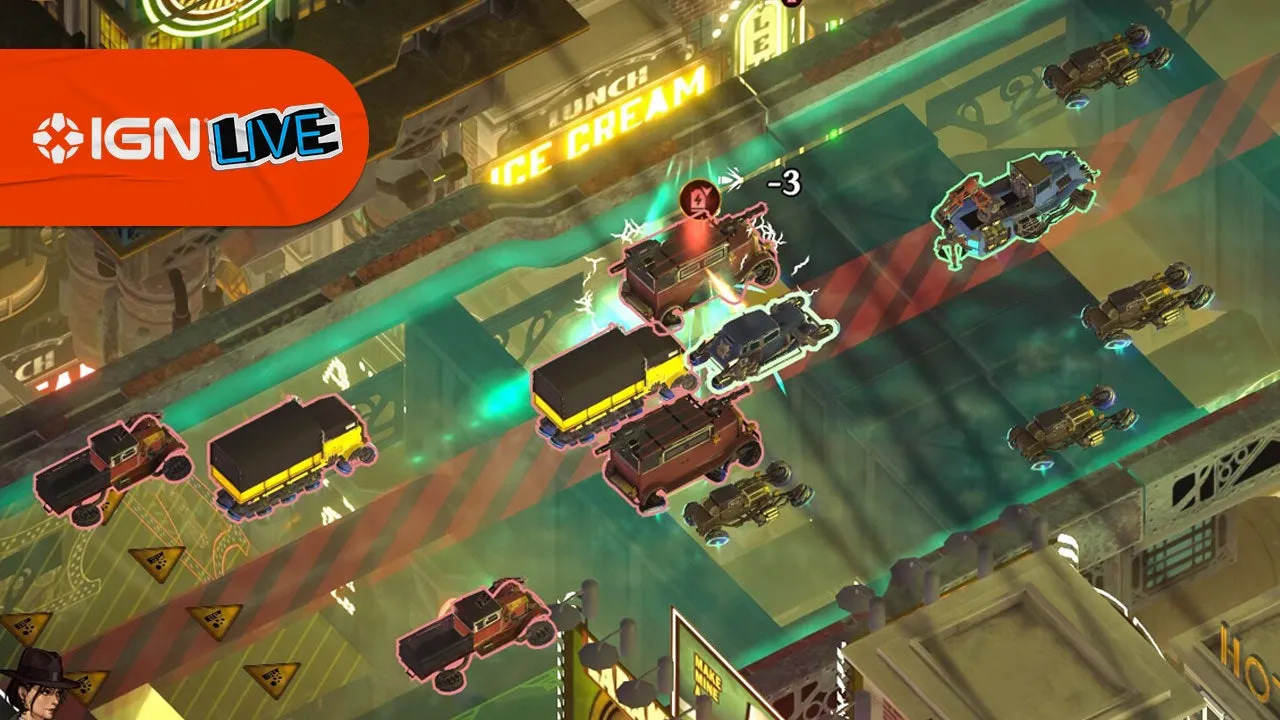
Aether & Iron creators at Seismic Squirrel, including Narrative Tyler Whitney and Creative Director Duane Stinnett, say they shipped about 33% of the tactical RPG's original scope after Production Supervisor Josh Enz killed two-thirds of it. For decision-makers, the lesson is how “scope triage” can preserve quality, while leaving a durable content pipeline for future releases.
Aether & Iron launched with a full 1930s Decopunk vibe. But the creators admit something that would make most project managers break out in hives: roughly 66% of the game's originally scoped content never made it into the released version.
In an IGN Live 2026 chat with the team at Seismic Squirrel, Aether & Iron Creative Director Duane Stinnett said Production Supervisor Josh Enz “came in and killed two-thirds of the game.” Stinnett framed it as painful but ultimately protective, adding that what shipped was about 33% of the original scope, and that the trimming “ends up working out for the best” because the team could deliver a better experience than stretching the project across everything they had planned.
That 66% cut matters beyond trivia, because it directly answers what players will keep asking: what happens next. Whitney, the game's Narrative Director (called Narrative Tyler Whitney in the segment), said the studio is open to potential sequels, but “you can't confirm anything.” His bigger point was about inventory. He described a “massive backlog of material,” saying he wrote a large wiki covering “everything,” and that the amount of world building written internally compared to what shipped is “a depressingly small percentage.” In other words, the cut wasn’t just failure or dead ends. It was a pipeline delay.
For executives and board members, this is also a case study in incentives. When scope explodes, teams usually face two bad options: ship something thinner across the board, or protect core pillars and defer the rest. The Seismic Squirrel approach sounds like the second route, and the team explicitly links it to capability. Whitney said the game’s narrative scope started more ambitious, but as they built out the project they realized they had to “trim narratively things down in order to fit what the team was capable of.” That is a budget and bandwidth statement disguised as storytelling.
The interesting business angle is that the game didn’t just preserve a theme. It preserved a gameplay identity that actually had to be engineered around the cut. Aether & Iron leans on retro floating cars powered by the titular Aether, used in combat, racing, and as a central pillar. Stinnett described the early development as “painful,” starting with prototypes for a fully free-roaming 3D game, then iterating through “so many iterations” trying to make turn-based tactical flight feel right. The team said nothing “was clicking,” so they pivoted to a new approach.
That approach became an isometric system where vehicles are bound to glowing blue “Aether roads.” Stinnett explained how earlier builds had the cars hovering over normal cobblestones, but that visually they looked like they were just driving, with no sense of vertigo or depth. The fix was structural and aesthetic at once: the roads are now gaseous, translucent blue mist, so players can see through into empty air below. The result is tactical clarity plus the fantasy of flight, letting players jump in, split lanes, and use car momentum to slam wreckage into enemy lines. For leaders, this is the kind of “make it solvable” design decision that de-risks delivery when ambition collides with production reality.
The team also addressed a common player intuition: are these cars based on real 1930s models? Stinnett said the vehicles were actually built from the ground up by Seismic Squirrel, but they’re “an amalgamation of existing vehicles that were heightened and adapted to fit the narrative.” He explained the legal practicality too, saying they would have needed clearances to use real cars because some car companies still exist today. Instead, the studio created fictionalized variants anchored in real-world archetypes. For the “Lowers,” described as the lowest segment of society, the industrial working-class section, many cars are retrofitted ground cars, with examples like a “crappy Model T” rusted out then retrofitted with lifters. Higher up in the city, everything is 1930s-built from the ground up to fly.
Finally, the creators connected the Decopunk inspiration to specific influences rather than vague vibes. Whitney said one early obsession was BioShock on Xbox 360, and that he even bought books and made up stories about what happened after he fell in love with the world. He also named Gangs New York and Sky Captain and the World of Tomorrow as movies that shaped his upbringing and “find home in” Aether & Iron, tying in their romanticism.
Aether & Iron is available now on Steam, and the team teased “big updates” coming soon, including a new roadside garage, new missions, and a new dice mini game. Put it all together and the strategic message is clear: if you cut two-thirds of your original scope, you need a reason to believe the work still has value. Seismic Squirrel’s reason is a backlog of world building, a game pillar that was re-engineered until it felt right, and a plan to use future content to keep the narrative engine running. For decision-makers watching the market, that’s a blueprint: scope triage can protect quality today while preserving options for tomorrow, as long as the deferred material is organized and productized into what players will actually play.
This story's Key Insights and Take-aways are locked.
Create a free account to unlock Executive Actions for one credit.
Register to UnlockAlways free for Executives Club members. Join the Club
More in Business

Anthropic’s Levant Alpöge cracks the Jacobian conjecture after 87 years
A Harvard valedictorian used Claude to hit a 1939 breakthrough, but the missing “why” is the real problem.

Uber buys Delivery Hero for nearly $15B, vaulting to top food delivery outside China
The deal doubles Uber's dual-services footprint and pushes a ride-and-eats bundling play into 50 more markets.

Epic and Google drop settlement bid, forcing rival Android app stores by July 22
Google told the court it is ready to carry third-party app stores starting Wednesday, July 22.