

AI Uncovered a 3D Einstein Tile That Fills Space Without Repeating
The discovery of a 3D aperiodic tile could reshape materials science, architecture, and how we think about order.
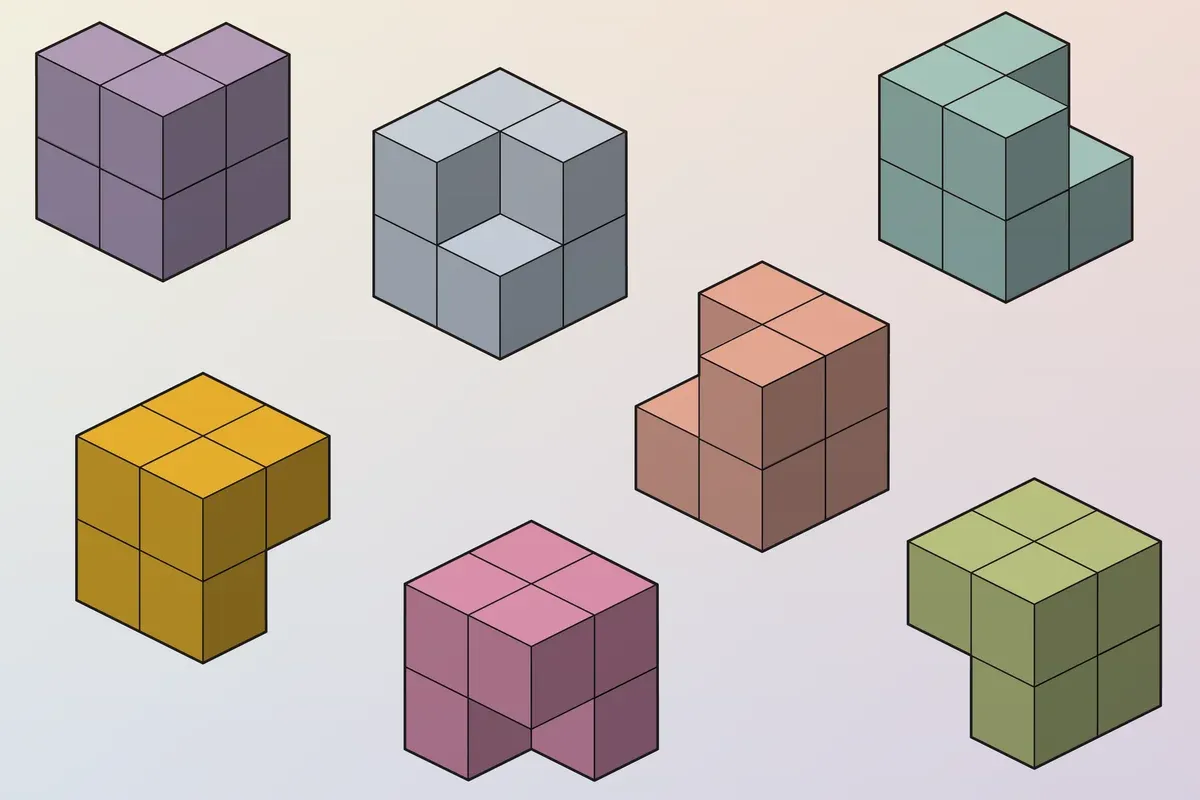
Researchers using AI have discovered a 3D einstein tile, a shape that fills space without ever repeating a pattern. The breakthrough opens new avenues for designing materials and structures with novel properties.
AI helped uncover a special object: a three-dimensional 'einstein' tile, a shape that can fill space without ever repeating a pattern. The discovery, reported by Scientific American, is a milestone in geometry and materials science, and it could change how designers, engineers, and researchers think about structure. For anyone who builds things, from physical products to digital models, the idea that a single shape can tile an entire space with no repetition is both a puzzle and an opportunity.
The name 'einstein' comes from the German for 'one stone,' not the physicist. It refers to a single tile that can cover a plane or space with no periodic repetition. In two dimensions, mathematicians searched for decades before finding an example in 2023. Now the same concept has been extended into three dimensions, with AI playing a key role in the search. That matters because aperiodic tiling sits at the intersection of mathematics, physics, and materials science.
When a structure never repeats, it can have properties that periodic crystals lack. Aperiodic arrangements can produce unusual symmetries, novel electronic behavior, and surprising mechanical strength. The 3D einstein tile is not just a mathematical curiosity; it is a blueprint for physical structures that could inspire new types of materials, coatings, and architectural forms. For executives, the discovery is a reminder that the boundaries of what can be designed and built are expanding.
AI's role in the discovery is a signal for leaders. The search for a 3D einstein tile involves exploring an enormous space of possible shapes. Traditional brute-force methods struggle with that scale. Machine learning models can narrow the search, identify promising candidates, and surface shapes that human intuition might miss. This is another example of AI accelerating discovery in hard technical fields, from drug design to materials engineering.
For industries that depend on materials, the implications are broad. Aperiodic structures have already been studied in photonics, where they can manipulate light in ways periodic structures cannot. In architecture and construction, non-repeating tiles could inspire new forms of cladding, paving, or structural panels. In manufacturing, additive printing makes it possible to produce shapes that would have been impossible to cast or machine. The 3D einstein tile could serve as a starting point for all of these.
The discovery also underscores a shift in how research gets done. AI is no longer just a tool for analyzing data; it is a partner in generating hypotheses and exploring design spaces. For CEOs and R&D leaders, the lesson is that computational discovery is becoming a competitive advantage. Companies that invest in AI-guided search, whether for molecules, materials, or geometries, are positioning themselves to find answers that traditional methods would miss.
That said, the path from a mathematical shape to a commercial product is long. The 3D einstein tile is a proof of concept, not a product. But the same pattern has played out before. For context, quasicrystals, which also have non-repeating structures, were once dismissed as impossible, and now they are used in everything from non-stick coatings to LED technology. The 3D einstein tile could follow a similar arc, moving from curiosity to utility over time.
For decision-makers, the takeaway is to watch this space. The discovery is a reminder that the boundaries of what can be designed and built are expanding, and AI is the tool pushing them. Whether you are in materials, construction, or software, the ability to find order in apparent chaos is a skill worth investing in. The 3D einstein tile is a small shape with a big message: the future of discovery will be shaped by algorithms that see what we cannot.
This story's Key Insights and Take-aways are locked.
Create a free account to unlock Executive Actions for one credit.
Register to UnlockAlways free for Executives Club members. Join the Club
More in Science

Alaska's 1,580-foot tsunami had warning signs. Scientists just found them.
Rapid glacier retreat, heavy rainfall, and thousands of tiny tremors preceded Alaska's 1,580-foot tsunami, a warning for every coastal community in a warming world.

The rare mutation that lets high-risk brains dodge Alzheimer's
Scientists found a natural defense against protein buildup, opening a new path to preventive treatments.

3,000 steps a day may halve Alzheimer's decline, study finds
New research links a modest daily walk to less tau buildup and nearly half the cognitive and functional decline, even for those with early signs.