
Amazon bets on a nuclear startup that has never built a working reactor
Expanding its X-energy deal, Amazon funds 12 unproven SMRs for Indiana, but no US small reactor is operating and the mid-2030s timeline is far from locked.
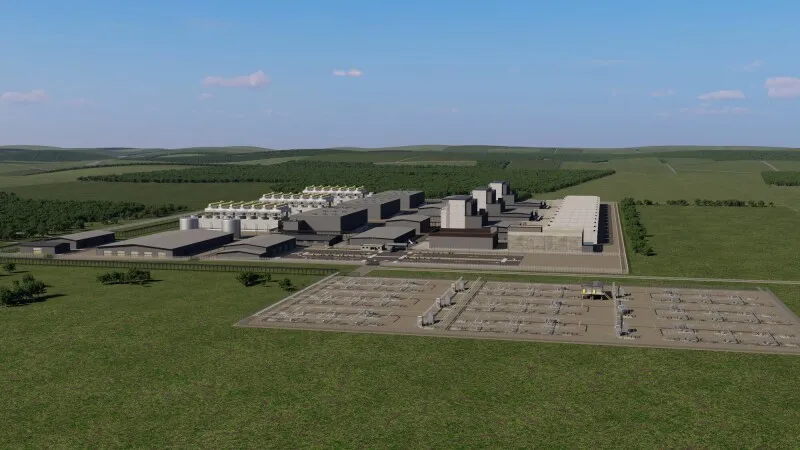
Amazon said it is expanding its deal with X-energy to fund 12 small modular reactors in Indiana, aiming for 960 megawatts to power datacenters. With no operational SMR in the US and X-energy yet to build a working reactor, the project is a high-stakes bet on an unproven technology.
Amazon is betting on a nuclear startup that has never built a working reactor. The company said Monday it is expanding its existing deal with X-energy to fund development of 12 Xe-100 small modular reactors at a former coal plant site in Sullivan County, Indiana. Once online, the facility would supply 960 megawatts of grid-connected electricity, and Amazon has signed on as the first power purchaser. Amazon would not disclose the size of its investment, saying only that it is "investing billions in nuclear energy projects." X-energy's representative told the South Bend Tribune the plant could be completed "as early as the mid-2030s," though "the timeline could change the further the project gets developed."
That caveat matters because X-energy has never delivered a working reactor. The US has no operating small modular reactor; China and Russia have functional SMRs. In the US, a single experimental unit has reached criticality, but it was built only to prove a design could one day become a reactor, not to generate power. That experimental unit is not X-energy's. The company has yet to build a single working reactor, and its Indiana project would rely on permitting that does not yet exist for it.
US nuclear regulation offers two pathways, and X-energy is not far enough down either one for Indiana. The first is standard design approval from the Nuclear Regulatory Commission, which certifies a reactor model as safe anywhere and lets a company build it without recertifying the design at each new site. Only one company has that approval for an SMR: NuScale, which has built no reactors, has no projects under construction, and abandoned a planned Utah plant after power distributors lost interest. The second pathway is site-specific approval for a particular reactor at a particular location. Several such permits exist, including Kairos Power's Oak Ridge, Tennessee project with Google, General Electric's planned SMR in Oak Ridge, and TerraPower's Wyoming project, which is moving forward despite delays. X-energy appears on neither list.
The company says it is in "the final phases" of NRC approval for a construction permit in Texas, where it would supply power to a Dow Chemical manufacturing plant. But that permit, if granted, would be site-specific and would cover only four reactors, far fewer than the 12 planned in Indiana. It would not transfer to a new location. Amazon also said it will not be involved in getting approval for the Indiana plant. "Amazon's role is as an investor … as well as committing to being the first customer for power produced from the facility," a company spokesperson said.
That arrangement makes Amazon an anchor tenant for a technology that has yet to prove itself at commercial scale. The spokesperson explained the logic: "New technologies like this often need initial customers to help de-risk projects and provide funding so they can be built and scaled to commercial availability, and that is the role Amazon is playing by helping to fund the project's development." This is the classic anchor customer strategy, but with an unusual twist: Amazon is not just buying power from a proven plant. It is helping create the plant itself.
For executives watching the energy landscape, the deal highlights the collision between hyperscale datacenter demand and physical grid reality. Amazon chose a former coal plant site, likely for its existing interconnection, cooling access, and workforce, but the reactor technology attached to it remains the industry's largest open question. SMRs promise factory-built, scalable nuclear power that can be deployed closer to load centers than traditional reactors. In practice, no commercial SMR has been switched on in the US, and X-energy's own timeline admits slippage.
That places this project squarely in the "maybe column," the same column as other ambitious next-generation nuclear efforts. For peers in technology, energy, and capital, the strategic takeaway is that hyperscalers are now willing to commit billions and long-term power purchase agreements to technologies with zero operating history. If X-energy delivers, it will validate a model that other companies can copy. If it slips, Amazon loses an investment but keeps optionality and a seat at the table. Either way, the deal is a signal: the scramble for clean, firm power is now moving past proven technology and into the realm of well-funded hope.
This story's Key Insights and Take-aways are locked.
Create a free account to unlock Executive Actions for one credit.
Register to UnlockAlways free for Executives Club members. Join the Club
More in Business

Elon Musk unveils a flying car, and SpaceX helped build it
The Tesla CEO's showcase at a SpaceX facility signals a future where road and rocket engineering converge.

Apple's $2,000 iPhone Duo opens preorders, taking on Samsung and Google
Apple's first foldable hits the market at a premium price, reshaping a category Samsung and Google have led.

Pope Leo XIV, first American pope, diagnosed with lung cancer
The 71-year-old Chicago-born pontiff underwent successful surgery on his right lung, and his diagnosis raises new questions about his AI-focused papacy and the Vatican's future.