

Amazon drops Luca Guadagnino’s Sam Altman biopic weeks after announcing an OpenAI partnership
The distributor says the film “will be better served” elsewhere, putting a hot awards campaign into a fresh scramble.
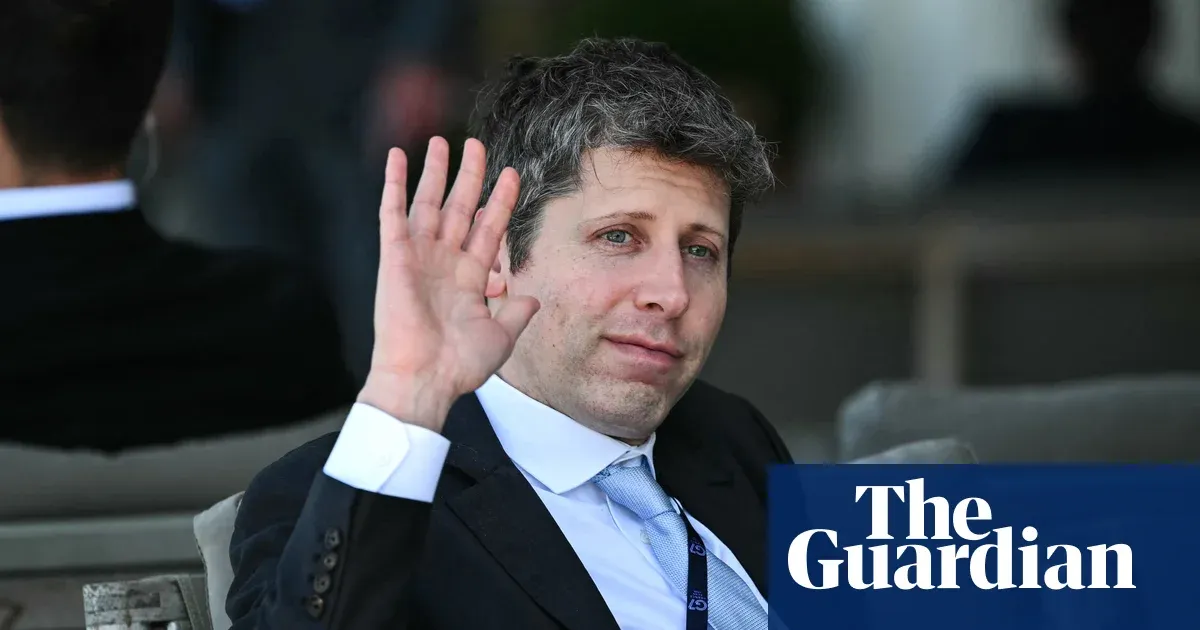
Amazon has dropped distribution for Luca Guadagnino’s biopic Artificial, a film centered on Sam Altman. The move, first reported by Puck, follows Amazon’s announcement of an OpenAI partnership and forces the production into immediate studio replacement and awards-race recalculation.
Amazon has dropped distribution for Luca Guadagnino’s Sam Altman biopic, Artificial, shortly after it announced an OpenAI partnership. In a statement first reported by Puck, Amazon said it believes “that Artificial will be better served if it were released by a different studio and are working closely with the film-making team to find the film a new home”.
So the headline question is not whether the movie exists, or whether the story is interesting. It is whether Amazon’s decision changes the odds of a project already “poised for an awards run next year.” The distributor is essentially saying the film’s best path is outside Amazon’s release pipeline, and it is asking the filmmaking team to land that path elsewhere.
From an operator’s perspective, this is a classic corporate pivot disguised as a creative logistics choice. “Better served” is diplomatic language, but it is still a clear outcome: the studio relationship is over, and the clock starts ticking on where Artificial will be housed for marketing, distribution, and awards timing. Awards campaigns are not just about art and press. They are about schedule certainty and execution, including how quickly a new distributor can lock dates, build positioning, and fund the rollout needed to sustain momentum.
What makes the timing feel combustible is that the film is centered on Sam Altman, and Amazon’s move comes in the shadow of its OpenAI partnership announcement. The source frames the biopic as “controversial,” and that is doing a lot of work. When your subject is a controversial tech executive, the audience conversation is likely to be heated before the first trailer even lands. That raises reputational risk for distributors, especially for companies that are simultaneously trying to market themselves as AI leaders and responsible partners.
This is where incentives start to matter. Amazon is a platform. It is also a content distributor. When it partners with high-profile AI companies, it is not only financing technology. It is aligning its brand with the technology’s public narrative. A biopic about the same ecosystem, particularly one described as controversial and timed for an awards run, can create an awkward overlap between corporate messaging and cultural debate.
The Amazon statement, as reported by Puck, does not spell out a dispute about story, casting, or production. It sticks to a release strategy claim: the film “will be better served” by another studio. But in entertainment business terms, when a distributor says it is “working closely” to find a “new home,” it is usually implying that internal appetite, timing, or risk thresholds have shifted. And those shifts tend to happen fast, because release windows and awards deadlines do not wait for committee calendars.
There is also a regulatory and governance backdrop in the broader tech world that executives cannot ignore, even when the story is about film rather than software. Controversy around powerful AI builders and their business decisions often triggers political scrutiny, policy debate, and public questions about accountability. Even without quoting any regulators in the source, the second-order implication for a distributor is straightforward: companies with AI partnerships are more exposed to reputational churn, and film projects that spotlight influential executives can become proxies in public debates about governance and legitimacy.
For Luca Guadagnino, the stakes are artistic and operational. Guadagnino is producing a project positioned for “an awards run next year,” which typically means every month matters, and every campaign decision compounds. For the production team, the immediate task is less about whether the movie is good and more about where it will live in the ecosystem: which studio will underwrite the marketing lift, how quickly a replacement deal can be negotiated, and whether the awards timeline can be preserved.
For decision-makers across entertainment, media, and tech-adjacent companies, this is a reminder that content strategy is now intertwined with corporate partnerships. When Amazon can drop a high-profile biopic after announcing an OpenAI partnership, it signals that distribution decisions may respond to broader corporate positioning pressures, not just box office forecasting. The strategic takeaway is simple but uncomfortable: if your brand is tied to a contested technology narrative, your content pipeline is not insulated from it. Artificial may still reach audiences, but Amazon has decided the best version of that journey requires a different distributor.
In other words, the film is still moving. The question is who owns the momentum.
This story's Key Insights and Take-aways are locked.
Create a free account to unlock Executive Actions for one credit.
Register to UnlockAlways free for Executives Club members. Join the Club
More in Entertainment
Norris grabs Hungary pole, as Hamilton penalised for impeding Piastri
A pole shift at the top as a stewards call changes the championship math and the weekend’s power dynamics.

Katy Perry blasts White House TikTok over 'Firework' soundtrack for Iran strikes
The pop star says she was neither consulted nor permitted as the administration paired her 2010 hit with military footage.

Animator Jean Nguyen’s Steam RPG Dinoblade sells 36,000 copies in 24 hours
Sucker Punch animator Jean Nguyen’s Dinoblade hits 36,000 sales fast, topping 600,000 wishlists and a Very Positive start.