

Amazon engineers slam 30,000 layoffs while company spends $200 billion on AI
The revolt puts a sharp question in front of Amazon's leadership and peers: how do you justify mass cuts while funding a historic AI buildout?
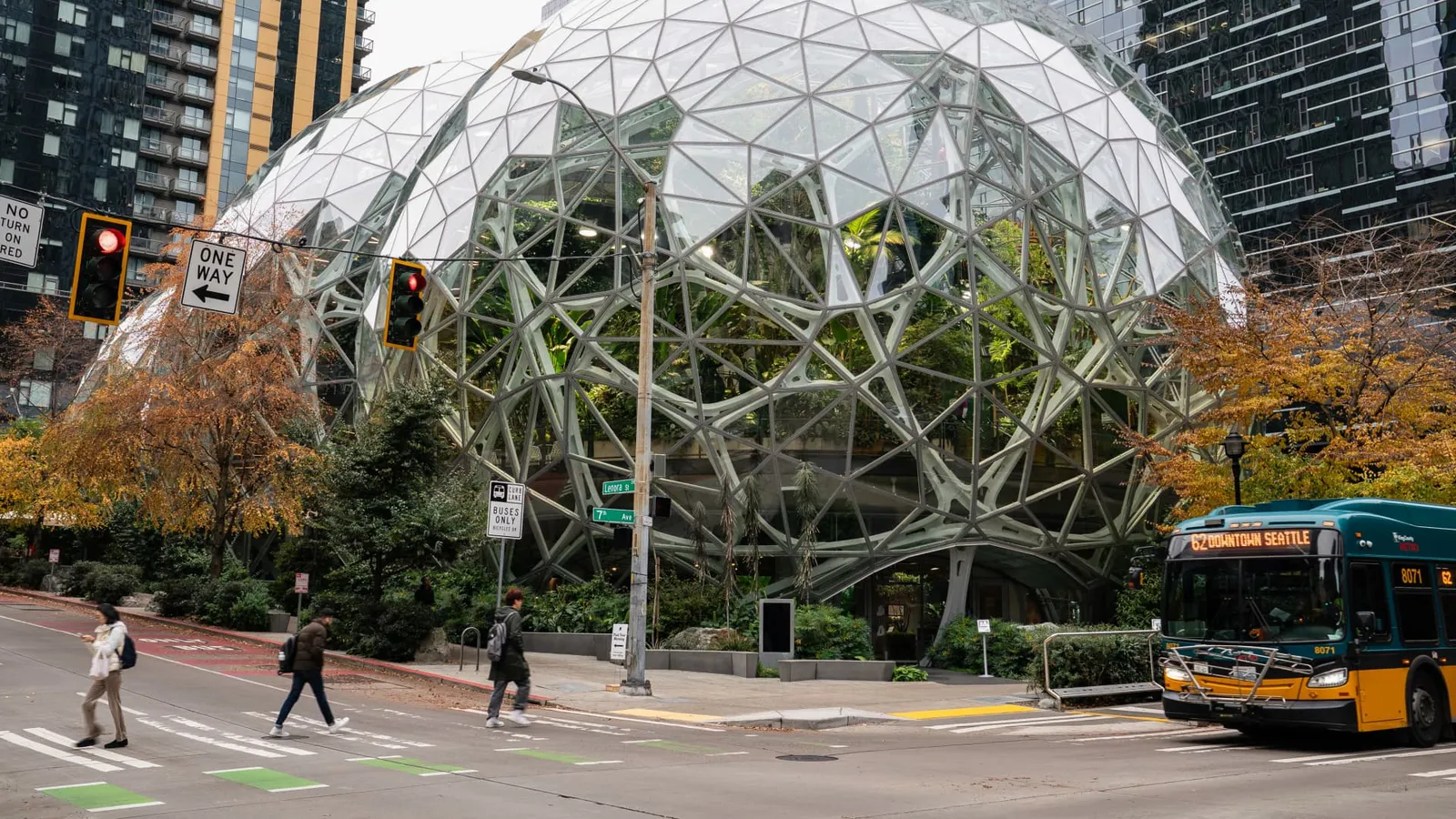
Amazon engineers in Seattle publicly criticized the company for laying off 30,000 staffers while it commits to spending $200 billion this year on AI infrastructure. For executives and boards, the clash is a warning that capital allocation and workforce decisions now carry reputational risk as well as operational risk.
Amazon engineers in Seattle are not just grumbling from the sidelines. They are calling out their employer for something that is hard to spin away: mass layoffs happening alongside a commitment to spend $200 billion this year on AI infrastructure. The number is the point. On one side, 30,000 staffers are being laid off. On the other, Amazon is pouring an enormous sum into the data centers, compute, and infrastructure needed to keep up in AI. Put bluntly, the company is asking people to see restraint in one part of the business and all-out aggression in another.
That tension matters because it is not a niche HR dispute. It is a public test of how a hyperscale tech giant explains its priorities when capital is tight for workers but abundant for strategic bets. Amazon is not alone in racing to build the physical backbone of AI. The industry has been shifting hard toward data centers, chips, cloud capacity, and power-hungry infrastructure that can support generative AI products and services. But the optics get ugly fast when those investments land in the same news cycle as layoffs. Engineers, especially in Seattle where Amazon is a defining employer, are essentially surfacing the question many employees, investors, and even customers will ask: if the company can fund $200 billion for AI infrastructure, why are 30,000 people being shown the door?
For leadership teams, this is a reminder that layoffs are no longer just a cost-cutting memo. In a market obsessed with AI, they can become a referendum on priorities. When a company like Amazon commits to spending at that scale, it signals that management sees AI infrastructure as foundational rather than optional. That may be strategically rational. AI compute is expensive, scarce, and increasingly central to product development, cloud competition, and future revenue pools. But strategy does not live in a vacuum. Employees read the message one way, the market another, and the public a third. When those readings collide, the company has to defend not just the math but the morality of the allocation.
There is also a second-order effect for boards and operators watching from the sidelines. Big infrastructure commitments lock in capital and can shape headcount decisions for years, because data centers and cloud buildouts are not one-quarter expenses. They are long-lived bets. Once management frames AI infrastructure as a priority at the $200 billion level, the rest of the organization feels the pressure to adapt. That can mean tighter spending elsewhere, slower hiring, more selective investment, and more scrutiny on which roles are deemed essential. The result is a sharper internal divide between future-facing projects and the people who used to be considered the backbone of the business. That divide is exactly what can trigger backlash, especially in companies where engineers understand the technical roadmap well enough to challenge leadership publicly.
The Amazon story also sits inside a broader labor and technology moment. Tech companies have spent the last few years swinging from hiring sprees to layoffs, often while continuing to spend aggressively on the next big platform shift. AI has intensified that pattern because the payoff is still uncertain, but the race feels existential. No major platform player wants to be the one that underinvested in the infrastructure required to train, serve, and scale AI products. So even as firms trim payrolls, they are doubling down on the physical and computational layers underneath the next wave of software. To workers, that can feel like a company saying the future matters more than the people who built the present.
That is why the message from Amazon engineers in Seattle lands with force. It is not just a complaint about timing. It is a challenge to the story management tells about discipline, growth, and innovation. A company can survive criticism over a layoff decision. A company can survive criticism over a large AI investment. Doing both at the same time is trickier, because the contrast invites a broader debate about who gets protected when a giant tech platform reshapes itself. For executives at similar firms, the takeaway is simple: if you are going to make a massive AI bet while cutting jobs, be ready to explain the linkage in plain English, because your own employees may be the first ones to ask whether the story adds up.
This story's Key Insights and Take-aways are locked.
Create a free account to unlock Executive Actions for one credit.
Register to UnlockAlways free for Executives Club members. Join the Club
More in Business

Anthropic’s Levant Alpöge cracks the Jacobian conjecture after 87 years
A Harvard valedictorian used Claude to hit a 1939 breakthrough, but the missing “why” is the real problem.

Uber buys Delivery Hero for nearly $15B, vaulting to top food delivery outside China
The deal doubles Uber's dual-services footprint and pushes a ride-and-eats bundling play into 50 more markets.

Epic and Google drop settlement bid, forcing rival Android app stores by July 22
Google told the court it is ready to carry third-party app stores starting Wednesday, July 22.