
Amazon MGM drops Sam Altman biopic Artificial starring Andrew Garfield from its schedule
The studio says the film would be better served elsewhere, just as Amazon makes its $50B OpenAI partnership move.
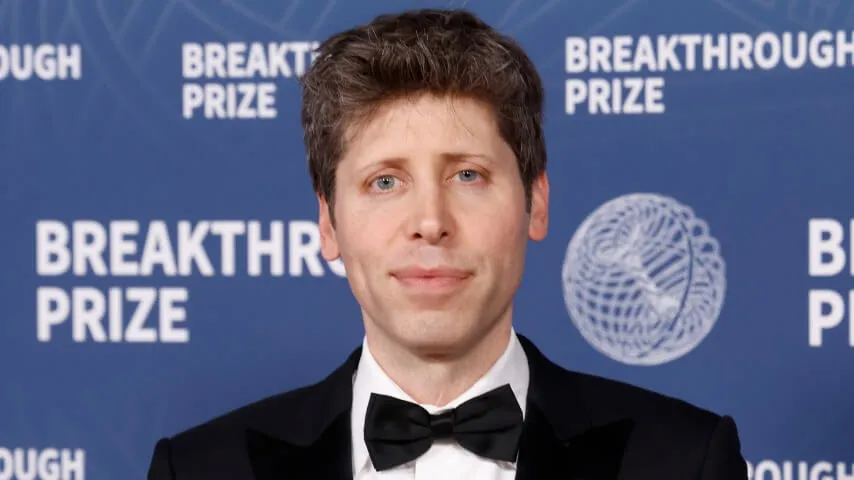
Amazon MGM has removed Luca Guadagnino's Artificial from its release schedule, despite Andrew Garfield starring. The timing lands awkwardly with Amazon's new strategic partnership with Sam Altman's OpenAI, raising immediate strategic questions for everyone in studio-land.
Amazon MGM just yanked Luca Guadagnino and Andrew Garfield's biopic Artificial from its schedule, and now the studio is trying to shop the movie to “a different studio.” In its own statement, Amazon MGM offered an awkwardly polite rationale: “We believe that Artificial will be better served if it were released by a different studio.” It also praised Guadagnino’s Oscar-nominated credentials and said it wants “a longstanding relationship that we hope to continue.”
The subtext is hard to miss because Artificial is widely described as an “unsympathetic” biopic of OpenAI founder Sam Altman. The very business that is funding the future of AI distribution is now distancing itself from a film apparently built around the person at the center of Amazon’s newest AI bet. The decision arrives as Amazon MGM appears to re-optimize around Altman’s orbit, after Amazon announced a strategic partnership with Altman’s OpenAI involving a reported $50 billion investment and promises that Altman’s company will use Amazon hardware.
If you are an exec, this is the kind of moment that looks small in a calendar app and huge in a board deck. Artificial was not just another indie project; multiple outlets had already framed it as nearly finished, with a target release in 2027. That means Amazon is not reacting to a film that is months from being usable. It is deciding to step away from an asset that, by most accounts, had advanced far enough to be close to the finish line.
Amazon says it is “working closely with the filmmaking team to find the film a new home.” But that line runs straight into reporting that the Artificial team was “shocked” by this week’s decision, according to The New York Times. The tension here matters for dealmakers: when studios pivot publicly without a specific reason, the market fills in blanks. And the specific blank in this case is the overlap between entertainment distribution timelines and corporate partnership optics, especially for companies making large, brand-sensitive investments.
The online chatter that naturally followed is basically one storyline: Artificial gets dropped a few months after Amazon announced it was entering a new strategic partnership with OpenAI. That partnership is described in the source as $50 billion invested into OpenAI and expectations that OpenAI will use Amazon hardware. Whether or not that is the stated reason for the release change, the connection is close enough that stakeholders cannot pretend it is irrelevant. In the real world, executives manage not only risk, but also the impression of risk, and corporate partnerships often create internal constraints that are easier to explain than to quantify.
There is also a practical production-side angle. Guadagnino was reportedly informed about the Tuesday decision, and he has already reportedly screened the film for representatives from several other studios. The fact that the team can pivot quickly implies Artificial may be closer to release readiness than a typical “find a buyer” scenario would allow. In other words, Amazon’s schedule drop is not necessarily a death sentence for the project, but it is a reminder that distributors control momentum, and that public signals can change who wants to touch an asset.
The cast adds fuel to the curiosity. The film stars Andrew Garfield as Sam Altman, with Ike Barinholtz reportedly playing Elon Musk. That mix of recognizable names and a subject at the center of AI power dynamics makes the movie more than a generic biography. It is positioned, at least by the outlet reporting described in the source, as a potentially unflattering portrayal, which tends to increase the likelihood that corporate stakeholders will perceive downstream reputational or contractual friction, even when no single clause is publicly cited.
For peers in adjacent roles, the takeaway is blunt: when corporate capital gets deployed into a strategic tech relationship, entertainment projects that intersect the same individuals can suddenly become complicated to package, market, or publicly align with. Amazon’s statement did not offer a single concrete reason beyond the “better served” language, but the timing creates the narrative that matters in board rooms and among lawyers. If you are a studio executive, investor, or partner working near fast-moving tech ecosystems, this is a stress test for how quickly capital partnerships can reshape what gets shipped, who gets comfortable, and how quickly creative work has to find a new home.
This story's Key Insights and Take-aways are locked.
Create a free account to unlock Executive Actions for one credit.
Register to UnlockAlways free for Executives Club members. Join the Club
More in Business

Anthropic’s Levant Alpöge cracks the Jacobian conjecture after 87 years
A Harvard valedictorian used Claude to hit a 1939 breakthrough, but the missing “why” is the real problem.

Uber buys Delivery Hero for nearly $15B, vaulting to top food delivery outside China
The deal doubles Uber's dual-services footprint and pushes a ride-and-eats bundling play into 50 more markets.

Epic and Google drop settlement bid, forcing rival Android app stores by July 22
Google told the court it is ready to carry third-party app stores starting Wednesday, July 22.