

AMD's $8.2B all-stock grab for Fei-Fei Li's World Labs
The chip giant is buying the AI world-modeling startup founded by Dr. Fei-Fei Li, putting the prominent researcher in charge of AMD's AI research.
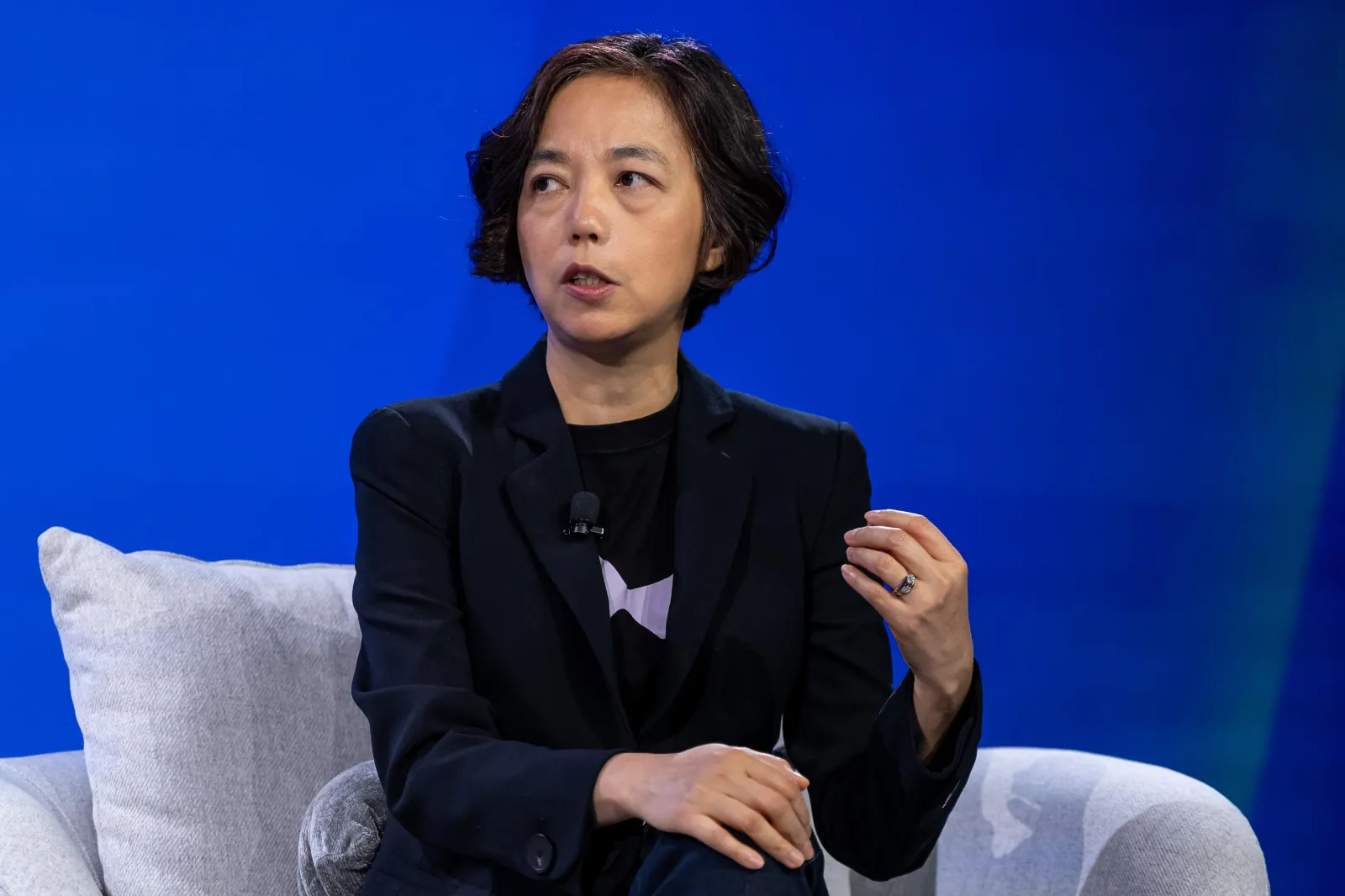
AMD announced an all-stock acquisition of World Labs, the AI research lab co-founded by Dr. Fei-Fei Li, for approximately $8.2 billion. The deal makes Li EVP and chief scientist at AMD, signaling a major bet on world models as the next AI frontier.
AMD is buying World Labs, the AI research lab co-founded by Dr. Fei-Fei Li, in an all-stock deal worth approximately $8.2 billion, the company announced today. The acquisition instantly makes Li one of the most powerful researchers in the chip industry: she will become EVP and chief scientist at AMD, reporting directly to CEO Lisa Su.
World Labs is a young company by any measure. It launched in 2024 and hit a $1 billion valuation within months, a sign of how aggressively investors are chasing AI startups with founding teams like Li's. The startup shipped its first commercial product in 2025: Marble, a world generation model that lets users create interactive 3D worlds from a simple text prompt. AMD says the deal is expected to close by the end of the year, and that the World Labs team will continue to focus on advancing AI model research.
For AMD, the deal is a strategic pivot. The company is best known as a maker of CPUs and GPUs, competing with Nvidia in the data center AI accelerator market. But with this acquisition, AMD is buying a piece of the AI stack that sits above the silicon: the models that generate and simulate 3D environments. That is a different bet from selling chips, and it puts AMD in direct competition with AI labs that are building similar capabilities.
World models are a distinct category from the large language models that dominate headlines. Instead of predicting the next word, a world model tries to understand and generate spatial scenes, which matters for robotics, gaming, autonomous driving, and simulation. Marble is an early example, but the underlying research agenda is broader. By bringing Li and her team inside, AMD gains an in-house research group that can shape how AI systems perceive and interact with the physical world.
The leadership structure is notable. Li will report to Lisa Su, meaning the research chief has a direct line to the CEO. That is a strong signal that AMD intends to treat world models as a core part of its strategy, not a side project. It also gives AMD a high-profile AI figurehead at a moment when the company is trying to position itself as a credible alternative to Nvidia in the AI boom.
The all-stock structure is worth pausing on. AMD is not spending $8.2 billion in cash; it is using its own shares to pay for the deal. That means World Labs investors and employees are betting that AMD's stock will hold its value, and it aligns the startup's team with AMD's long-term performance. For a company whose market value has swung with AI sentiment, that is a meaningful choice.
For executives and boards watching from the sidelines, the deal is a reminder that the AI talent war is no longer just about hiring engineers. It is about acquiring entire research organizations with proven founders. World Labs went from launch to a $1 billion valuation to an $8.2 billion acquisition in roughly two years, a trajectory that will make other AI founders think hard about whether to build independently or sell into a larger platform.
The bigger question is what this means for the competitive landscape. Nvidia has built its dominance on hardware, but AMD is now signaling that the next phase of AI competition will be defined by models that understand space, not just language. If world models become as important as many researchers expect, AMD's $8.2 billion bet could look cheap. If not, it will be a costly reminder that even the best researchers cannot guarantee a market.
This story's Key Insights and Take-aways are locked.
Create a free account to unlock Executive Actions for one credit.
Register to UnlockAlways free for Executives Club members. Join the Club
More in Business

Elon Musk unveils a flying car, and SpaceX helped build it
The Tesla CEO's showcase at a SpaceX facility signals a future where road and rocket engineering converge.

Apple's $2,000 iPhone Duo opens preorders, taking on Samsung and Google
Apple's first foldable hits the market at a premium price, reshaping a category Samsung and Google have led.

Pope Leo XIV, first American pope, diagnosed with lung cancer
The 71-year-old Chicago-born pontiff underwent successful surgery on his right lung, and his diagnosis raises new questions about his AI-focused papacy and the Vatican's future.