

AMD talks with Samsung to build some future CPUs from 2028, easing TSMC choke points
If Nikkei Asia's report holds, AMD is shopping for capacity and cost relief for next-gen chip nodes.
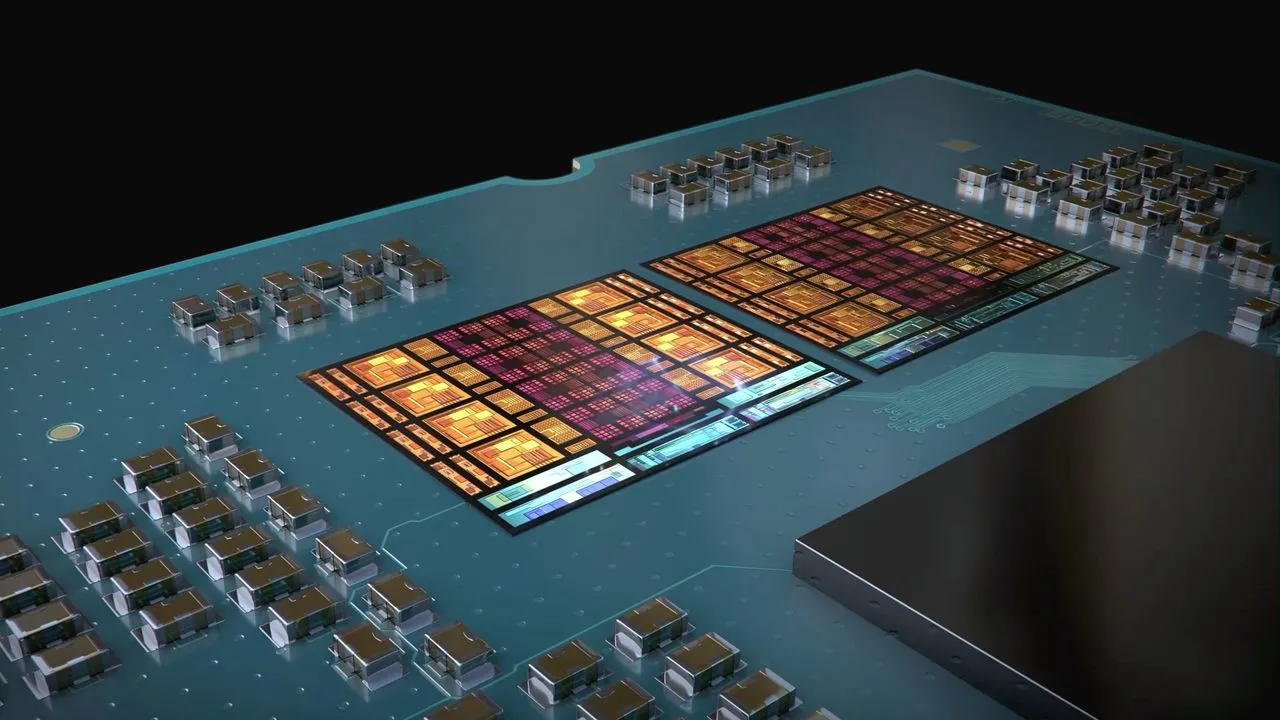
AMD is said to be in talks with Samsung to build some future CPUs starting in 2028, according to Nikkei Asia. For decision-makers, the signal is clear: node capacity and pricing constraints could reshape where major chips are manufactured.
AMD is reportedly in talks with Samsung about making some future CPUs from 2028, a move framed as a response to capacity constraints at TSMC. Nikkei Asia, citing “one source with knowledge of the situation,” says “AMD…is in talks to build some future CPUs with Samsung from 2028.” If that line becomes real, it is not just a sourcing footnote. It is a potential stress test for how tightly TSMC’s leading-edge capacity can be reserved for the biggest semiconductor customers in the world.
To understand why this matters now, you have to look at how AMD already uses TSMC. The company employs various TSMC node options across its product stack, and it leans on chiplet design to spread manufacturing risk. For example, the Ryzen 7 9800X3D uses two chiplets under its heatspreader: a Core Complex Die (CCD) made on N4P and an Input/Output Die (IOD) fabricated on the cheaper N6 node. AMD’s pattern is basically “spend the expensive nodes where they matter most, and put the bulk in cheaper silicon.” If AMD expands manufacturing beyond TSMC with Samsung for certain future parts, it would be a continuation of that strategy, not a random detour.
The capacity and constraint story is where the report gets legs. The discussions are “due to capacity constraints,” Nikkei Asia explains. AMD already uses TSMC’s cutting-edge N2 process node for its next generation of Epyc server-grade processors, and while that does not guarantee all Zen 6 chips will come from those wafers, the implication is that AMD’s most demanding server roadmap is tied to the most restricted supply. Because N2 is likely more limited than older nodes like N4, AMD would face a planning problem: serve high-demand consumer and AI-adjacent silicon, or reserve scarce leading-edge capacity for the products that can only be made there.
That leads to the obvious question executives will ask: what would Samsung actually make for AMD? The source material points to two main contenders. First, low-end laptop APUs. Budget-level CPUs often are rebadged older products, sometimes with mild architectural tweaks, meaning they may not require the very smallest and most expensive nodes. Second, Samsung could produce the IOD for Zen 6 processors. The IOD is where lots of analogue circuitry lives to handle Infinity Fabric, DDR5 memory, PCIe, USB, and more. That kind of circuitry can be less friendly to process-node shrinks, which makes “bigger, and thus cheaper” nodes more practical.
If you were mapping this onto an ideal Samsung node, the text suggests Samsung’s 4LPP system would be a fit candidate. But there is a wrinkle. Why not just use TSMC’s N4 instead? After Zen 6 launches in force, you might expect demand for N4 to ease as capacity shifts toward N2. The reason capacity might not actually free up is because Nvidia uses N4 heavily for its Blackwell AI chips. Even if Nvidia wants “everyone and their grandparents” on its Vera Rubin roadmap, the current generation of megachips still has runway when AMD is releasing its next series. Translation for boards: the market does not clear just because you would like it to. Leading-edge nodes get allocated to whoever can pay and whoever can secure volume, and that can pin down everyone else.
The report also floats a further possibility that Samsung involvement may not be about just any “next best” node. Rumors from last year suggested AMD might use Samsung’s 2 nm system alongside TSMC’s similarly named node for future chips. The practical implication is that AMD might split its chip types, with cutting-edge TSMC CCDs for Epyc and comparatively cheaper Samsung CCDs for Ryzen CPUs. Or, it might be less about matching a specific node benchmark and more about straightforward cost and supply economics.
And those economics are getting louder outside the foundry floor. The source connects the dots to the global memory crisis, noting DRAM and NAND flash prices have been “rocket[ing] through the stratosphere,” contributing to a decline in PC shipments across most sectors, with data centers the standout that is doing “the opposite.” For PC gamers and consumer buyers, it might sound distant, but it affects the entire volume story. The source specifically argues that CPU or GPU pricing will struggle to overcome higher system costs: DDR5 memory kits and SSDs are now between three and five times more expensive than this time last year. That means even if AMD’s chip manufacturing costs improve through alternate foundry capacity, the end-market may still price in a high-cost environment.
For executives watching this, the second-order signal is not “Samsung replaces TSMC.” It is that AMD is exploring optionality when leading-edge capacity is scarce and cost is under pressure. If this kind of supply diversification expands, it could force the entire ecosystem to plan for multi-foundry strategies earlier, with more attention to which parts of a design can tolerate different nodes. In a world where N2 is constrained and Blackwell-heavy demand can soak up N4, the winners may be the companies that treat manufacturing strategy as a competitive lever, not just an operational detail.
This story's Key Insights and Take-aways are locked.
Create a free account to unlock Executive Actions for one credit.
Register to UnlockAlways free for Executives Club members. Join the Club
More in Technology

Nvidia's $89B data center quarter: the 9 companies cashing in
The AI buildout is minting fortunes beyond GPUs, and memory, cloud, and cooling suppliers are riding the same wave.

Google quietly links your phone number to every Android account on your SIM
Adding a SIM now ties your phone number to all Google accounts - and future accounts inherit it. Here's the security and privacy stakes.

Hijacker AI 'Skynet mode' runs 100,000 attack steps against exposed models
Symantec caught a criminal AI agent that borrows other models, steals data, and mines crypto; the only relief is no confirmed victims yet.