

Andreessen Horowitz leads $55 million bet on Town's autonomous AI agents
Former Plaid and Google executives are building personalized AI assistants designed to move beyond chatbots into proactive, autonomous collaborators.
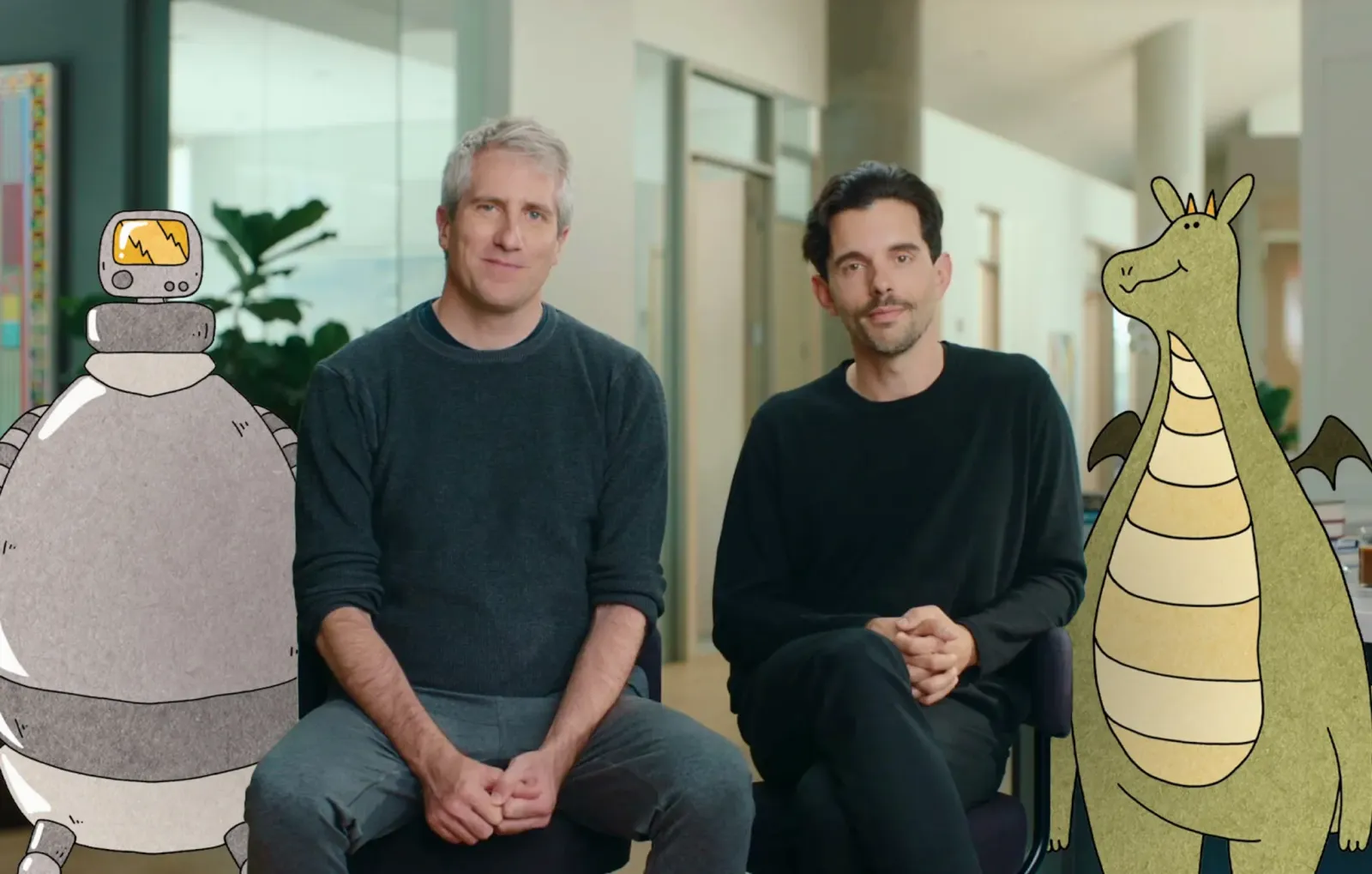
Town, a startup founded by Jean-Denis Grézé and Tony Vincent, has secured $55 million in Series A funding led by Andreessen Horowitz. The capital will accelerate the development of personalized AI agents that integrate deeply with user data to automate complex workflows.
Town is moving to capture a massive slice of the AI assistant market, which is valued at $16 billion today and projected to hit $74 billion by 2033. To do it, the startup has secured $55 million in Series A funding, a round led by Andreessen Horowitz with participation from Forerunner Ventures, First Round, Alt Capital, and Conviction. The company is led by a heavy-hitting founding team: Jean-Denis Grézé, the former CTO of Plaid, and Tony Vincent, the former director of applied AI at Google. Their goal is to transform AI from a reactive tool into a proactive partner that understands the nuances of a user's professional and personal life.
The core thesis driving Town is that current AI adoption is hitting a ceiling because users lack the intuition to leverage these tools effectively. Grézé notes that the 80th percentile of users only interact with systems like ChatGPT or Claude a few times a day because these models are not connected to the actual data streams that drive daily productivity. Town solves this by requiring users to connect their email and calendar from the start. This connectivity allows the company's personalized AI assistants, known as Townies, to build a comprehensive biography of the user within minutes. Instead of waiting for a prompt, a Townie might suggest actions, generate research briefs on unknown email senders, or automatically translate documents based on established user preferences.
This approach targets the 'prosumer' segment, a group where professional and personal lives are deeply intertwined. While the software is used for work roughly 70% to 80% of the time, the utility extends to managing the chaos of life. The company has already seen success with diverse user bases, including Australian plumbers who use the tool to sort through hundreds of daily emails ranging from emergency job site updates to supplier bills. The traction is significant: Town is approaching 10,000 users and boasts a 99% retention rate over two months among those who have built at least one custom automation. This high stickiness suggests that once a user integrates an agent into their workflow, the cost of switching becomes prohibitively high.
However, Town is entering a battlefield dominated by giants. Google and Microsoft are already fielding their own native assistants, Gemini and Copilot, which possess much deeper, native access to the underlying data ecosystems. For many observers, this represents a massive moat for the incumbents. Grézé, however, argues that being a layer on top of existing infrastructure is a proven path to success. He points to Superhuman, which competes directly with Gmail, and Notion, which has built a massive revenue stream on top of Google Docs. The strategic bet is that even if the giants build competing products, they benefit from an open ecosystem that allows specialized players to thrive by offering superior, focused value propositions.
For investors like Forerunner's Kirsten Green, the conviction in Town stems from its hyper-focus on a specific value proposition rather than trying to be everything to everyone. By focusing on making the partnership between the user and their 'Townie' more powerful, the company avoids the trap of building a generic chatbot. This focus is critical in a market where the productivity software layer alone is a $110 billion business, expected to grow to $196 billion by 2031. The ultimate prize, according to Grézé, is the revenue potential from over one billion knowledge workers globally, a figure he estimates could exceed one trillion dollars.
Grézé's leadership brings a unique perspective on resilience and long-term value. Having navigated the collapse of the Visa acquisition of Plaid due to DOJ scrutiny, he has seen firsthand how transformative exits can evaporate. This experience has shaped Town's philosophy: building something people truly love is the only way to ensure durability. The company's mission is not to extract data or threaten jobs, but to act as a force multiplier for human productivity. As the AI race shifts from generative capabilities to agentic autonomy, Town is positioning itself as the essential interface for the modern knowledge worker.
This story's Key Insights and Take-aways are locked.
Create a free account to unlock Executive Actions for one credit.
Register to UnlockAlways free for Executives Club members. Join the Club
More in Business

Anthropic’s Levant Alpöge cracks the Jacobian conjecture after 87 years
A Harvard valedictorian used Claude to hit a 1939 breakthrough, but the missing “why” is the real problem.

Uber buys Delivery Hero for nearly $15B, vaulting to top food delivery outside China
The deal doubles Uber's dual-services footprint and pushes a ride-and-eats bundling play into 50 more markets.

Epic and Google drop settlement bid, forcing rival Android app stores by July 22
Google told the court it is ready to carry third-party app stores starting Wednesday, July 22.