

Andrew Carnegie’s 1889 rule still beats the Giving Pledge's half-measures
Carnegie demanded lifetime giving and near-total disposal, while modern billionaires debate timing, structure, and control.
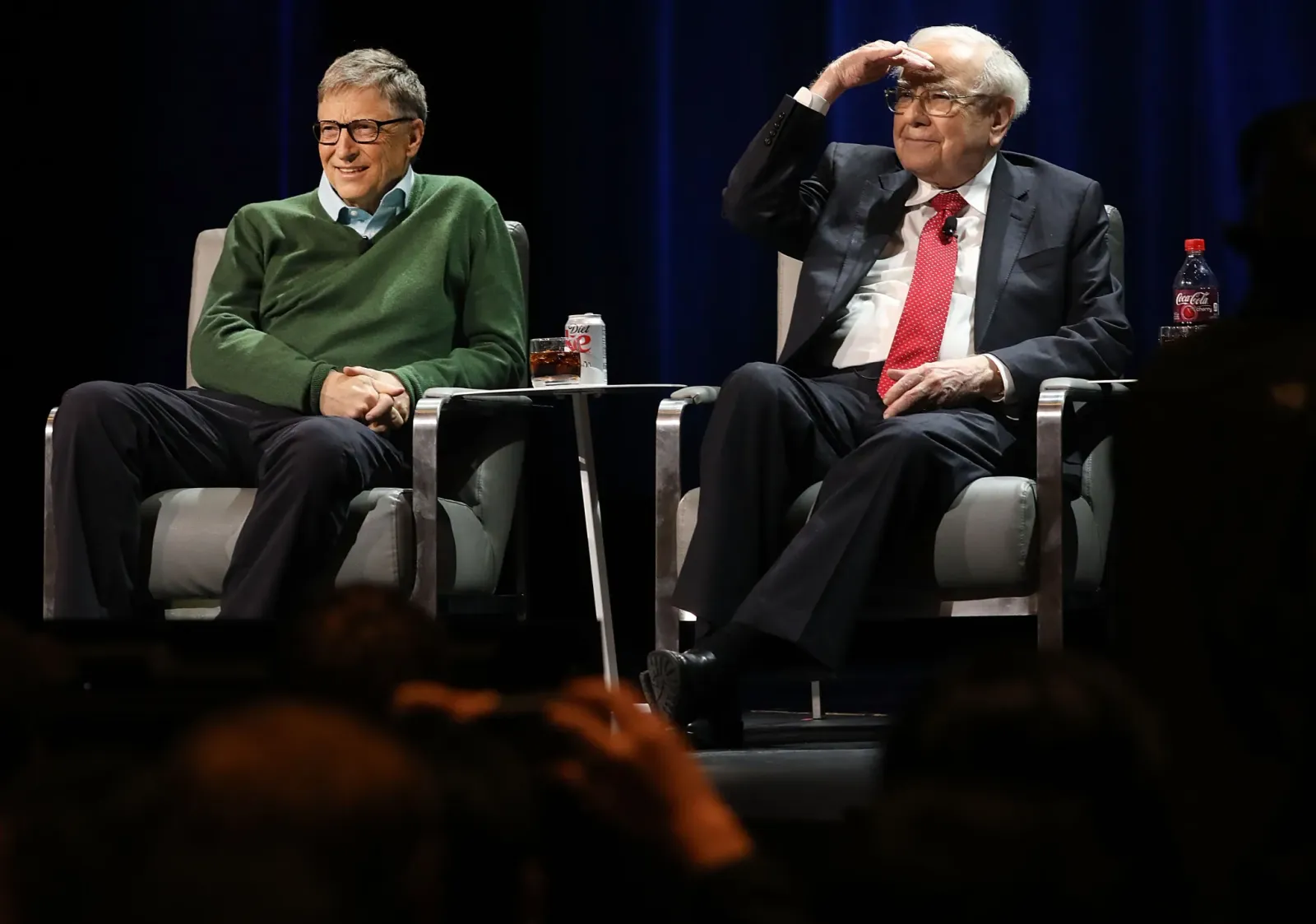
Andrew Carnegie’s 1889 “Gospel of Wealth” argued that surplus fortune after death is a moral failure and that billionaires should act as “trustees” by giving during their own lifetimes. Fortune contrasts that standard with today’s wealth inequality, the Giving Pledge, and the ongoing pushback from Peter Thiel.
Andrew Carnegie’s warning, often quoted as “the man who dies rich dies disgraced,” was written as a threat, not a suggestion. In 1889, he argued the wealthy must give away their surplus themselves, on their own terms, while they are alive and able to correct mistakes. Today, the sentiment hits harder because the country once again looks a lot like Carnegie’s era in the one metric that matters for his thesis: concentration at the very top.
The numbers are grim in a very specific way. The top 0.1% of Americans now hold over 14% of national wealth, a record high since the Federal Reserve began tracking in 1989. Economists Emmanuel Saez and Gabriel Zucman, in a landmark 2014 paper reconstructing U.S. wealth concentration back to 1913, estimate that the top 0.1% owned roughly 22% of national wealth, a level approaching the peaks of 1916 and 1929. Nobel laureate Paul Krugman has described the current era not as a second Gilded Age but a “hyper-gilded age,” and that framing matters here because Carnegie also believed wealth concentration was not just an economic fact, but a moral and governance problem.
So what did Carnegie actually demand, and why does it clash with modern philanthropy models? His Gospel of Wealth, published in 1889, was built on a sharp idea: any fortune held past death reflects moral failure. He viewed the wealthy as “trustees” obligated to distribute the money during their own lifetime specifically so they could witness and correct the results themselves. Carnegie did not treat institutions like foundations, trusts, or family offices as neutral storage bins for intention. He rejected the substitutes because they make it easier to postpone action, outsource interpretation, or lock in choices that cannot be adjusted by the original decision-maker.
Carnegie’s own behavior matched the argument. Over 18 years, he gave away roughly $350 million, about 90% of his fortune. He personally funded 2,509 libraries, Carnegie Hall, and Carnegie Mellon University before his death in 1919. If you run a straight inflation calculation, his fortune would be worth roughly $6.8 billion today, which would not even crack the Bloomberg Billionaires Index top 500. But if you measure his wealth impact as a relative share of GDP, the University of Missouri estimates it could be as high as $500 billion, placing him between Elon Musk and Google co-founder Larry Page by that comparison. The specific point is not which billionaire list he would rank on. It is the scale of lifetime giving he treated as normal, not exceptional.
That’s why the modern Giving Pledge looks like a fundamentally different species of commitment. Gates and Buffett have openly credited Carnegie’s 1889 essay as the direct inspiration for their 2010 Giving Pledge, which asks billionaires to commit at least half their wealth to charity during their lifetime or at death. But the comparison exposes a gap in both of Carnegie’s core requirements. On quantity, Carnegie demanded nearly all of one’s fortune, while the Pledge asks for half. On timing, Carnegie insisted on giving while alive so results could be observed and corrected, while the Pledge allows death bequests, foundation structures, and indefinite deferral.
The structure difference is not just philosophical, it’s operational. Gates’s Bill & Melinda Gates Foundation has a 20-year sunset clause after Gates’s death, but it continues operating long past the point where Gates can correct mistakes himself. Carnegie would have viewed that as exactly the kind of administrator structure he considered a cop-out: a way to translate “I intend good” into “someone else will carry it forward, and I cannot meaningfully adjust.” Buffett’s case illustrates the same tension with a different constraint. He has given away more than $60 billion since 2006, but his Berkshire stake kept growing faster than his gifts, forcing him to admit his original plan was not “feasible” and to set a hard new target: full divestment by 2034. MacKenzie Scott’s giving faces a similar compounding dynamic: her giving has been more than offset by the surging value of Amazon stock acquired in her divorce from Jeff Bezos, meaning her net worth has barely declined despite billions in gifts. In other words, waiting and compounding do not just delay the moral decision. They expand the burden.
This is where Peter Thiel enters as the sharpest modern counterpoint. Thiel has called the Giving Pledge an “Epstein-adjacent, fake boomer club,” and he has urged billionaires to unsign it. He has also pushed Musk specifically to abandon his own commitment. Carnegie’s era had people who objected to how wealth was made, like the labor unions who fought Carnegie’s library grants in the 1890s. Thiel’s objection is different. He objects to giving itself. And that matters because it suggests a reversal of the Carnegie logic: where Carnegie feared that dying rich would bring disgrace, Thiel’s posture implies public pressure to give may be the real threat to a fortune’s legacy and the donor’s autonomy.
Carnegie’s bet, then, was that voluntary lifetime giving was the only way billionaires could control the terms of what happens to their wealth. His model succeeded partly because it was structurally irreversible. Money spent building a library in 1903 cannot be reclaimed by heirs, taxed away, or parked indefinitely the way shares inside a trust can keep compounding. Carnegie understood that the disgrace was not merely “dying rich.” It was dying with the decision still unmade.
Now translate that into today’s boardrooms and CFO spreadsheets. When wealth concentrates, incentives concentrate too. Foundations and pledges can be useful governance tools, but they also create timing and accountability gaps. Buffett’s divestment target by 2034 and Gates’s foundation operating well after his direct ability to adjust highlight the same core issue Carnegie obsessed over: once the decision is deferred to structures beyond the donor’s lifetime, correction becomes harder and the moral clock keeps ticking. For any executive or director overseeing both ownership and philanthropic strategy, the strategic stakes are straightforward. You can choose a commitment that looks good on paper, but Carnegie’s test asks whether the plan keeps control with the decision-maker long enough to make it real.
This story's Key Insights and Take-aways are locked.
Create a free account to unlock Executive Actions for one credit.
Register to UnlockAlways free for Executives Club members. Join the Club
More in Business

Anthropic’s Levant Alpöge cracks the Jacobian conjecture after 87 years
A Harvard valedictorian used Claude to hit a 1939 breakthrough, but the missing “why” is the real problem.

Uber buys Delivery Hero for nearly $15B, vaulting to top food delivery outside China
The deal doubles Uber's dual-services footprint and pushes a ride-and-eats bundling play into 50 more markets.

Epic and Google drop settlement bid, forcing rival Android app stores by July 22
Google told the court it is ready to carry third-party app stores starting Wednesday, July 22.