

Anthropic stock is now a currency in San Francisco real estate
Home sellers are accepting equity in the AI startup instead of cash, betting on a future worth more than today's dollars.
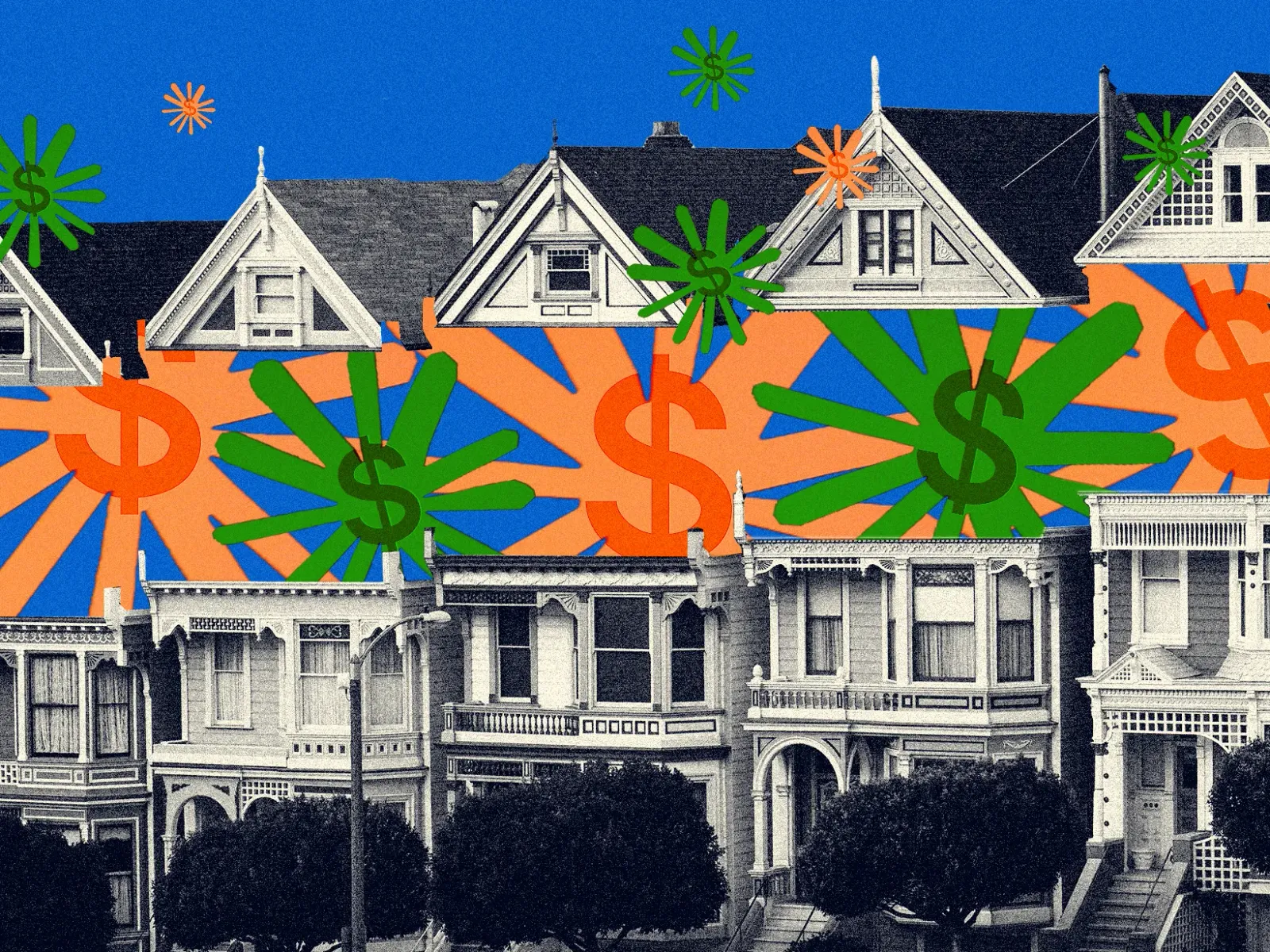
Several San Francisco Bay Area real estate listings are offering to exchange homes for shares in AI startup Anthropic. This signals a growing belief among sellers that Anthropic's equity could appreciate faster than traditional assets, creating a new liquidity option for startup employees and investors.
In a market where cash is king, a new currency is emerging in San Francisco real estate: Anthropic stock. Several listings in the Bay Area are now offering sellers the option to trade their homes for a piece of the AI startup, a move that turns equity into a down payment. It's a bet that Anthropic's shares will be worth more than the property itself in the years to come, and it's a sign of just how frothy the AI boom has become for those holding the right paper.
The listings, spotted on platforms like Zillow and Redfin, explicitly state that sellers are open to accepting Anthropic equity as full or partial payment. One property in San Francisco's Pacific Heights neighborhood, listed at $4.5 million, notes that the seller would consider a deal involving Anthropic shares. Another in Oakland, priced at $1.2 million, makes a similar offer. The trend is small but telling: it reflects a belief that Anthropic, the company behind the Claude AI model, could be the next Nvidia or Google, and that its stock could outperform real estate, which has historically been one of the safest long-term bets in the Bay Area.
For context, Anthropic has raised over $7 billion from investors including Google, Salesforce, and Spark Capital, and was valued at $18.4 billion in its last funding round in December 2023. The company's shares are not publicly traded, but they are increasingly used as collateral for loans and, now, as currency for big-ticket purchases. This is not entirely new: during the dot-com boom, employees of companies like Yahoo and Google used stock to buy homes, and in the crypto boom, sellers accepted Bitcoin. But the shift to AI equity signals a maturation of the sector, where the paper is seen as liquid enough to be trusted for a transaction as illiquid as a house.
The implications for the broader market are significant. If this trend catches on, it could create a new asset class for real estate transactions, one tied to the fortunes of a single company. That concentration risk is real: if Anthropic's valuation tanks, so does the value of the home. But for sellers, the upside is a potential windfall if the company goes public or is acquired at a higher valuation. For buyers, it offers a way to monetize equity without selling shares, which could trigger tax events or dilute their stake.
Regulators are likely watching. The IRS has rules for barter transactions, and accepting equity for a home would be treated as a taxable event, with the value of the shares at the time of the deal subject to capital gains tax. There's also the question of how to value private company shares, which are not marked to market daily. Sellers would need to agree on a valuation method, likely based on the most recent funding round or a 409A valuation, which could be contentious if the company's value has shifted since the last round.
For startup employees, this is a potential lifeline. Many hold significant equity but have limited ways to access its value without selling shares, which can be restricted by lock-up agreements or board approval. Using equity for a home purchase offers a way to unlock value without a sale, but it also ties the buyer's personal finances to the company's performance. If Anthropic stumbles, the buyer could lose both their job and their home's value.
The trend also highlights the growing wealth concentration in AI. San Francisco has long been a hub for tech wealth, but the AI boom has created a new class of paper millionaires at companies like OpenAI, Anthropic, and Inflection AI. These employees have seen their equity values soar, but they often lack the cash to buy homes in a market where median prices top $1.3 million. Accepting equity as payment bridges that gap, but it also deepens the connection between the tech sector and the housing market, a relationship that has historically led to boom-and-bust cycles.
For now, the number of listings is small, but the signal is clear: Anthropic stock is becoming a currency of its own, one that sellers trust enough to bet their homes on. If the AI boom continues, expect more of these deals, and expect other startups to follow suit. The question is whether this is a smart hedge or a dangerous bet on a single company's future. Either way, it's a reminder that in the Bay Area, the line between paper wealth and real assets is getting blurrier by the day.
This story's Key Insights and Take-aways are locked.
Create a free account to unlock Executive Actions for one credit.
Register to UnlockAlways free for Executives Club members. Join the Club
More in Technology

OpenAI says 10,000 agents cracked a 90-year math problem in 88 hours
The company's claim is audacious, but one mathematician is pushing back. Here's what it means for AI-driven discovery.

Meta still serves child sexual abuse ads on Instagram in India - BBC report
A new report following the BBC Eye investigation says the ads are still there - what it signals for every platform with a self-serve ad engine.

White House yanks 'Build the Wall' game after Tetris Company copyright warning
The administration's arcade game vanished in hours - and the takedown playbook every brand can learn from.