

AOC’s $600 Q27G4ZD OLED sticks the landing, but HDR brightness and refresh nags disrupt
$600 buys a fast, color-forward QD-OLED gaming monitor, with two real friction points: HDR performance limits and reminders.
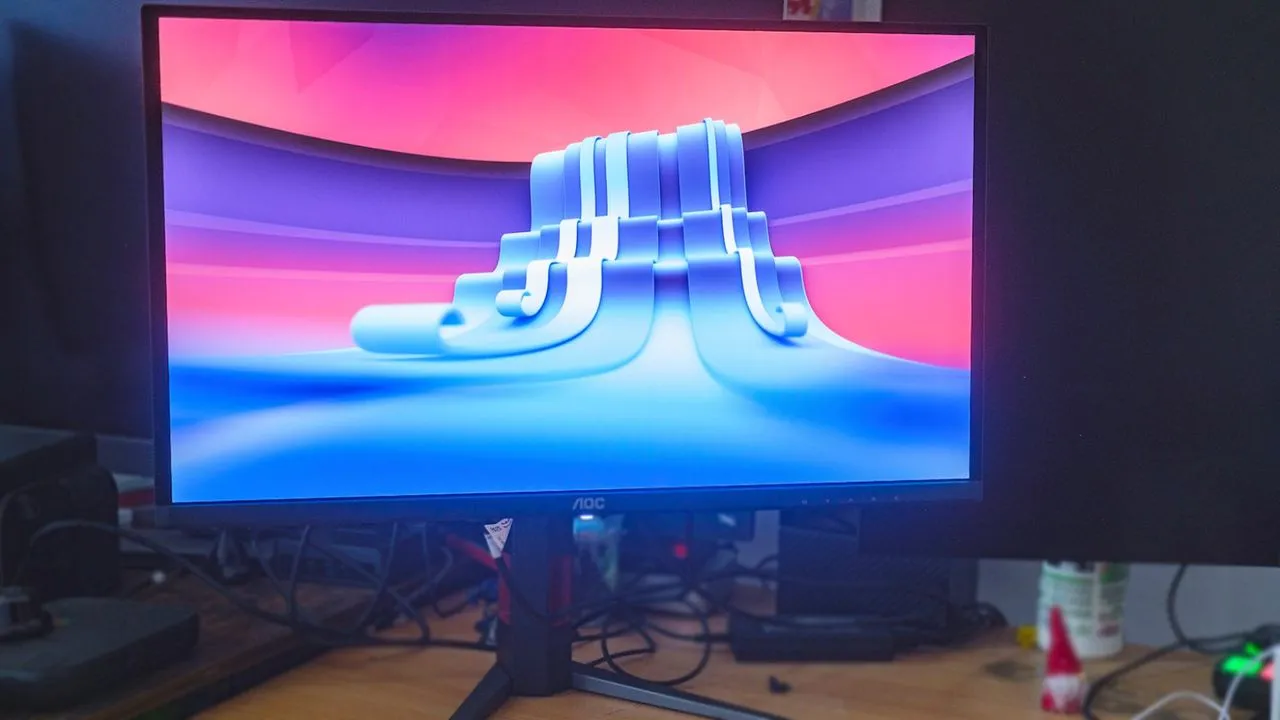
GamesRadar+ tested the AOC GAMING Q27G4ZD OLED gaming monitor at around $600, rating it highly for HDR visuals and gaming performance. For decision-makers, the review signals where value holds up and where buyers get interrupted: HDR brightness shortfalls and periodic pixel refresh warnings.
At around $600, the AOC GAMING Q27G4ZD OLED gaming monitor lands in the sweet spot: it is quick, looks great in motion, and generally does what you buy it for. GamesRadar+ reports it is rated up to 240Hz and 1440p, then backs that up in real play, including a full run through Pragmata. The big tension is not speed. The tension is whether “OLED gaming at $600” behaves like an effortless upgrade or forces compromises.
The answer is both. On the one hand, the Q27G4ZD slipped “incredibly easily” into the reviewer’s setup and delivered smooth performance from 120Hz to 240Hz, with no obvious latency or unresponsiveness reported. On the other hand, HDR comes with friction: the reviewer had Linux “conversing with the panel about said HDR” and they also hit a recurring reminder every four hours that interrupts gaming sessions until pixel refresh is sorted. If you want the quick takeaway, it is this: the monitor’s core gaming experience holds up well, but the HDR experience is more conditional than the price suggests.
Let’s start with the value proposition. The review frames OLED monitors as having “come down in price at a steady clip,” and positions AOC as a brand that, historically, can feel like a “crapshoot.” In this case, the reviewer calls the Q27G4ZD a “superb little monitor” for around $600, specifically noting decent quality HDR and solid gaming performance. The panel being a QD-OLED matters in how content looks. The reviewer says that even when HDR did not work for Pragmata, the game still ran with full ray tracing and path tracing enabled, and the panel’s colors looked vivid, with the “clinical sci-fi areas” popping.
But OLED success is not just visuals. It is also the physical and software details that decide whether a product feels premium or merely functional. GamesRadar+ points to design quirks that undermine the “upper-echelon range” feel you might expect at $600. During connection, “the back, decorative ring shouldn’t fall off,” and the thin, harshly angled back did not hide a “small whining noise” when the monitor was on. It is not a deal-breaker because speakers or headphones masked it for the reviewer, but it does show how value can coexist with audible annoyances. They describe the monitor as a “quiet soldier,” a compliment for reliability that also hints at low drama, not extravagance.
Connectivity is one of the practical features that can matter for households and setups. There are four USB-A ports, connecting over USB-B rather than USB-C, and they sit underneath the monitor. The stand’s 90-degree swivel makes them easier to access, which the reviewer calls a “boon” for those who like “TATE mode” for retro games. For operators and buyers, this is the kind of detail that affects everyday friction more than marketing does. If your desk setup is already optimized, port placement and ergonomics decide whether the monitor becomes part of the workflow or another thing you work around.
On performance, the review is unusually confident. From 120Hz to 240Hz, the monitor “never showed any obvious signs of latency or unresponsiveness.” The reviewer also says lower refresh settings on consoles did not introduce issues that impacted gameplay. Even on Linux using CachyOS, they report no problems outside of HDR. In other words, for pure play, the Q27G4ZD seems stable and responsive. The reviewer also highlights how it behaves in dark gradients during Pragmata, describing atmosphere as staying intact when gradients “would gradient into darkness.”
HDR is where the story gets more complicated, and where the second-order implications show up for anyone deploying monitors at scale, buying for teams, or equipping a mixed-use office. The reviewer notes that for work-related usage they would steer clear because it is “just not bright enough at 400 nits.” They also state that for work and grading HDR, it is recommended to use 1000 nits at a minimum. That is a meaningful gap: consumer HDR gaming can still look good, but content creation and professional grading typically need higher luminance headroom for accurate tone mapping. They also mention using Switch 2 for HDR and a Windows device to confirm it is “serviceable” in HDR, but they caution that videos recorded to test HDR editing came out “a little too off base in looks.” Translation: the monitor can be entertaining for HDR gaming, while still being risky as a reference device for HDR workflows.
The other HDR-adjacent interruption is the pixel refresh reminder. GamesRadar+ says that “every four hours” a warning to get pixel refresh sorted popped up, and that gaming sessions were “continually interrupted by an irritating reminder.” They call out that AOC needs to take another look at it. This matters beyond personal annoyance. If the product is being purchased as a primary gaming screen, a recurring intervention can change user behavior, especially for long sessions, late-night marathons, or competitive play where timers and interruptions are the enemy.
There are also “features” that the reviewer views as potentially wasteful. They are not an esports player and do not need a fake on-screen reticle. They also suggest steering clear of “AOC Game Color,” a series of presets they say lean into saturated color “a little too often.” The upshot: the Q27G4ZD is strong as a display for the basics, and selectively weaker if you depend on preset-driven tuning for the “right” look without calibration. Still, retro games are repeatedly cited as benefiting from the panel’s vibrancy, with older games like Earthbound and Mother 3 described as in their element.
So should you buy it? The reviewer’s decision is basically yes, with clear boundaries. OLED prices are falling, and the QD-OLED-backed monitor can “hang with the rest in its price range.” Competing monitors might offer “just a bit more” on features, but the reviewer argues fewer will actively stay out of the way during gaming the way this one does. They also close with a broader market note: in 2026, getting a tech product that works as advertised and “doesn’t overreach” is relatively rare in some sectors. For executives, founders, and investors tracking consumer tech demand, the strategic stake is clear: when value propositions are tested in real setups, the winners are those that deliver performance stability and correct expectations. AOC’s Q27G4ZD seems to deliver on gaming. The cracks are the kind that only show up over time: HDR brightness limitations and recurring pixel refresh interruptions that can break flow.
This story's Key Insights and Take-aways are locked.
Create a free account to unlock Executive Actions for one credit.
Register to UnlockAlways free for Executives Club members. Join the Club
More in Business

Anthropic’s Levant Alpöge cracks the Jacobian conjecture after 87 years
A Harvard valedictorian used Claude to hit a 1939 breakthrough, but the missing “why” is the real problem.

Uber buys Delivery Hero for nearly $15B, vaulting to top food delivery outside China
The deal doubles Uber's dual-services footprint and pushes a ride-and-eats bundling play into 50 more markets.

Epic and Google drop settlement bid, forcing rival Android app stores by July 22
Google told the court it is ready to carry third-party app stores starting Wednesday, July 22.