

Apollo's Slok: AI's core flaw is compute costs outweigh benefits
As AI stocks tumble, the economist warns demand for compute is price-sensitive and the payoff for firms has yet to show up.
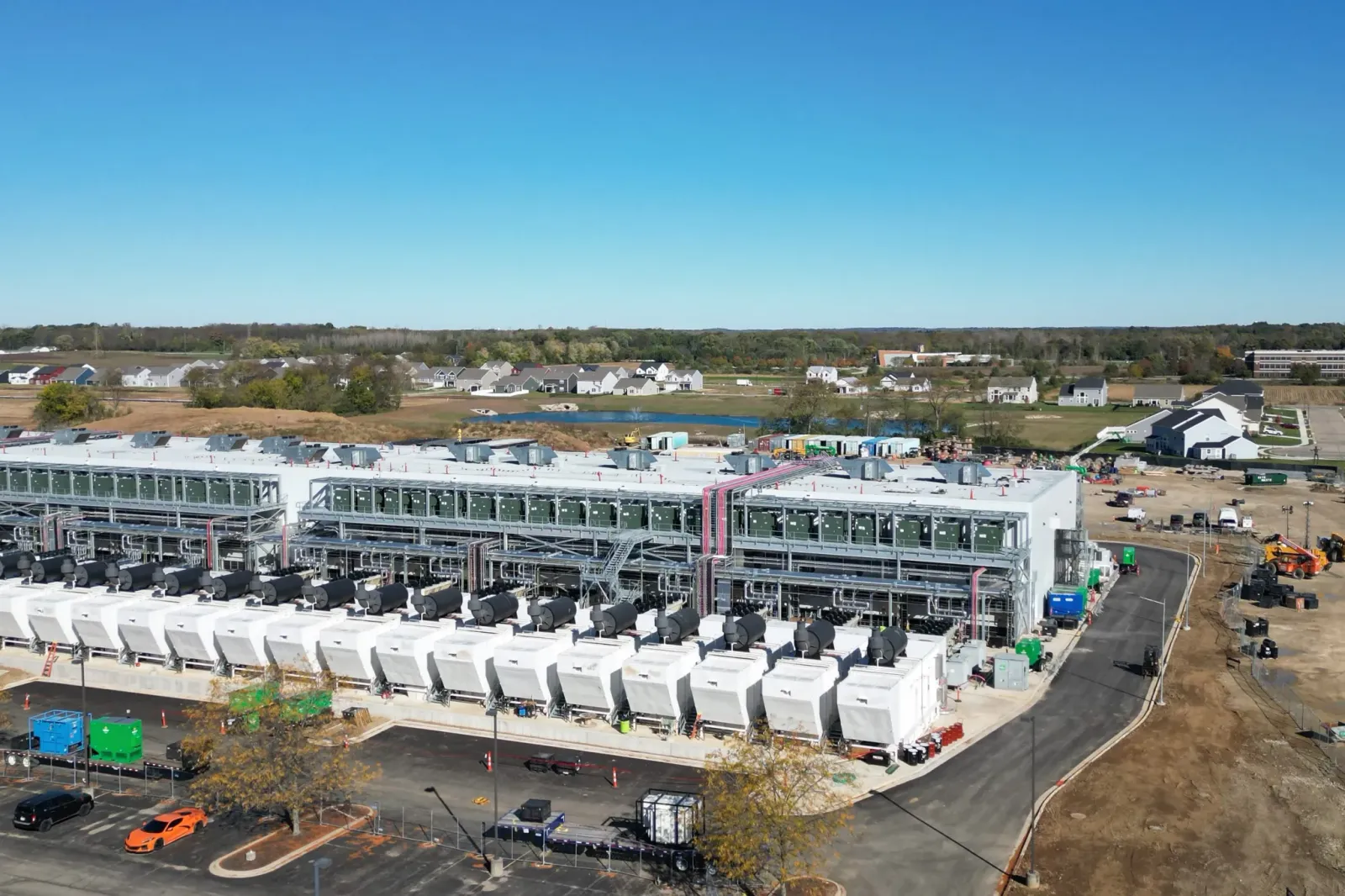
Apollo economist Torsten Slok warned this week that the AI bull case rests on a flawed assumption: the marginal cost of compute exceeds the marginal benefit to users. For decision-makers, the implication is that data-center buildout and AI capex may be overbuilt, with companies increasingly reluctant to pay for AI services.
Apollo economist Torsten Slok spent this week dismantling the AI bull case, and the timing was brutal: AI-related stocks were tumbling, especially chip names, as traders started doubting how much longer the capital expenditure orgy can go on. Slok's central charge is blunt. "The core economic flaw in the AI bull case is that the marginal cost of producing compute exceeds the marginal benefit it delivers to users, raising questions about claims of unlimited demand for data centers," he wrote. He also pointed to a recent slowdown in token spending growth, saying the demand curve for compute is flat and highly sensitive to price changes, and noted that most companies investing in the technology have yet to see significant productivity returns, with AI now looking more like a cost center than a growth driver.
That flat demand curve matters because it undermines the math behind the data-center buildout. Slok argued the main determinant in data-center construction models is not physical capacity or power, but the actual price users are willing to pay for compute. Companies will only pay a high price if it translates into higher revenue growth, bigger profits, or substantial savings, and there is little sign any of those exist at scale. "So far, the AI payoff for firms has been slow to materialize, implying a growing reluctance to pay for AI services," he explained. "Maybe that will come in the future. Maybe not."
The warnings landed as the market's mood shifted. A handful of hyperscalers plan to spend an estimated $800 billion this year, with capex next year seen topping $1 trillion. But raising all that capital may not be as easy as it once was. Meta has already issued a lot of debt and announced this week the issuance of a new class of shares, in part to help CEO Mark Zuckerberg pay for a possible wealth tax in California. With the social media giant planning to spend $135 billion to $145 billion this year, the cost of insuring Meta's debt against default touched a record on Thursday. Five-year credit default swaps widened 7.6 basis points to an all-time high of 114.79 basis points.
Smaller AI players are feeling the squeeze even harder. CoreWeave, a "neocloud" AI company, has seen its stock crash more than 30% this month, and its five-year credit default swaps have shot up to 1,145 basis points. That is a stark signal that debt markets are pricing in real distress, not just a growth hiccup. Slok's broader point is that the entire AI trade may be running on borrowed time and borrowed money.
Slok also flagged a "circularity" problem in token spending. AI companies have already come under scrutiny for financing deals where they provide money or guarantee debt for other companies that are also top customers, raising doubts about how sustainable their growth is. He suggested a similar dynamic exists between AI startups and the venture capital firms that invest in them, noting that 80% of the top 1% of AI spenders are VC-backed. In his view, that means startups are paying for their compute bills with venture capital rather than organic earnings. That kind of circular flow can make demand look stronger than it really is.
On Saturday, Slok went further, declaring that AI has "delivered zero financial payoff" to U.S. companies outside of the big hyperscalers. While profit margins and revenue per worker are rising for the so-called Magnificent Seven, the rest of the S&P 500 has seen no such improvement. Echoing the week's earlier notes, he said Corporate America overall doesn't need the latest AI model and doesn't want to pay for it. Even as AI becomes cheaper and commoditized, mainstream companies may have a hard time using the technology to boost financial results. "AI may be a great calculator, but in business, intelligence is mostly judgment," he wrote. "Judgment depends on context, and the answer varies with which human or which model you ask. Perhaps most importantly, AI does not understand accountability, trust, culture, unwritten rules, ethical trade-offs or fairness, all of which shape reputational risk and ultimately drive revenue growth and profit margins."
The credit market stress is not just a market footnote. S&P Global's head for digital infrastructure, Mark Habib, flagged "interconnected financing structures" between hyperscalers and data center projects or smaller AI companies. "It is safe to assume that there is more (debt) out there that we are not seeing," he said during a roundtable in London, according to Reuters. "If it's not reported, then it's not part of the disclosure by the hyperscalers. Also, if we are not rating the transactions where this liability may accrue, then the fact of the matter is that we might not have the visibility." Habib's warning underscores how much of the AI buildout may be financed outside the visibility of ratings agencies and public disclosures.
For CFOs and boards, the week's warnings sharpen the central question: are AI capex plans built on realized returns or on an assumption of unlimited demand that Slok says is false? If the marginal cost of compute exceeds the marginal benefit, the $800 billion to $1 trillion spending plans may be building capacity the market won't pay for. The pressure is now on companies to show how AI investments translate into revenue, profit, or savings, and to make sure their financing structures do not hide the same circularity Slok is warning about.
This story's Key Insights and Take-aways are locked.
Create a free account to unlock Executive Actions for one credit.
Register to UnlockAlways free for Executives Club members. Join the Club
More in Business

A flaw in PHP just forced governments to pull their own sites offline
European agencies from Belgium to Germany took websites dark to patch a critical weakness in the language behind almost 70% of the web, and the blast radius extends far beyond government portals.

BioWare shuts down, Mass Effect 5 dead after $55B EA buyout
The legendary RPG studio's closure lands months after a $55 billion investment group buyout of EA, raising tough questions for gaming's biggest acquirers.
Musk weighs Tesla-SpaceX mega-merger as boards form review panels
Special committees at both companies will examine a tie-up that could fuse electric vehicles and space launch, forcing a fresh look at governance and valuation.