
Apple’s clerical slip disqualified Jon Hamm’s Emmy guest-star bid for The Morning Show
A 2025 Emmy rule about prior Lead/Supporting submissions blindsided Apple, costing Hamm a possible nomination.
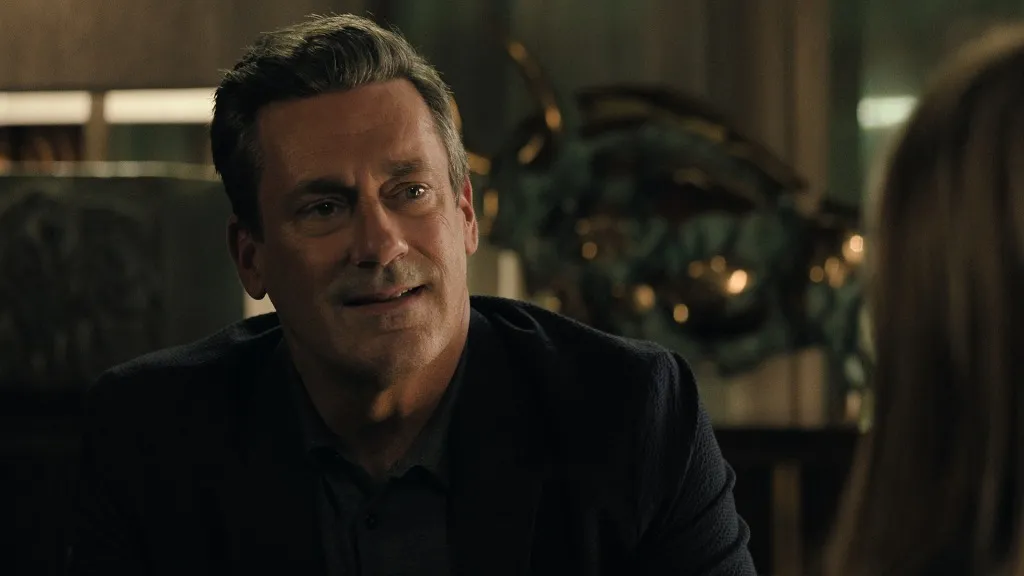
Jon Hamm’s would-be Emmy nomination for The Morning Show was derailed after Apple submitted him as a guest star under eligibility rules that changed for 2025. The mistake matters to decision-makers because Emmy category eligibility has become a compliance problem, not just a PR one.
Jon Hamm’s Emmy momentum hit a bureaucratic wall this week. Apple TV apparently submitted him for The Morning Show as a guest star, but Hamm was disqualified because the Emmys introduced a new eligibility rule in 2025 that blocks guest-star submissions for actors who have already been nominated for Outstanding Lead or Supporting Actor or Actress for the same specific role. Variety reports the issue was procedural, not performance: Hamm had only appeared in three episodes of the most recent season, so someone at Apple tried to route him into the guest category. The Emmys said no, and the nomination opportunity vanished.
The key detail is the one Apple apparently missed. The Emmys now say that if an actor has already been nominated for Outstanding Lead or Supporting in connection with a specific role, they cannot later be submitted as a guest star just because the part got smaller. That means the same actor can be talented, busy, and already on the ballot history-wise, and still get blocked from a “better fit” category later in the awards cycle. Hamm previously received a nomination for The Morning Show in 2024 as a supporting actor, and that prior nomination becomes the constraint that governs how he can be classified when a later season has fewer episodes and a smaller screen presence.
For decision-makers, this is a useful reminder of how awards-season strategy is evolving. Historically, studios could treat categories as a set of levers: amplify the angle that best matches the work in a given season, with campaign teams adjusting submissions based on screen time, narrative prominence, and competition. But eligibility rules have tightened in ways that shift the problem from creative positioning to compliance rigor. The Emmys do not provide specific justifications for these rule changes, but the reporting notes that many people suspected this particular patch was added after Claire Foy won a Guest Star Emmy in 2021 for appearing again in The Crown through flashbacks after her main tenure ended. In other words, the guardrails were likely built to prevent a perceived loophole around “returning” to a series in a way that does not match how the category is intended to work.
So what does this mean for Apple, and for other studios trying to turn nominations into brand equity? It suggests that internal review processes for Emmy submissions need to be treated like regulatory compliance, not like an after-action checkbox. Variety’s reporting frames the disqualification as an Apple clerical error: someone at Apple TV was “all fired up” to submit Hamm for his work in the most recent season. Then, because Hamm was in only three episodes, a team decided the guest-star path would be more competitive. The new rule turned that competitive logic into an ineligibility trap. When the consequence is a lost slot on the ballot, a “small” misclassification becomes expensive. Not because the Emmys are targeting Apple in particular, but because the system is now less forgiving when eligibility depends on how a prior nomination maps to a later submission.
The second-order effect is that campaign teams now have to track nomination history with a level of precision that sounds boring until you get burned. Hamm’s case is also a reminder that award outcomes are not just about whether an actor gives a great performance, but whether the submission team categorizes the actor under rules that may have changed midstream. In practice, that means studios should expect more scrutiny and fewer opportunities to recover after the fact. Once disqualified, the actor cannot simply be refiled into a different bucket on the fly. That pushes studios toward earlier, more formal eligibility verification, ideally before the submission deadline when the decisions still feel flexible.
And Hamm is not exactly sitting out the year. The source notes he is still submitting elsewhere, in both animated categories for his Fox cartoon comedy Grimsburg, and in the other Apple show Your Friends And Neighbors. That matters because it undercuts the “this hurts his career” storyline. Hamm’s broader awards campaign can continue. But the immediate lesson for boards and operators is sharper: even established, frequently nominated talent can be blocked by a submission that runs afoul of updated rules. The Emmys may “love nominating Hamm for things,” as the reporting puts it, yet even love cannot override eligibility. For studios, the strategic stakes are clear. The same resources that go into persuading voters must now go into ensuring submissions comply with changing definitions of who counts as Lead, Supporting, or Guest.
The broader market context is that the Emmys are not static, and neither are the categories studios target. As rules tighten, the opportunity for studios is less about gaming the system and more about building process discipline around how work gets packaged for awards. In an era where studios, streamers, and talent teams compete for cultural visibility, an avoidable disqualification is a double loss: you lose the potential nomination, and you lose time, leverage, and momentum that could have been used to amplify other eligible candidates. Hamm’s disqualification is a small story on the surface. Underneath, it is a warning about compliance as a competitive advantage, and about how quickly “best guess” submissions can turn into preventable setbacks.
This story's Key Insights and Take-aways are locked.
Create a free account to unlock Executive Actions for one credit.
Register to UnlockAlways free for Executives Club members. Join the Club
More in Entertainment

ESPN’s NFL free agency page opens with a cookie gate, not a contract ranking
For decision-makers tracking roster value, the “highest-paid list” tease is nowhere in the provided content.

Animaccord readies 'Masha and the Three Bears' at Annecy, banking on parenting folklore to expand
As the franchise behind the world’s most watched cartoon adds a new entry, decision-makers should track what that means for IP flywheels.

Neymar licenses his AI likeness for FlareFlow's 16-title microdrama franchise
Chinese-owned FlareFlow bets on an AI microdrama series built around Neymar during the World Cup, turning likeness licensing into a content pipeline.