

SpaceX jumps 6% in premarket, valuing the company at $2 trillion+ after its debut
The stock’s first-day surge pushes SpaceX past $2 trillion, reshaping how investors and regulators think about private space risk.
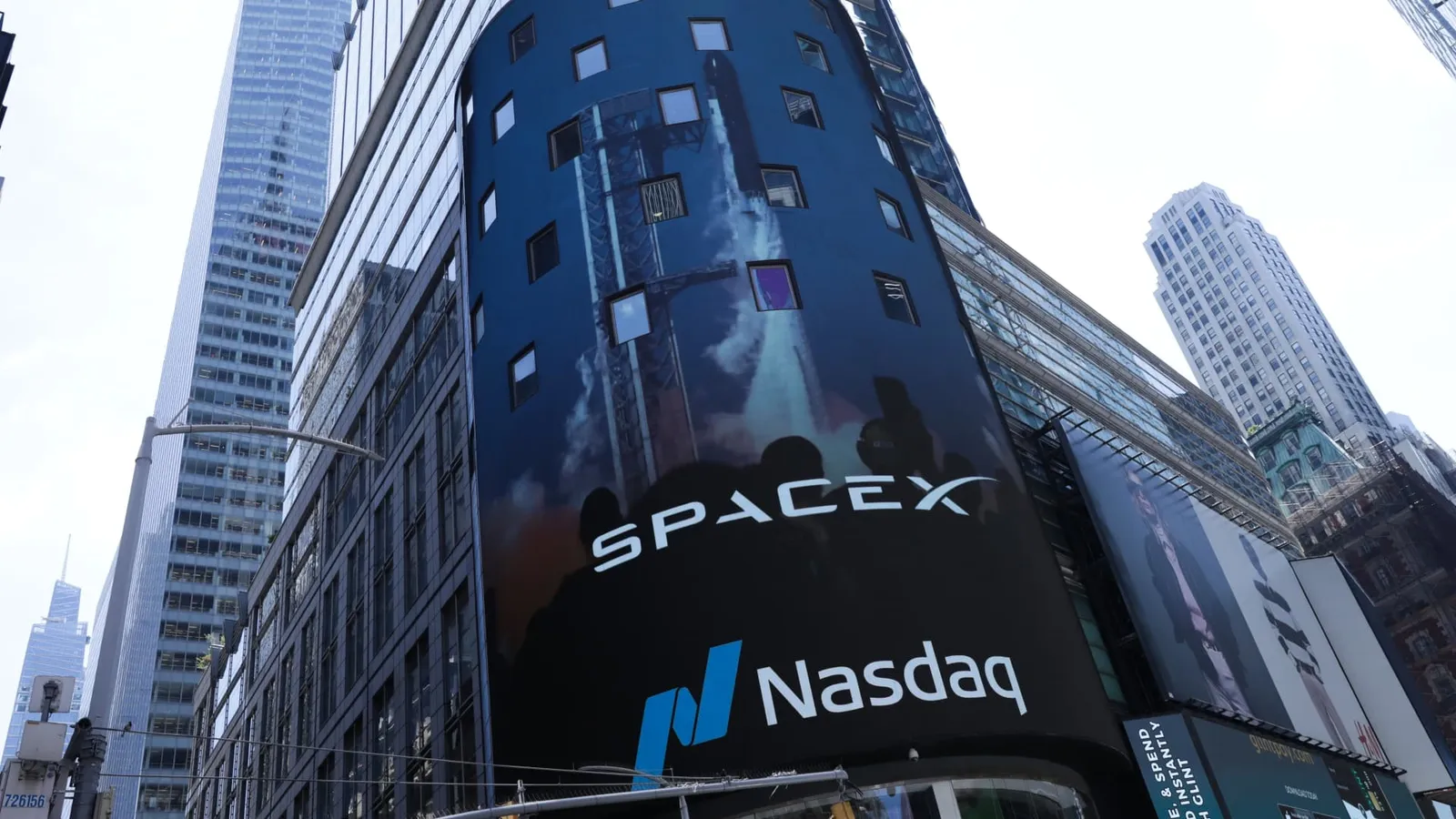
SpaceX shares gained 6% in premarket after a record debut day for the company. The rally put SpaceX's valuation at more than $2 trillion immediately after trading started, creating a new benchmark for capital markets exposure to space.
SpaceX is now valued at more than $2 trillion, after its stock rallied on the first day of trade. That upside did not just show up on a closing chart. It spilled into premarket trading as well, where the stock gained 6%.
For decision-makers, the immediate point is simple: SpaceX just turned a long-running story about rocket launches into a market-priced valuation that investors can now buy, sell, and model in real time. The “record debut” matters because first-day pricing often becomes a reference point for everyone watching the asset class, from growth investors to institutions looking for new exposures.
This is what makes the moment feel bigger than a single stock pop. SpaceX has historically been the kind of company that lives outside the traditional public-market spotlight. When a business is private, you rarely get clean, continuous price discovery. You get headlines, funding rounds, and occasional secondary-market liquidity. Now, with a debut and a valuation that clears $2 trillion, SpaceX is providing a live pricing mechanism for its future trajectory.
And future trajectories are exactly what markets tend to price. A first-day rally can reflect expectations around scale, execution, and the ability to keep turning projects into cash flows over time. It can also reflect sentiment, where investors rush to be early to something that feels both rare and high-upside. Regardless of the mix, the outcome is the same for execs: there is now a visible “market narrative” attaching a $2 trillion valuation to SpaceX right after trading begins.
There is also a governance and oversight angle hiding underneath the celebration. Once a company is public, the regulatory and disclosure framework changes the rhythm of decision-making. Public companies must live with tighter reporting requirements, more scrutiny of risk factors, and a constant drumbeat of market expectations. Even if the fundamentals for SpaceX were already strong, the standards for how it communicates performance and risk become more formal.
Regulatory framing matters because space sits at the intersection of technology, national security considerations, spectrum and communications rules, environmental and launch licensing concerns, and complex contracting ecosystems. When a company moves into the public markets at a valuation that big, regulators and policymakers do not just think about launches and engineering. They also think about investor protection, transparency, and how public scrutiny could amplify the consequences of any missteps.
For boards, this debut is a reminder that capital markets can reprice an entire category very quickly. In private markets, valuations can remain anchored to deals and rounds. In public markets, valuations can detach from last private pricing and track sentiment, guidance expectations, and competitive positioning day by day. A 6% premarket move after a record debut highlights that there is active demand and active disagreement, the two ingredients that create volatility and, sometimes, opportunity.
For peers, the second-order implication is benchmark anxiety. When a company like SpaceX enters the market with a valuation above $2 trillion right away, it implicitly sets a high bar for how investors might underwrite other space and aerospace businesses, especially those with ambitious timelines and heavy capital needs. Even companies that never touch SpaceX’s exact business model will feel the gravitational pull of “what the market thinks is possible.” That can influence fundraising expectations, partnership strategy, and how quickly teams decide whether to pursue public listings or remain private longer.
The strategic stakes for investors and operators are about more than chasing a headline. When a stock starts trading at a scale like this, it forces faster decisions across the ecosystem. Capital allocators may adjust risk models for space exposure. Corporate partners may reassess counterparties as market-priced actors rather than private ones. And internal leadership teams at adjacent companies will feel pressure to translate long-term technical programs into business narratives that can survive quarterly scrutiny.
SpaceX gaining 6% in premarket after a record debut, with a valuation over $2 trillion, is not just a market warm-up. It is a public-market turning point. The question now becomes whether that valuation stays tethered to measurable execution as trading continues, or whether the early surge proves to be a short-term pricing event. Either way, the debut has already changed the reference frame for space investing, regulation, and how ambition gets priced.
This story's Key Insights and Take-aways are locked.
Create a free account to unlock Executive Actions for one credit.
Register to UnlockAlways free for Executives Club members. Join the Club
More in Business

Elon Musk unveils a flying car, and SpaceX helped build it
The Tesla CEO's showcase at a SpaceX facility signals a future where road and rocket engineering converge.

Apple's $2,000 iPhone Duo opens preorders, taking on Samsung and Google
Apple's first foldable hits the market at a premium price, reshaping a category Samsung and Google have led.

Pope Leo XIV, first American pope, diagnosed with lung cancer
The 71-year-old Chicago-born pontiff underwent successful surgery on his right lung, and his diagnosis raises new questions about his AI-focused papacy and the Vatican's future.