

Apple unveils first foldable iPhone Duo with 7.6-inch display under new CEO Ternus
Apple's first foldable, the iPhone Duo, marks a major product bet for new CEO John Ternus, with a 7.6-inch unfolded screen.
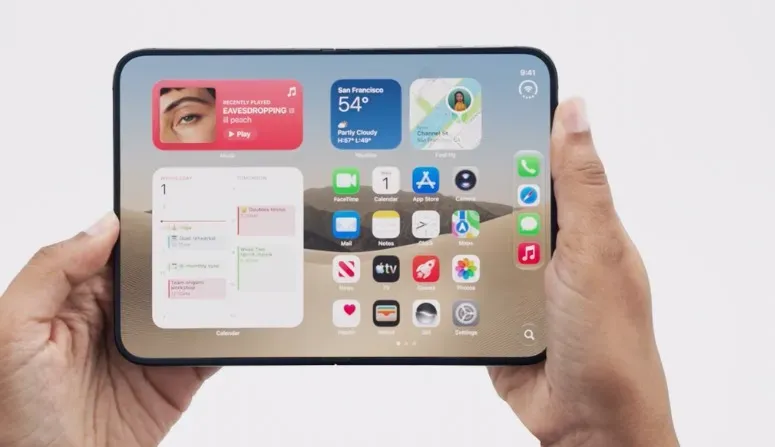
John Ternus, Apple's new CEO, unveiled the company's first foldable device, the iPhone Duo, at the 'Surprise and Shine' event in Cupertino. The device, featuring a 7.6-inch unfolded Retina display and a 5.4-inch outer screen, signals Apple's entry into the foldable market and could reshape its competitive position in the premium smartphone segment.
Apple today introduced its first foldable device, the iPhone Duo, at the 'Surprise and Shine' event held in Cupertino. The announcement was led by John Ternus, Apple's new CEO, marking the first marquee product launch under his leadership. The iPhone Duo features a 7.6-inch Retina display when unfolded and a 5.4-inch outer screen, positioning it as a hybrid between a smartphone and a tablet. The event itself was a statement: Apple is no longer watching the foldable category from the sidelines but is now a direct participant.
The iPhone Duo represents a significant departure from Apple's traditional iPhone lineup, which has relied on incremental updates to screen size and camera technology. For years, the company has been rumored to explore foldable prototypes, but the iPhone Duo is the first concrete product to emerge from those efforts. The 7.6-inch unfolded display offers a canvas that rivals the iPad mini, while the 5.4-inch outer screen keeps the device pocketable when closed. This dual-mode design suggests Apple is targeting users who want a larger display for productivity and media consumption without carrying a separate tablet.
The timing of the launch is notable. Ternus, who previously served as Apple's hardware engineering chief, has taken the helm at a moment when the smartphone market has matured and growth has slowed. The foldable form factor is one of the few areas where innovation still drives consumer excitement and premium pricing. By entering this segment, Apple is betting that the iPhone Duo can reignite upgrade cycles among its installed base, many of whom have held onto older iPhones for longer periods. The device also gives Apple a direct answer to the foldable phones that have been available from other manufacturers for several years, though Apple's approach appears to emphasize seamless integration with its existing ecosystem.
From a technical standpoint, the iPhone Duo's displays are both Retina quality, which means they meet Apple's standard for pixel density and color accuracy. The unfolded 7.6-inch screen is likely to be the primary interface for multitasking, document editing, and video watching, while the outer 5.4-inch display serves as a quick-glance screen for notifications and calls. Apple has not yet disclosed the hinge mechanism or durability specifications, but these details will be critical for consumer confidence. Foldable devices have historically faced scrutiny over screen creases and long-term reliability, and Apple will need to address those concerns head-on.
The leadership angle is equally important. Ternus's decision to make the iPhone Duo his first major product introduction signals that he is willing to take risks and push the company into new hardware categories. It also sets a tone for his tenure: innovation over caution. Apple's board and investors will be watching closely to see whether the iPhone Duo can replicate the success of the original iPhone or the iPad, both of which created entirely new product categories. The foldable market is still relatively small, but it is growing, and Apple's entry could legitimize the form factor for mainstream consumers who have been hesitant to try devices from lesser-known brands.
For developers, the iPhone Duo presents both an opportunity and a challenge. Apps will need to adapt to the larger unfolded display, potentially offering new multitasking layouts or split-screen views. Apple has a robust ecosystem of developers who have already optimized apps for the iPad, so the transition may be smoother than it was for other foldable platforms. However, the dual-screen nature of the device means that apps must also handle the transition between the outer and inner displays seamlessly. Apple's software team will likely provide tools and guidelines to help developers make the most of the new form factor, but the onus will be on third-party apps to deliver experiences that justify the device's premium price.
The broader strategic stakes are high. Apple has long been the benchmark for smartphone design and user experience, and the iPhone Duo is a test of whether that reputation can extend to a new hardware category. The company's supply chain, which has been refined over decades, will need to deliver the complex hinge and flexible display components at scale. Any production delays or quality issues could tarnish the launch and give competitors an opening. On the other hand, if the iPhone Duo succeeds, it could cement Apple's position as the leader in premium mobile devices and force other manufacturers to accelerate their own foldable roadmaps.
In the coming months, the market will learn more about pricing, availability, and the device's real-world performance. Early adopters will be the first to test the hinge durability and the software experience. For now, the iPhone Duo stands as a bold statement from Apple's new CEO: the company is willing to reinvent its most iconic product to stay ahead. Whether that bet pays off will depend on execution, but the announcement alone has already shifted the conversation in the smartphone industry. Apple has entered the foldable era, and the iPhone Duo is its opening move.
This story's Key Insights and Take-aways are locked.
Create a free account to unlock Executive Actions for one credit.
Register to UnlockAlways free for Executives Club members. Join the Club
More in Business

A flaw in PHP just forced governments to pull their own sites offline
European agencies from Belgium to Germany took websites dark to patch a critical weakness in the language behind almost 70% of the web, and the blast radius extends far beyond government portals.

BioWare shuts down, Mass Effect 5 dead after $55B EA buyout
The legendary RPG studio's closure lands months after a $55 billion investment group buyout of EA, raising tough questions for gaming's biggest acquirers.

Musk weighs Tesla-SpaceX mega-merger as boards form review panels
Special committees at both companies will examine a tie-up that could fuse electric vehicles and space launch, forcing a fresh look at governance and valuation.