
Archer stock jumps 20% after unveiling a military craft with Anduril
The eVTOL maker is still racing for FAA certification, but a new military partnership just changed the conversation.
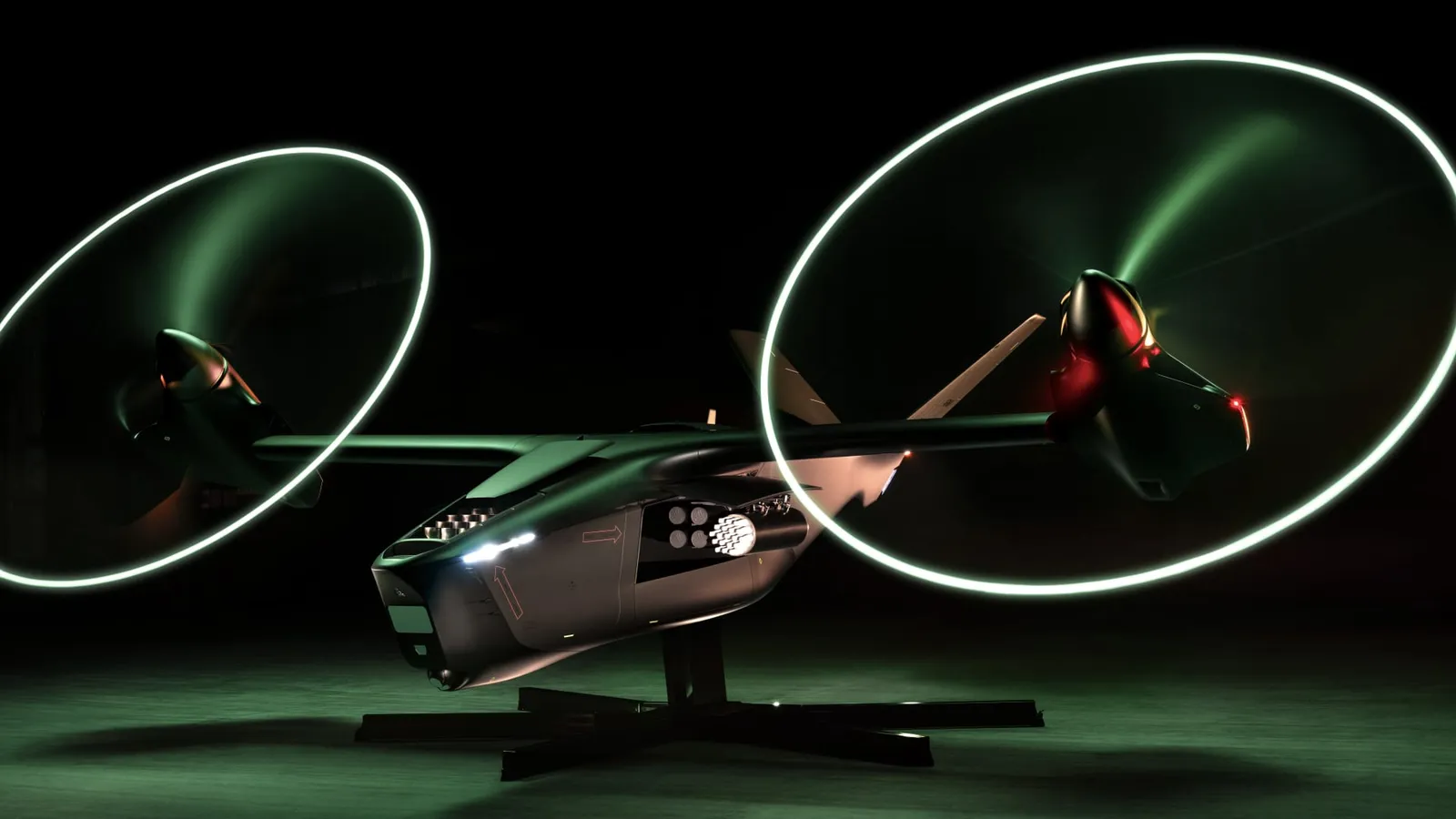
Archer, the eVTOL company, saw its stock rip 20% higher after unveiling a military craft built with Anduril. For decision-makers, the move highlights how certification timelines and defense demand are starting to pull the sector in different directions.
Archer stock surged 20% higher after the company unveiled a military craft with Anduril, a signal that the eVTOL race is not only about air taxis anymore. While Archer and other eVTOL peers are pursuing FAA certification to begin commercial flights, this kind of defense-facing product launch can reshape expectations for what “commercial viability” means and when investors will start rewarding it.
At its core, the headline matters because it ties a market reaction to a specific development: Archer unveiling a military craft with Anduril and the stock jumping 20%. The immediate question for executives is simple: is this an accelerator for the company’s main path to the FAA and passenger operations, or is it a parallel track that changes funding priorities, partnerships, and timelines? In an industry where timelines can be long and certification can be uncertain, even a credible additional lane can meaningfully affect capital allocation decisions.
Archer and its eVTOL peers are racing for FAA certification to start flying their air taxis commercially, and that regulatory sprint is the gravity well for the sector. FAA certification is not a marketing event. It is a structured, process-heavy gate that determines whether aircraft designs can be operated under defined safety rules, and it can influence everything downstream: flight planning, maintenance workflows, pilot training requirements, and who gets comfortable buying or contracting rides before mass deployment.
The military angle with Anduril, by contrast, suggests a different set of incentives. Defense programs can emphasize mission capability, operational constraints, survivability considerations, and integration needs that do not always map 1-to-1 onto commercial air taxi requirements. That does not eliminate the FAA challenge for air taxis, but it can change how a company stages technology development. If the defense craft builds on hardware, software, or manufacturing know-how that also carries over to civilian platforms, then the effort may create more “learning velocity” than starting from scratch. If it does not, it still changes investor psychology by broadening what success could look like.
This is where board-level and treasury-level thinking comes in. In capital intensive categories like aviation and autonomy, companies typically need runway. The market tends to reward stories that imply multiple routes to revenue, or at least multiple ways to de-risk the business. A military craft partnership can also affect supplier strategy. Components, testing regimes, production standards, and compliance documentation can differ by customer and use case, which can create both complexity and bargaining power. For an executive team, the question becomes operational: can Archer incorporate any defense-driven requirements without derailing the FAA certification path that underpins its commercial thesis?
Second-order, it also pressures peers. If Archer can visibly connect a stock-moving milestone to a concrete new program with Anduril, other eVTOL companies may feel compelled to broaden partnerships beyond civil aviation stakeholders. The logic is not that defense displaces commercial certification. It is that attention and capital can shift faster than certification calendars. When the market reprices a name on a product unveiling, it creates a new competitive benchmark for how quickly companies can demonstrate progress.
For decision-makers watching the sector, the strategic stake is timing. Archer and its eVTOL peers are still racing for FAA certification to start flying their air taxis commercially. But the 20% jump after the military craft unveiling shows how quickly the narrative can widen, and how stock reactions can reflect expectations beyond passenger flights. If this partnership translates into measurable technical milestones and financial visibility, it can help Archer keep the spotlight while the longer FAA process runs. If it distracts or competes internally, it can raise execution risk. Either way, the signal is clear: in eVTOL, the next milestone is not always the one regulators are focused on, but the market will still trade on it.
This story's Key Insights and Take-aways are locked.
Create a free account to unlock Executive Actions for one credit.
Register to UnlockAlways free for Executives Club members. Join the Club
More in Business

Anthropic’s Levant Alpöge cracks the Jacobian conjecture after 87 years
A Harvard valedictorian used Claude to hit a 1939 breakthrough, but the missing “why” is the real problem.

Uber buys Delivery Hero for nearly $15B, vaulting to top food delivery outside China
The deal doubles Uber's dual-services footprint and pushes a ride-and-eats bundling play into 50 more markets.

Epic and Google drop settlement bid, forcing rival Android app stores by July 22
Google told the court it is ready to carry third-party app stores starting Wednesday, July 22.