
At TechBBQ, Europe's AI elite wrestle with who's in control
Investors, founders, and operators from across Europe gathered in Copenhagen to confront the hardest question in AI: how do humans keep agency as machines scale?
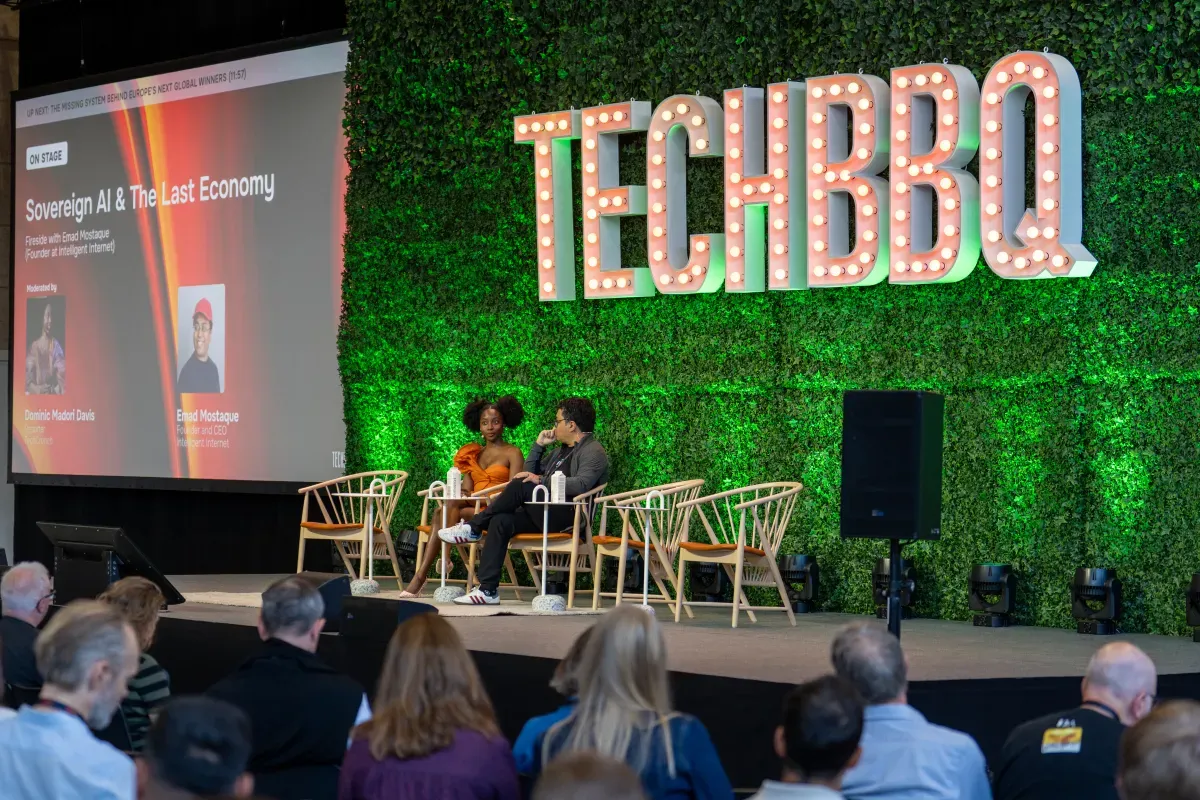
At the annual Nordic TechBBQ conference, European AI leaders from investing, founding, and operating roles converged on a single theme: preserving human agency over increasingly autonomous systems. The outcome signals a shift toward governance-first AI strategies that executives must embed now to avoid regulatory and reputational whiplash.
COPENHAGEN - The question hanging over TechBBQ this year wasn't about model performance or funding rounds. It was simpler and more unsettling: who's actually in control? Across panels, keynotes, and hallway debates, investors, founders, and operators from across Europe kept circling back to the same tension - AI is moving faster than the mechanisms meant to keep it aligned with human intent. The annual Nordic tech gathering, held in the Danish capital, has become a bellwether for European AI sentiment, and this year's mood was less celebratory than soberly determined.
The conference's throughline was agency - not as a buzzword, but as a design principle. Attendees argued that the current trajectory of AI development, with its emphasis on autonomy and self-improvement, risks leaving humans as spectators rather than decision-makers. The stakes are concrete: from hiring algorithms that perpetuate bias to autonomous systems making high-stakes calls in logistics, finance, and healthcare, the gap between what AI can decide and what humans can oversee is widening. One operator put it bluntly during a fireside chat: "We're building systems that can act faster than we can react, and that's a liability, not a feature." The comment drew nods, not pushback.
Europe's regulatory backdrop sharpened the urgency. The EU AI Act, already in force in stages, mandates human oversight for high-risk systems - but enforcement is still catching up with deployment. TechBBQ attendees saw this as both a constraint and an opportunity. Startups that bake agency into their products from day one, they argued, will have a compliance advantage that turns into a market edge. Investors echoed that sentiment, noting that due diligence now includes questions about human-in-the-loop mechanisms, explainability, and escalation paths - not just accuracy metrics.
The conversation also turned to the cultural dimension. European AI leaders, unlike their counterparts in Silicon Valley or Shenzhen, tend to prioritize societal trust over raw speed. That difference, several speakers suggested, is becoming a competitive differentiator. As global scrutiny of AI's unintended consequences grows - from deepfakes to autonomous decision-making in public services - the European approach of embedding human agency into the architecture itself could become the export that matters most. One investor framed it as a shift from "AI-first" to "human-first AI," a phrase that circulated widely on the conference floor.
But agency isn't just a philosophical ideal; it's an operational imperative. Operators shared case studies of near-misses where automated systems made decisions that required human intervention to correct - sometimes at significant cost. The lesson: oversight can't be an afterthought bolted onto a finished model. It has to be designed into the data pipeline, the model's guardrails, and the deployment workflow. That means new roles, new metrics, and new accountability structures. Companies that treat agency as a feature, not a constraint, are already seeing better adoption rates and fewer regulatory headaches.
The investment angle was equally pragmatic. Venture funds at TechBBQ reported that they're now weighting governance capabilities as heavily as technical performance when evaluating AI startups. A founder with a robust human-oversight framework can close rounds faster than one with a marginally better benchmark score but no clear answer to "what happens when it fails?" This is a reversal from even two years ago, when speed-to-market dominated every term sheet. The shift reflects a maturing market where trust is the scarcest resource.
For executives not in the room, the message from Copenhagen is clear: the window to build agency into your AI strategy is closing. Regulators are moving, customers are asking harder questions, and competitors are using governance as a wedge. The companies that thrive in the next decade won't be those with the most powerful models, but those with the clearest answers on who remains in control. TechBBQ didn't resolve the paradox - it sharpened it. And that, arguably, was the point.
As the conference wound down, the prevailing sentiment wasn't fear but resolve. Europe's AI community is choosing to lead on the question others are avoiding. The path forward isn't slowing innovation; it's steering it with intentionality. For anyone building, funding, or deploying AI, the takeaway is unambiguous: agency isn't a constraint on progress - it's the foundation for sustainable scale.
This story's Key Insights and Take-aways are locked.
Create a free account to unlock Executive Actions for one credit.
Register to UnlockAlways free for Executives Club members. Join the Club
More in Technology

Google quietly links your phone number to every Android account on your SIM
Adding a SIM now ties your phone number to all Google accounts - and future accounts inherit it. Here's the security and privacy stakes.

Hijacker AI 'Skynet mode' runs 100,000 attack steps against exposed models
Symantec caught a criminal AI agent that borrows other models, steals data, and mines crypto; the only relief is no confirmed victims yet.

Nvidia's AI-financier shift faces its first big test as neoclouds stumble
A rout in neocloud stocks is forcing investors to weigh Nvidia's hidden exposure as both supplier and lender to the AI buildout.