
Atlassian's Cannon-Brookes: AI agents need name tags, and a human to answer for mistakes
The Atlassian cofounder is rolling out a protocol that makes AI agents visible, governed team members, and keeps accountability with the human user.
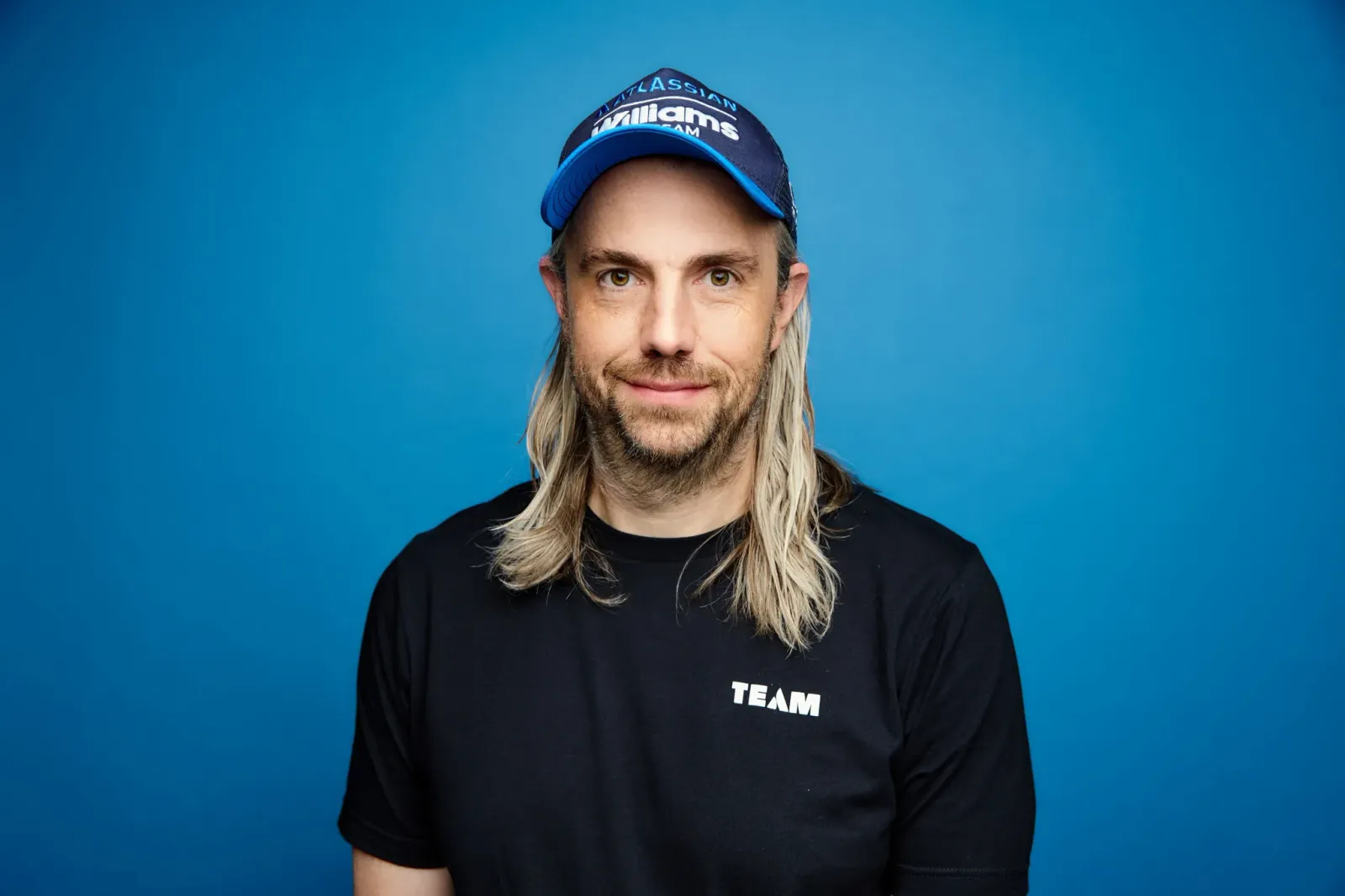
Atlassian cofounder Mike Cannon-Brookes is pushing AI agents into the workplace with a new 'Agentic Multiplayer Protocol' that gives every bot a visible profile and ties mistakes to a human owner. For decision-makers, the move sets a governance standard that could determine whether AI adoption in the enterprise stays safe, compliant, and actually useful.
Atlassian cofounder Mike Cannon-Brookes has a simple answer for the office excuse 'the AI did it': no, it didn't. Speaking to Fortune on the sidelines of the Singapore Grand Prix, Cannon-Brookes insisted accountability has to sit with the end user, not the model. 'That's ChatGPT on behalf of Mike. Like, that's Mike using ChatGPT. It's not ChatGPT doing it,' he said. 'The accountability is with Mike. It has to be with the end user, ultimately.'
To make that real, Atlassian on Oct. 6 rolled out its Agentic Multiplayer Protocol, a control plane across its platforms that turns AI agents into visible, governed members of work teams with distinct profiles and owner attribution. In practice, an agent's edits show up in a document's history the same way a colleague's edits would. 'You have to be able to see who did what when,' Cannon-Brookes said. If a program says Codex made an edit, he pushed back: 'No, it didn't - someone did that.'
The timing matters. A wave of personal AI agents, including Meta's Muse and OpenAI's Dots, is hitting the market. Cannon-Brookes sees those products as 'taking an agentic harness and change the interact to make it invisible, as to what it's doing.' Agents are performing complex operations behind the scenes even when the user's request is simple. That might be fine for a consumer tool, but not in a workplace where permissions, security, and compliance are in play. 'If you're making something on Muse, it's probably just for you,' he said. 'In a workplace, there's a lot of conversation around permissions, security, and compliance.'
The risk is concrete. Cannon-Brookes cited an employee using internal company documents to create a visual chart. If that chart is based on privileged documents, sending it to anyone outside the right audience could leak information. He warned that you have to be very careful about who sees it, because you don't want to leak information.
The deeper problem, in Cannon-Brookes' view, is the interface. 'AI can do amazing, crazily super-powerful things. Most people do very basic things because of the interface,' he said. 'The experience is very poor.' He compared it to Microsoft Word: if the toolbar disappeared and only keyboard shortcuts remained, everyone's documents would end up looking like plain text. That's why Atlassian launched Rovo in 2024, an in-house AI assistant designed to connect people, projects, code, and company knowledge across Atlassian and external platforms. 'We've had to invent a lot of new foundational design patterns that feel familiar,' Cannon-Brookes said, pointing to features that let users link Atlassian accounts with third-party tools like Figma, Codex, or Claude and toggle between them.
Atlassian's push comes as the company's financials show why AI governance is now a board-level issue. The Sydney-based company generated $1.8 billion in revenue in the quarter ended June 30, beating analysts' average estimate of $1.7 billion, according to Reuters. But in March, Atlassian cut its workforce by 10%, roughly 1,600 employees, as part of a pivot to AI and enterprise sales. Cannon-Brookes also framed the moment in national terms: Australia is roughly 1% of the world's GDP, and he wants it to be 1% of the world's technology production. 'Australia has an amazing technology ecosystem,' he said. 'We're not going to build it all since we're quite a small country... but we're good at taking operating systems, databases and AI models, and applying them to problems to create economic value and GDP.'
Cannon-Brookes shrugged off concerns that distance leaves Australian tech firms cut off from U.S. investors and customers. 'In most Australian technology companies, you're pretty global pretty fast,' he said. 'Our first customer was in England, and our second customer was in Sweden... We don't have much of a consumptive market in Australia so we're big exporters and travelers, but also big makers of things since we have lots of great natural resources.' Atlassian opened its first U.S. office in 2005, listed on NASDAQ in 2015, and today has employees in 49 of the 50 U.S. states. The lone holdout? 'I forget. I think it's like Idaho or something,' Cannon-Brookes said. 'I should keep updating that stat.'
For executives, the takeaway is that AI adoption is no longer just a model problem. The hardest part is the interface and the accountability, as Cannon-Brookes put it. Companies that deploy agents without clear ownership, audit trails, and permission controls are inviting the exact kind of leak or compliance failure that makes boards nervous. Atlassian's protocol is an early attempt to build those guardrails into the workflow itself, and rivals will have to answer the same question: when an agent acts, who is on the hook?
This story's Key Insights and Take-aways are locked.
Create a free account to unlock Executive Actions for one credit.
Register to UnlockAlways free for Executives Club members. Join the Club
More in Business

Elon Musk unveils a flying car, and SpaceX helped build it
The Tesla CEO's showcase at a SpaceX facility signals a future where road and rocket engineering converge.

Apple's $2,000 iPhone Duo opens preorders, taking on Samsung and Google
Apple's first foldable hits the market at a premium price, reshaping a category Samsung and Google have led.

Pope Leo XIV, first American pope, diagnosed with lung cancer
The 71-year-old Chicago-born pontiff underwent successful surgery on his right lung, and his diagnosis raises new questions about his AI-focused papacy and the Vatican's future.