
Bebe Rexha blocks Olivia Rodrigo rivalry after “Olivia outsold u” comparison
Rexha says she is happy for Rodrigo and doubles down on celebrating women instead of turning pop into a cage match.
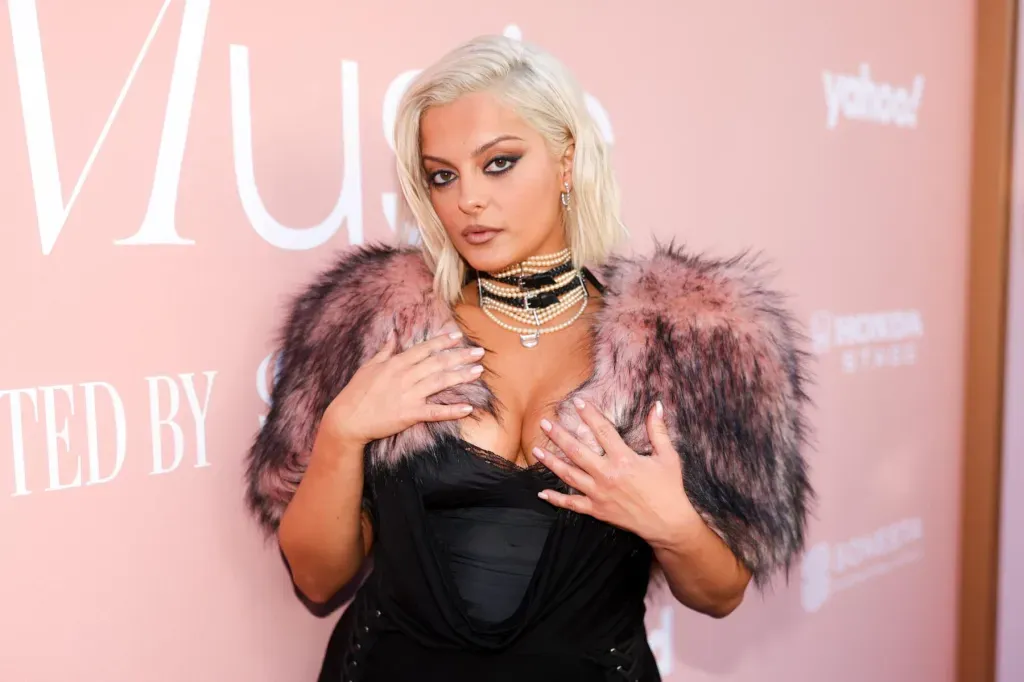
Bebe Rexha rejected a social media comparison between her and Olivia Rodrigo, replying, “I’m actually happy for her.” The exchange followed Rexha’s tribute to late Oliver Tree after they recorded a song for her Dirty Blonde album that did not make the final tracklist.
Bebe Rexha is having none of the “women in pop as competitors” storyline. After a social media user wrote “Olivia outsold u btw” in a thread around Rexha, the singer responded: “I’m actually happy for her. No need to put women against each other.” She then pointed people back to her own work, adding “Stream DIRTY BLONDE for women empowerment. Livies X Rexhars.”
To understand why that mattered, you have to rewind a bit. Rexha had just shared a heartfelt tribute to late artist Oliver Tree on social media, saying they recorded a song together for her latest album, Dirty Blonde, but it ultimately did not make the final tracklist. Her post read: “I’m in shock. I was in the middle of my cd signing in nyc when I found the news of Oliver tree. I can’t believe it,” followed by a description of Tree as “so smart. Passionate. Talented. Kind,” and the message, “We recorded a record together to be on dirty blonde.” Then, after the Oliver Tree tribute, the conversation veered into sales comparison mode.
That turn is not an accident. In pop, commercial metrics become a shorthand for legitimacy fast. The commenter used chart and streaming language as a social cudgel, and it landed in the exact spot where the industry loves to create tension, the perceived ladder where women are always one rank apart. Rexha’s reply is notable because it does not dispute the existence of sales gaps. It rejects the premise that gaps need to become personal rivalry. “I’m actually happy for her” is a direct counter to the audience behavior that thrives on zero-sum framing.
The stakes here are bigger than fandoms arguing in replies. The article highlights that Olivia Rodrigo’s third studio album, You Seem Pretty Sad for a Girl So in Love, debuted at No. 1 on the Billboard 200 and shattered streaming records. That context explains why people reach for “outsold” as a blunt instrument. When an artist’s mainstream performance is both visible and record-setting, the temptation is to treat commercial outcomes as a scoreboard for everyone in the same broad genre, regardless of their different creative lanes.
Rexha is not new to pushing back against the pressures that come with that environment. Last year, she publicly criticized former collaborator G-Eazy, with whom she scored a major hit on 2015’s “Me, Myself & I.” In that earlier post, Rexha wrote: “I have been UNDERMINED. I’ve been so quiet for the longest time.” She added, “I haven’t seen the signs even though people constantly are bringing them up and they have been SO OBVIOUS,” and she claimed that “when I have spoken up I’ve been silence and PUNISHED by this industry.” She said, “Things must change or I’m telling ALL of my truths. The good the bad and the ugly. (sic)”
Notably, she later removed the post and added: “Someone from my team had me take down my Instagram Story,” she explained. That sequence matters because it shows the tightrope artists often walk between speaking publicly and managing the fallout that follows. Even when artists raise serious concerns about the industry, the internet can respond by turning the message into a spectacle or a debate about who is to blame. Rexha’s current response, by contrast, is a form of boundary-setting. She refuses to participate in the rivalry game even when offered an easy opening.
From an industry perspective, this kind of message has second-order effects. Social platforms now function like informal brand committees, where the most viral reaction sets the tone for what fans and newcomers believe the artist stands for. When Rexha publicly discourages pitting women against each other and frames the moment as encouragement, it nudges audience expectations. It also reduces the chance that future interactions are hijacked into “compare and conquer” content cycles.
There is also a business reality underneath the vibe. When female artists are treated as competitors by default, it can distort how labels, marketers, and media outlets frame releases, collaborations, and narratives. That can influence everything from playlist pitching angles to how press interviews are structured. Rexha’s refusal to play along does not change the underlying market math, but it changes the story people tell around it, and those stories influence engagement, which is currency in modern music distribution.
For peers and decision-makers, the strategic takeaway is clear: Rexha’s move is a reminder that audience incentives often reward conflict, but artist incentives might require something else. She is using her platform to steer attention back to her work and the broader idea of women empowerment. And in a world where sales comparisons can quickly become a trap, her reply is a clean, public exit from the rivalry frame, with her own album serving as the alternative endpoint.
This story's Key Insights and Take-aways are locked.
Create a free account to unlock Executive Actions for one credit.
Register to UnlockAlways free for Executives Club members. Join the Club
More in Entertainment
Viu CEO Janice Lee: nearly 20% of long-form users watch microdrama
The format launched months ago, and Viu is building a broader branded and co-production plan around it.
Ransom Canyon returns next month as Netflix fills the Taylor Sheridan Dutton Ranch gap
Netflix brings Ransom Canyon back for Season 2 next month, staking streaming-week dominance against Sheridan’s Yellowstone universe.

Steam drops four paid games to free for 24 hours starting June 20
Management sim, grand strategy, sports, and mech FPS go free this weekend, so plan installs and playtime like a release week.