
Beijing data shows Chinese carriers hold 66.5% of post-Covid international routes
The market went from a 50:50 split to two-thirds Chinese, reshaping pricing, access, and leverage for foreign airlines.
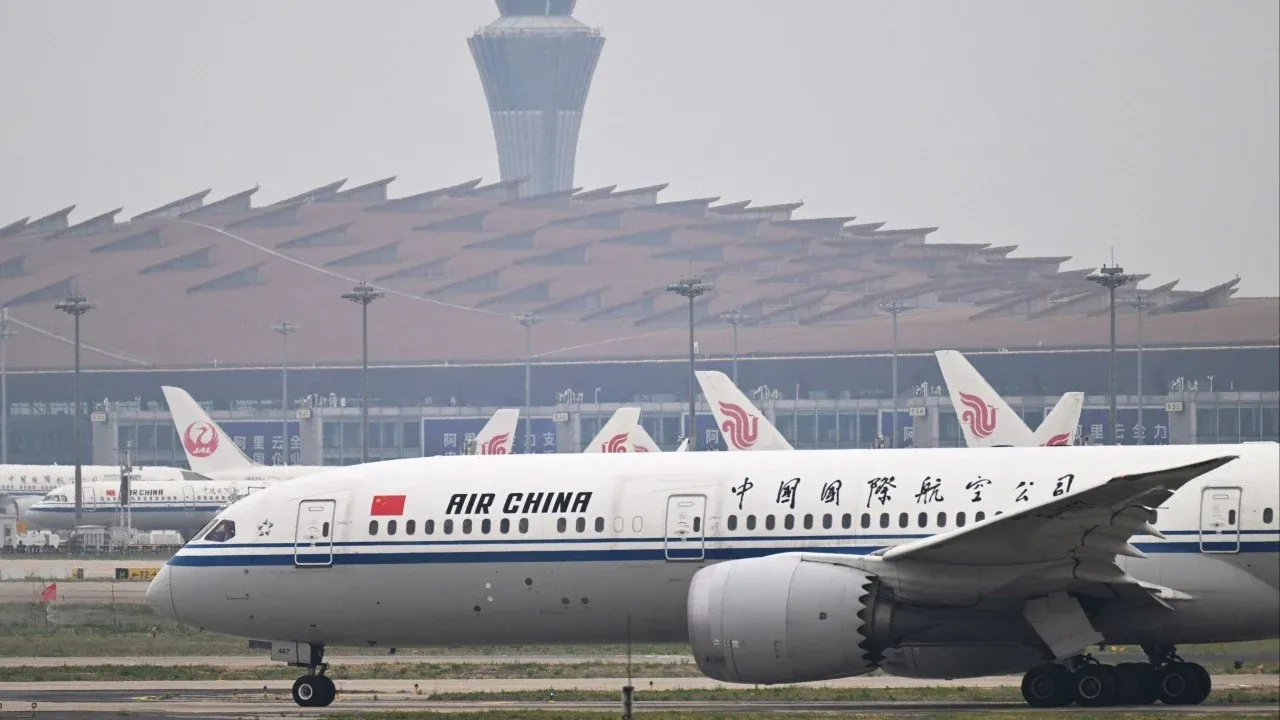
At an industry summit in Beijing on Friday, IBA Group said Chinese airlines now control 66.5% of international air routes linking China and overseas cities. That compares with 33.5% held by foreign airlines, reversing the pre-pandemic 50:50 split.
Chinese carriers have seized a growing share of the international air travel market on routes connecting Chinese and overseas cities since the Covid-19 pandemic. At an industry summit in Beijing on Friday, IBA Group, a UK-based aviation intelligence company, said local carriers now hold a 66.5% market share, while foreign airlines hold 33.5%. In plain terms, the comeback is not just happening. It is leaning hard toward Chinese operators.
The key detail is the reversal from before the pandemic. The source says the split used to be 50:50 between domestic and foreign carriers. Post-Covid, it has shifted to roughly a two-thirds versus one-third arrangement. That is the type of number executives build business cases around: it signals who passengers are being carried by, who has network density on the most relevant corridors, and who can translate route share into pricing power.
So how does a 50:50 world turn into a 66.5% one? The source frames it as an expanding slice since Covid-19, which implies the recovery phase did not simply restore the old balance. When markets reopen, carriers do not just “restart.” They rebalance schedules, aircraft assignments, crew planning, and sales focus. If one side captures more demand early, it often attracts more of the next wave too, because better frequencies and route reliability can pull passenger preference. Even without adding any new numbers, the direction of change matters: a swing of 16.5 percentage points in route market share is large enough to affect commercial strategy.
This is where executives should pay attention. Route market share is not vanity data. It affects commercial leverage in multiple ways. First, airlines and route partners tend to build operations around where the volume is. Higher share can support more frequent services, which then helps defend that share. Second, route control often changes how carriers negotiate with airports, ground handlers, and travel distributors, because counterparties want traffic. Third, when one group becomes dominant on key corridors, it can shape competitive behavior. The source does not mention pricing or discounts, but market-share shifts typically show up in commercial tactics, load management, and capacity planning.
There is also the boardroom reality that foreign airlines face. A one-third share can still be profitable, but it generally comes with less room to absorb mistakes. If Chinese carriers are taking two-thirds, foreign carriers may have to work harder for growth, or accept a slower ramp on the corridors where Chinese operators are strongest. That means more pressure on fleet utilization and route selection. It also makes network strategy more urgent: do you chase share aggressively, or concentrate on specific premium niches and geographic focuses?
For Chinese carriers and their stakeholders, the implication cuts both ways. A 66.5% position creates momentum, but it also increases scrutiny. Dominance can draw attention from regulators and policymakers, especially in markets where aviation is tied to broader economic and strategic priorities. Even the fact pattern in the source is “since the Covid-19 pandemic,” meaning the shift is not a one-off blip. It is a trend presented as current: Chinese carriers are holding the majority share now, as measured by IBA Group at a summit in Beijing.
For investors and strategic partners, the signal is that route share is a moving asset, not a static feature of the industry. When executives plan capital, they often consider which players are likely to maintain demand capture as travel normalizes. The source gives the direction and the numbers: Chinese carriers at 66.5% compared with foreign airlines at 33.5%. That makes route access and the ability to sustain frequencies part of the underwriting logic, not just an operational detail.
Ultimately, this is a story about who controls the international map after the pandemic. The source says the pre-pandemic world was a 50:50 split. Now, according to IBA Group, Chinese carriers are at 66.5% and foreign carriers are at 33.5% on routes connecting Chinese and overseas cities. For airline executives, that raises immediate strategic stakes: foreign carriers must decide how to respond to a structurally changed market, while Chinese carriers must decide how to convert share into durable advantage without triggering counter-moves. For decision-makers across the aviation ecosystem, the takeaway is simple and sharp: the post-Covid network is not back to normal. It has been reallocated.
This story's Key Insights and Take-aways are locked.
Create a free account to unlock Executive Actions for one credit.
Register to UnlockAlways free for Executives Club members. Join the Club
More in Business

Anthropic’s Levant Alpöge cracks the Jacobian conjecture after 87 years
A Harvard valedictorian used Claude to hit a 1939 breakthrough, but the missing “why” is the real problem.

Uber buys Delivery Hero for nearly $15B, vaulting to top food delivery outside China
The deal doubles Uber's dual-services footprint and pushes a ride-and-eats bundling play into 50 more markets.

Epic and Google drop settlement bid, forcing rival Android app stores by July 22
Google told the court it is ready to carry third-party app stores starting Wednesday, July 22.