
Binance freezes $3B of record $6.3B hack, but $3.3B is already gone
The world's largest crypto exchange halted all withdrawals after a suspected North Korean heist, and analysts say most of the stolen funds are already beyond reach.

Binance suspended all withdrawals after a hack with an estimated $6.3 billion impact, freezing about $3 billion in stablecoins. Elliptic says the attacker moved $3.3 billion into unfreezable assets, making this the largest heist on record and a test of crypto's crisis response.
Binance, the world's largest cryptocurrency exchange, has suspended all withdrawals after suffering what appears to be the biggest heist in history. The exchange puts the estimated total impact at about $6.3 billion and says it has frozen around $3 billion of affected assets, mainly stablecoins that act as cash for the crypto market. But blockchain intelligence firm Elliptic calculates that the attacker changed roughly $3.3 billion into digital assets that cannot be frozen, and is now working to cash those out as traditional currency.
That $3.3 billion gap is the story. Binance's freeze is a circuit-breaker, but it only works when the stolen assets sit in instruments that issuers or exchanges can seize. Stablecoins, which are issued by centralized companies, can be blacklisted and frozen. Other cryptocurrencies, including those Elliptic says the attacker converted into, are far harder to pin down. So while Binance scrambles to contain the damage, the attacker is already trying to move the unfreezable portion into the traditional financial system.
The scale is unprecedented. The exchange itself said this appears to be the biggest heist in history, and the numbers dwarf the major exchange attacks of the past decade, which have often been measured in the hundreds of millions. A single theft of this size is a stark reminder of how much value now sits on centralized platforms, and how attractive those pools of customer funds have become to sophisticated, state-linked adversaries. For Binance, the stakes are existential: it must prove it can protect user assets while also explaining why legitimate customers cannot access their money.
The suspension of withdrawals is the emergency response. It gives blockchain analysts and law enforcement time to trace the flow of funds, but it also locks out everyday users and corporate treasurers who rely on Binance for liquidity. For any business holding crypto on an exchange, the immediate lesson is that custody risk is not abstract. A single security failure can tie up working capital overnight, forcing companies to explain to their own boards why a chunk of their balance sheet is suddenly inaccessible.
The attack also lands at a sensitive moment for the crypto industry. Exchanges have spent years courting institutional investors, building compliance teams, and arguing that digital assets are ready for prime time. A heist of this magnitude, linked to North Korea, undercuts that narrative and gives regulators a vivid example of the risks inherent in centralized custody. The freeze itself will likely become a case study in how exchanges handle crisis, from customer communication to the mechanics of asset recovery.
For the broader ecosystem, the event highlights the asymmetry of crypto heists. Stablecoins, despite their branding, are ultimately controlled by their issuers, who can freeze addresses with a command. Native blockchain assets like Bitcoin and Ether offer no such kill switch. That is why Elliptic's estimate matters: the portion of the stolen funds that was converted into unfreezable assets is effectively out of reach, barring a miracle in tracing and cooperation with exchanges where the attacker tries to cash out.
For executives watching from the sidelines, the takeaway is clear. The infrastructure that makes crypto attractive, speed, pseudonymity, and irreversibility, is the same infrastructure that makes theft so damaging when it happens. The Binance heist is not just a story about one exchange. It is a stress test of whether the industry can handle a loss that would bankrupt a traditional financial institution, and a reminder that in crypto, the backstop is often a server-side freeze that only works if you catch the thief before they run.
This story's Key Insights and Take-aways are locked.
Create a free account to unlock Executive Actions for one credit.
Register to UnlockAlways free for Executives Club members. Join the Club
More in Business
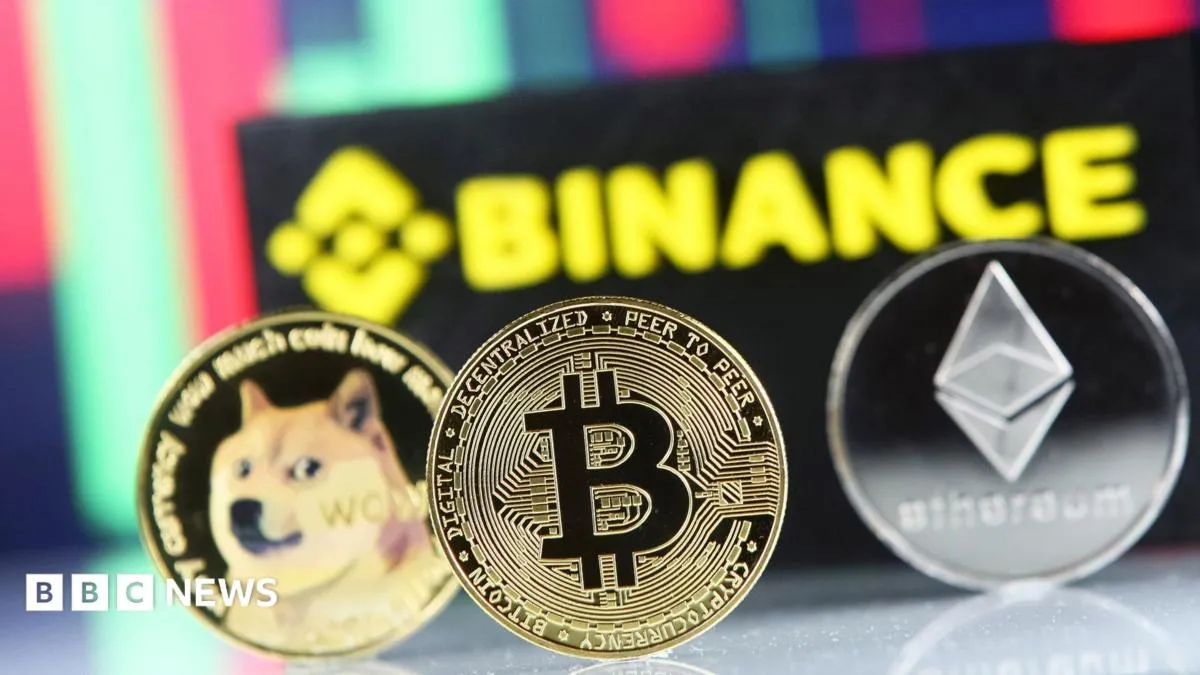
Binance scrambles to claw back $6.3B stolen in North Korea-linked hack
The world's largest crypto exchange faces the biggest heist on record, and the recovery effort will test the limits of blockchain forensics.
North Korea's TraderTraitor unit blamed for Binance's record $6.3bn heist
The largest crypto theft on record has rattled markets, slashed billions from token values, and put Binance's security revamp under the spotlight.

Binance probes $6.3B hack, freezes $3B; Polymarket halts trades
Two major trading platforms reported separate security incidents on Thursday, with billions frozen and user funds on the line.