
Blair Partnership wins exclusive global role to revive The Wombles franchise
A consolidated IP setup and a new exclusive representative point to fresh movies, TV series, and broader expansion plans.
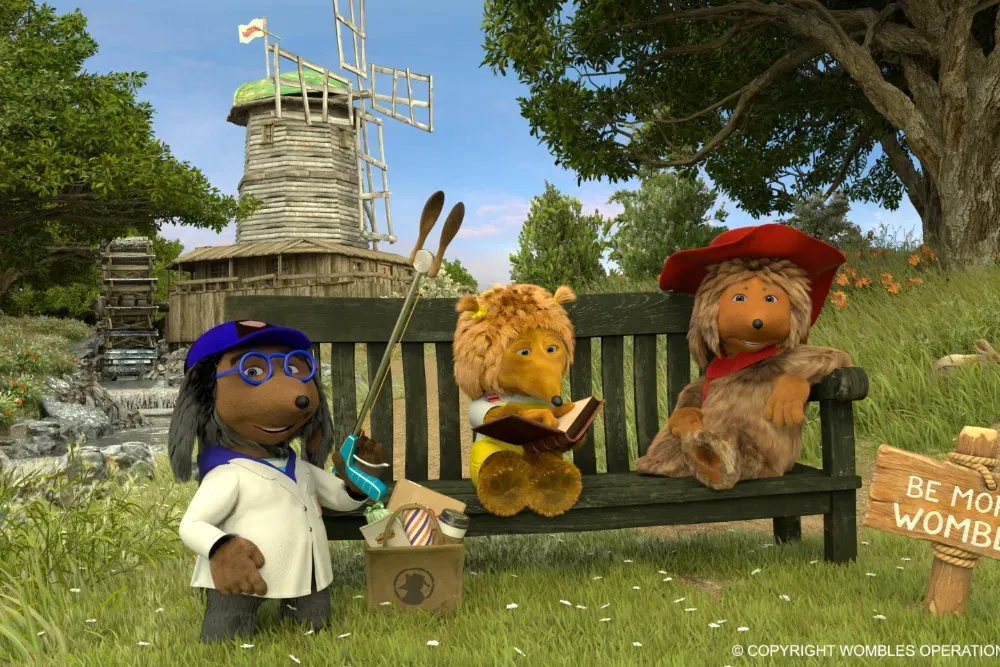
The Blair Partnership has been appointed as The Wombles' exclusive global representative as the brand’s intellectual property rights are consolidated. The company will develop new movies, TV series, and more tied to the beloved 1960s characters created by Elizabeth Beresford.
The Blair Partnership is set to revive The Wombles franchise after its appointment as the characters' exclusive global representative, with the brand’s intellectual property rights consolidated behind a cleaner, more controlled ownership structure. In practical terms: if you are a rights holder, studio, streamer, or distributor, this is the kind of consolidation that reduces friction. It can also signal a more deliberate push toward greenlighting and scaling new projects, because fewer entities tend to mean fewer decision-making bottlenecks.
Variety reports the deal in the context of a full franchise refresh: The Wombles, created by Elizabeth Beresford in the 1960s, are described as fictional furry critters with an eco-driven mission who live in burrows. The franchise is “beloved” in Britain, and now the next phase is being structured around what decision-makers care about most. Who owns the IP, who controls licensing, and who can commit to development across formats without getting stuck in rights negotiations.
From a boardroom perspective, this matters because entertainment franchises are essentially an asset class with a complicated balance sheet. You can have cultural affection, but without clear IP control, you cannot reliably turn that affection into financing, production timelines, or global distribution. Consolidating the brand’s intellectual property rights is the boring part that usually decides whether the exciting part happens. It is the difference between “maybe someday” development and a company that can take a plan to partners and say, effectively, “Yes, we can license this. Yes, we can launch that.”
The appointment of The Blair Partnership as exclusive global representative adds another layer: representation is not just a title, it is a coordination engine. An “exclusive global representative” role typically positions one team as the single front door for international conversations. That can accelerate deal cycles, especially across territories where local partners want a straightforward pathway for licensing and production. For studios and platforms, a single representative can mean fewer parallel negotiations, less uncertainty, and a clearer view of how the brand will be rolled out in different markets.
Variety’s exclusive also frames the revival in terms of outputs, not vibes. The Blair Partnership will “develop new movies, TV series and more” for The Wombles. That signals an ambition to treat the franchise as a multi-platform system, where characters and story worlds can be monetized across screens and formats. In the current media environment, multi-format development can be a hedge against volatility. If one format underperforms, other formats can still carry the brand forward, especially when the characters are already established and recognizable.
There is also a distribution and regulatory backdrop hiding in plain sight. Entertainment IP rights are often subject to jurisdictional differences: contracts, licensing structures, and enforcement norms can vary across countries. While the source does not detail regulatory steps, the emphasis on consolidated IP rights and an exclusive global representative implicitly reduces the administrative and legal complexity that can otherwise slow international launches. For executives, that is not just legal housekeeping. It can be the difference between launching during a favorable programming window and missing it.
For Elizabeth Beresford’s original creation from the 1960s, the revival path is telling. The Wombles were built around an eco-driven mission, which, while not quantified in the source, is exactly the kind of theme that tends to travel across generations and geographies. When a franchise returns, the question is usually whether it can preserve what made it lovable while updating packaging for new audiences. The development push described by Variety suggests the franchise will be reintroduced with enough structure to support multiple new productions, rather than a one-off nostalgia play.
The second-order implication for media executives is straightforward: deals like this can reshape who gets to steer the roadmap. If The Blair Partnership is positioned as the exclusive global representative, partners that want The Wombles in their lineup will likely need to work through that channel. That changes bargaining dynamics and could influence which producers get attached, how quickly projects move from development to production, and how licensing terms get negotiated across regions.
For boards evaluating entertainment strategy, The Wombles revival is a case study in franchise modernization through IP control. Cultural recognition is the starting point, but operational clarity is what turns recognition into capital-efficient expansion. The strategic stake is simple: as franchises globalize, the teams who can consolidate rights and run global representation effectively are the ones best positioned to convert fandom into scalable content pipelines.
This story's Key Insights and Take-aways are locked.
Create a free account to unlock Executive Actions for one credit.
Register to UnlockAlways free for Executives Club members. Join the Club
More in Entertainment

Commodore’s Christian Simpson restarts the retro PC brand, then launches flip phones
After reviving the Commodore 64 with modern tweaks, Commodore is taking the retro look into flip-phone territory.

Asia Argento wins Locarno’s Life Achievement Award, praised by Giona A. Nazzaro
The Locarno festival honors Asia Argento with a Life Achievement Award, spotlighting her film career risks and reinvention.

Barcelona passes Rashford option at £26m, leaving England star’s next move wide open
The Catalan club declined the buy option for Marcus Rashford at £26m, and now everyone has to guess the playbook.