
Commodore’s Christian Simpson restarts the retro PC brand, then launches flip phones
After reviving the Commodore 64 with modern tweaks, Commodore is taking the retro look into flip-phone territory.
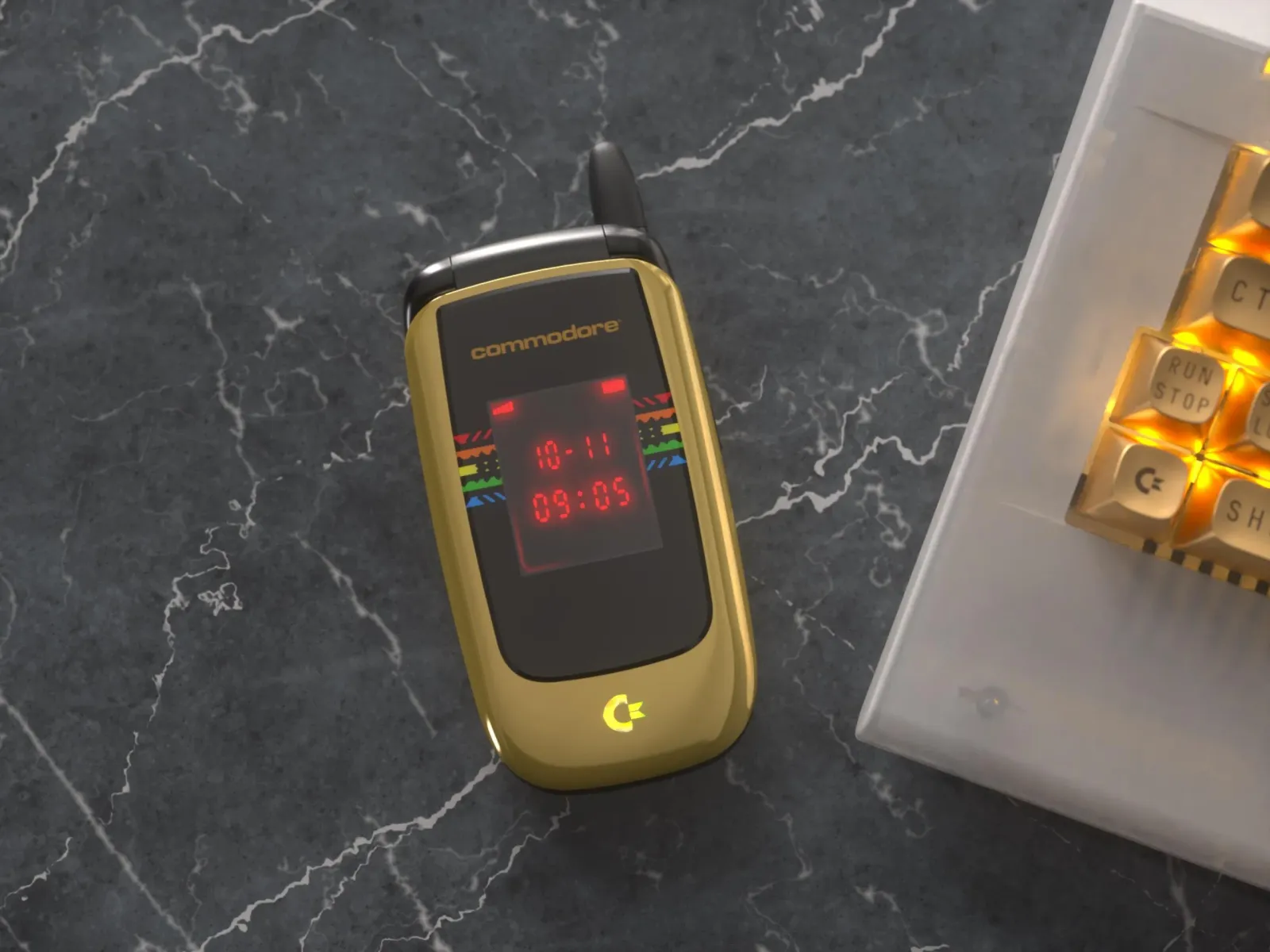
Christian Simpson, a retro gaming YouTuber also known as Peri Fractic, bought the remains of Commodore in 2025 and restarted product development in the mid-1990s. He and his team now sell a modern Commodore 64, and the next move is extending that retro identity into flip phones.
Christian Simpson, the retro gaming YouTuber also known as Peri Fractic, did not just resurrect an old tech brand. In 2025, he bought the remains of Commodore, then decided to pick up where the original Commodore left off by beginning product development in the mid-1990s. The result is a Commodore 64 that looks like the 1982 original, while quietly updating it with features the original never had. Commodore says it has sold 30,000 of these since last… according to the story, the sales figure is part of the case that the nostalgia play is not just a gimmick.
So when you hear “Commodore is getting into flip phones,” the key question for decision-makers is not whether the look is charming. It is whether the brand engine that worked for a modern Commodore 64 can transfer to a different device category where user expectations, supply chains, and regulatory realities are very different. The early answer, at least from the way Commodore is positioned in the story, is that the company believes the retro identity is the product, and the hardware is the delivery system.
Zoom out for a second. Vintage computing brands are not rare, but shipping a credible “new” version of a classic can be surprisingly hard. You are juggling design authenticity, modern usability, and something less glamorous but equally decisive: distribution and returns. The story frames the Commodore 64 as a “pure nostalgia play,” but it also says Commodore’s version is not a time capsule. It is “the spitting image” of the 1982 original, other than “the Wi-Fi connectivity, the USB ports, and a few other slightly modern niceties.” That is an important distinction for boards and investors. A brand can trade on the past, but the device still has to meet present-day expectations, or customers treat it like museum glass.
This matters even more when a company moves from one category to another. A Commodore 64 sits in the enthusiast and hobby ecosystem, where buyers may tolerate quirks if the core experience feels right. Flip phones, however, compete in a world where buyers are often optimizing for reliability, carrier compatibility, battery life, durability, and support. The story does not spell out the technical details of the flip phones, but it is enough to understand the executive challenge: if Commodore is serious, it needs a repeatable system for translating its visual identity into a product that works in the real world, not just in retro photos.
There is also the regulatory and compliance layer that comes with mobile devices. The story does not list specific regulators or certifications, but flip phones typically intersect with wireless spectrum rules, device certification processes, and safety and emissions standards that can vary by market. For a company rebooting from brand assets, that compliance work is rarely glamorous. It is also rarely optional. In practice, this is where small teams get slowed down or where costs spike. The second-order implication is that Commodore will need operational maturity beyond industrial design: vendor management, testing, and documentation become as central as the retro aesthetic.
Then there is the market story underneath the story. The Verge’s framing is upbeat and pointed, and the numbers it shares are part of the pitch: Commodore says it has sold 30,000 of the modern Commodore 64s since last… (the visible excerpt ends mid-sentence, but the point is that sales are meaningful). When a revived brand can show real unit movement, it changes how stakeholders interpret the next product cycle. It is one thing to say a retro product “might work.” It is another to have evidence that people are actually paying and that the company can keep shipping.
That is why the move to flip phones is more than a quirky headline. It is a test of strategic transfer. If Commodore can carry the retro brand feel across devices, it can potentially build a portfolio where each launch reinforces the others. If it cannot, the risk is also clear: nostalgia-based launches can be front-loaded, and the second wave is where skeptics decide whether the company is building a business or just chasing vibes.
For executives at companies watching this space, the takeaway is not “copy Commodore’s design.” It is that brand resurrection is becoming a competitive strategy, not a novelty. A creator-founder with enough credibility to buy an old company and restart development can still drive traction, if they pair aesthetics with modern necessities like Wi-Fi connectivity and USB ports. The bigger question for decision-makers is whether nostalgia can be operationalized. Commodore is now betting it can, and the flip-phone chapter will quickly reveal whether the bet holds beyond the keyboard and into the world of connected handhelds.
This story's Key Insights and Take-aways are locked.
Create a free account to unlock Executive Actions for one credit.
Register to UnlockAlways free for Executives Club members. Join the Club
More in Entertainment

Asia Argento wins Locarno’s Life Achievement Award, praised by Giona A. Nazzaro
The Locarno festival honors Asia Argento with a Life Achievement Award, spotlighting her film career risks and reinvention.
Blair Partnership wins exclusive global role to revive The Wombles franchise
A consolidated IP setup and a new exclusive representative point to fresh movies, TV series, and broader expansion plans.

Barcelona passes Rashford option at £26m, leaving England star’s next move wide open
The Catalan club declined the buy option for Marcus Rashford at £26m, and now everyone has to guess the playbook.