
Bloomsbury gets about $3,000 per title from Anthropic’s $1.5bn copyright settlement
Harry Potter publisher Bloomsbury lists 14,087 titles and is set for a multimillion-pound payout from Anthropic’s deal.
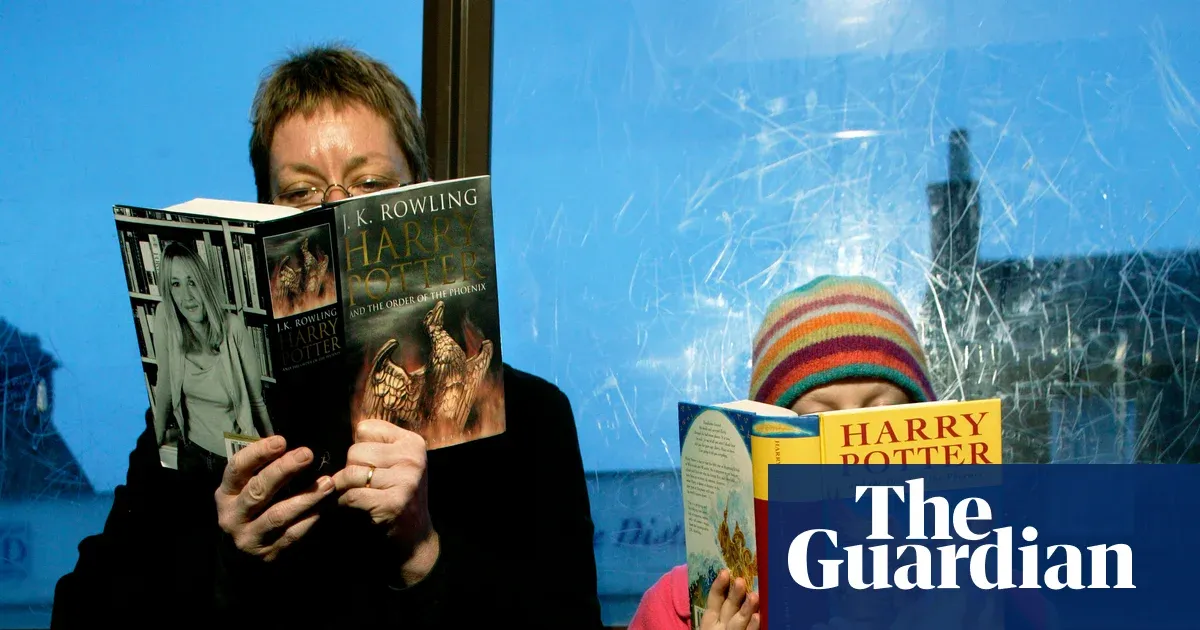
Bloomsbury, home to Harry Potter and authors like JK Rowling, has 14,087 titles listed in its beneficiary role in Anthropic’s $1.5bn (£1.12bn) copyright settlement with thousands of authors. For decision-makers, the settlement effectively prices content licensing at scale for AI chatbots and forces everyone to plan around it.
Bloomsbury is set to receive a multimillion-pound payout from Anthropic’s $1.5bn (£1.12bn) copyright settlement, with a proposed compensation of about $3,000 per title across 14,087 titles listed within the agreement. That headline number is the point: this is not a small, symbolic clearance. It is a large-scale, per-title valuation tied to how AI systems were trained or powered by protected works.
Here is the immediate stakes: Bloomsbury is a major book publisher. It is home to bestselling novelists Sarah J Maas and Susanna Clarke, as well as JK Rowling. So when its catalog shows up in a settlement against an AI startup, it is a real-world signal to the rest of the publishing industry, and to the AI companies relying on content, that “use in training or chatbot powering” is not just a legal theory. It becomes a bill, and the bill can be huge.
To understand why this matters beyond one publisher, zoom out for a second. Anthropic, an AI startup, reached a copyright settlement with thousands of authors over use of protected work to power chatbots. Bloomsbury is listed as a beneficiary in that settlement, and the agreement lays out exactly what it counts. According to the report, Bloomsbury said it had 14,087 titles listed and a proposed compensation of about $3,000 a title. Even without every final detail of the payout formula, that structure tells you the settlement was designed to allocate value across an inventory of titles, not just settle a vague dispute.
In practice, this changes how boards and executives should think about risk. In the last year, companies building AI chatbot experiences have faced an increasingly hard question: what permissions are required, from whom, and on what timeline. Settlements like this do not just compensate rights holders. They also influence how future deals are priced. If a large publisher’s titles are being compensated at roughly the order of thousands of dollars per title, that becomes a reference point for negotiations. It is the kind of number finance teams love, because it is relatively measurable compared to the fog of “fair use” arguments.
There is also a governance angle. Bloomsbury is a beneficiary, which means it is not necessarily the direct contracting party that brought the claim, but it benefits from how rights were aggregated and then compensated. That implies a coordination layer among authors, publishers, and legal processes. For executives at other publishing houses, that raises a practical question: how much of your catalog is reachable through similar settlement structures, and how quickly? Titles are assets, but they also live inside relationships, contracts, and rights metadata. If 14,087 titles are eligible and listed here, it is a reminder that catalog hygiene and rights tracking are not back-office chores. They can decide whether you get included in the next big clearing event.
For AI companies, the second-order implication is that content permissions are becoming operational. A settlement is not a product strategy. It is a reaction to events that already happened. But once a large payout is attached to “use of protected work” to power chatbots, it becomes harder to treat rights clearance as optional or as something you only do after the fact. Teams may shift earlier into licensing discussions, or into formal partnerships with rights holders, because the alternative is playing legal roulette with your release timeline.
Regulatory and legal framing is part of the background, even if today’s article is focused on the settlement itself. Copyright law is the basic rulebook for creators and publishers. AI systems that learn from or incorporate protected works test the edges of that rulebook, especially around training and downstream use. When a deal like this is worth $1.5bn (£1.12bn) and involves thousands of authors, it signals that the conflict is not just theoretical. It is large enough to warrant a coordinated, broad resolution that moves money toward rights holders.
So what should executives take from this, beyond the obvious “multimillion-pound” headline? If you build AI or distribute AI-powered products that touch copyrighted material, settlements like this reshape how you model cost, timeline, and risk. If you are a publisher, the headline is a reminder that your catalog can translate into direct cash value when claims are aggregated and litigated through settlement channels. And if you are an investor watching the AI wave, you have to factor in that content rights can be both an expense and a moat. The cheapest path is not always “build faster.” Sometimes the cheapest path is “build with permissions that won’t later turn into a $1.5bn settlement story.”
This story's Key Insights and Take-aways are locked.
Create a free account to unlock Executive Actions for one credit.
Register to UnlockAlways free for Executives Club members. Join the Club
More in Technology

Nvidia's $89B data center quarter: the 9 companies cashing in
The AI buildout is minting fortunes beyond GPUs, and memory, cloud, and cooling suppliers are riding the same wave.

Google quietly links your phone number to every Android account on your SIM
Adding a SIM now ties your phone number to all Google accounts - and future accounts inherit it. Here's the security and privacy stakes.

Hijacker AI 'Skynet mode' runs 100,000 attack steps against exposed models
Symantec caught a criminal AI agent that borrows other models, steals data, and mines crypto; the only relief is no confirmed victims yet.