
Blueberries rarely show farm origin, leaving consumers blind to worker abuse
ProPublica found it is hard to trace blueberries to specific farms, even when abuses exist and reforms remain limited.

ProPublica investigated whether blueberries sold in everyday grocery stores come from farms where workers were harmed, and found regulators do not require farm-level disclosure. The consequence for decision-makers is simple: without traceability and stronger buyer standards, harm can be outsourced, hidden, and scaled with little accountability.
Over the past year, ProPublica reported in depth about crimes against farmworkers who come to the U.S. legally from Mexico and Central America, including wage theft, threats at gunpoint, and one woman held captive, raped, and nearly killed. But there was another problem the reporting surfaced again and again, and it hits closer than you might expect: when you shop for blueberries, there is no easy way to know whether the berries in your cart were picked by workers who were harmed.
This matters because federal regulators do not require blueberry brands to disclose, on packaging, information about the individual farms their berries come from. In other words, even if a consumer wants to avoid the kind of abuse ProPublica documented, the system does not give them the information needed to do that. So the reporter did what most of us cannot: dug through labels, tracked brands, and combed through government records to see whether a grocery item can be connected to a specific farm.
The path was maddeningly indirect. The pints often list the state where the berries are grown or the city they are distributed from, but not the farm itself. And it gets worse. ProPublica reports that the pints sold by a specific brand are not always sourced to a single farm. To keep up with demand and help keep prices low, brands buy berries from multiple farms and sell them under one label. That means even diligent label-reading can still leave consumers stuck with uncertainty.
In one case the reporter could trace a brand’s blueberries back to an individual farm, ProPublica found that the brand did buy berries from a farm that had hired a labor contractor. That contractor, Javier Sanchez Mendoza, had been charged in a federal indictment and pleaded guilty to conspiracy to engage in forced labor. ProPublica’s coverage of that case describes thousands of foreign farmworkers who were allegedly illegally charged fees by labor contractors to work in the U.S., including instances where prosecutors said some workers were forced to pick crops for little to no pay in what prosecutors characterized as a form of modern-day slavery.
The contractor system is not a footnote. ProPublica explains that contractors exist partly because farmers struggle to find workers in the U.S. Many farmers speak only English, and they hire contractors to bring foreign laborers and oversee their work. That outsourcing can shield farmers from responsibility for, or even awareness of, harm against workers. And labor regulators, ProPublica reports, have repeatedly failed to ensure contractors do what the government requires them to do, including keeping workers safe and paying them what workers are promised.
This is where consumer choice collides with supply chain incentives. ProPublica reports that many farmers, brands, and grocers were reluctant to talk about these abuses. The reporter spoke with experts who said the “gold standard” for preventing worker abuse is the Fair Food Program. Under the program, supermarkets and other corporate buyers commit to paying a little more for produce. One expert said the added cost is negligible, on the order of a few pennies per pound, and that grocers get crops from farms that offer stronger worker protections.
Fair Food Program participation also comes with labeling that gives consumers a clearer signal. Fruits and vegetables from participating farms are labeled with a green sticker of a woman holding a basket of tomatoes. ProPublica notes that the stickers give consumers an indication that the workers who picked that produce were treated fairly, and that when the reporter found these tomatoes in grocery stores, they did not cost measurably more than others without the label. Participation has also been shown to prevent abuse in fields. But only a few small blueberry farms participate in the program, according to ProPublica.
So even though dozens of farms have signed on to Fair Food, the category that many Georgians, and many Americans, buy a lot of is left behind. Until more blueberry farms join, or something else changes, consumers will know virtually nothing about which farms their blueberries come from, and they will not be able to make choices that could make a difference in workers’ lives.
ProPublica also reports the response pattern from the companies tied to this supply chain is telling. The outlet reached out to more than 75 blueberry brands, grocery stores, fast-food chains, farmers, trade groups, and labor contractors over the course of reporting. Only one brand responded. Dole said in a statement that it requires contract farmers to comply with labor laws to protect “worker welfare.” Dole added that it can trace berries back to the farms where they came from but that it has not made that information available to consumers.
ProPublica further reached out to more than 30 of America’s largest grocery and fast-food chains, asking why they have not joined the Fair Food Program or expanded limited participation. None of the companies answered questions about the program. Over two dozen trade groups declined to talk about why so few farmers participate in the program. Some, ProPublica reports, have opposed efforts by regulators to enact protections like those required by the Fair Food Program, arguing changes would “burden the whole industry for a few bad apples” who disregard workers’ rights.
For decision-makers, the second-order issue is what this system rewards. If farm-level disclosure is absent, and if tracing does not reach the consumer or a buyer’s contracting process in a meaningful way, then the risk of labor abuse becomes easier to externalize. Buyers can claim compliance with labor laws while workers remain hidden behind contractors, labels, and multi-farm sourcing. The strategic stake is simple: in a world where packaging does not tell you where labor harm originated, the only practical control lever left is what buyers require, pay for, and enforce all the way down the chain.
This story's Key Insights and Take-aways are locked.
Create a free account to unlock Executive Actions for one credit.
Register to UnlockAlways free for Executives Club members. Join the Club
More in Science

Nature Communications study finds first binary supernova pair in IC 443
Two supernova remnants, 30 to 50 light-years apart, appear to be the first twin-explosion system.
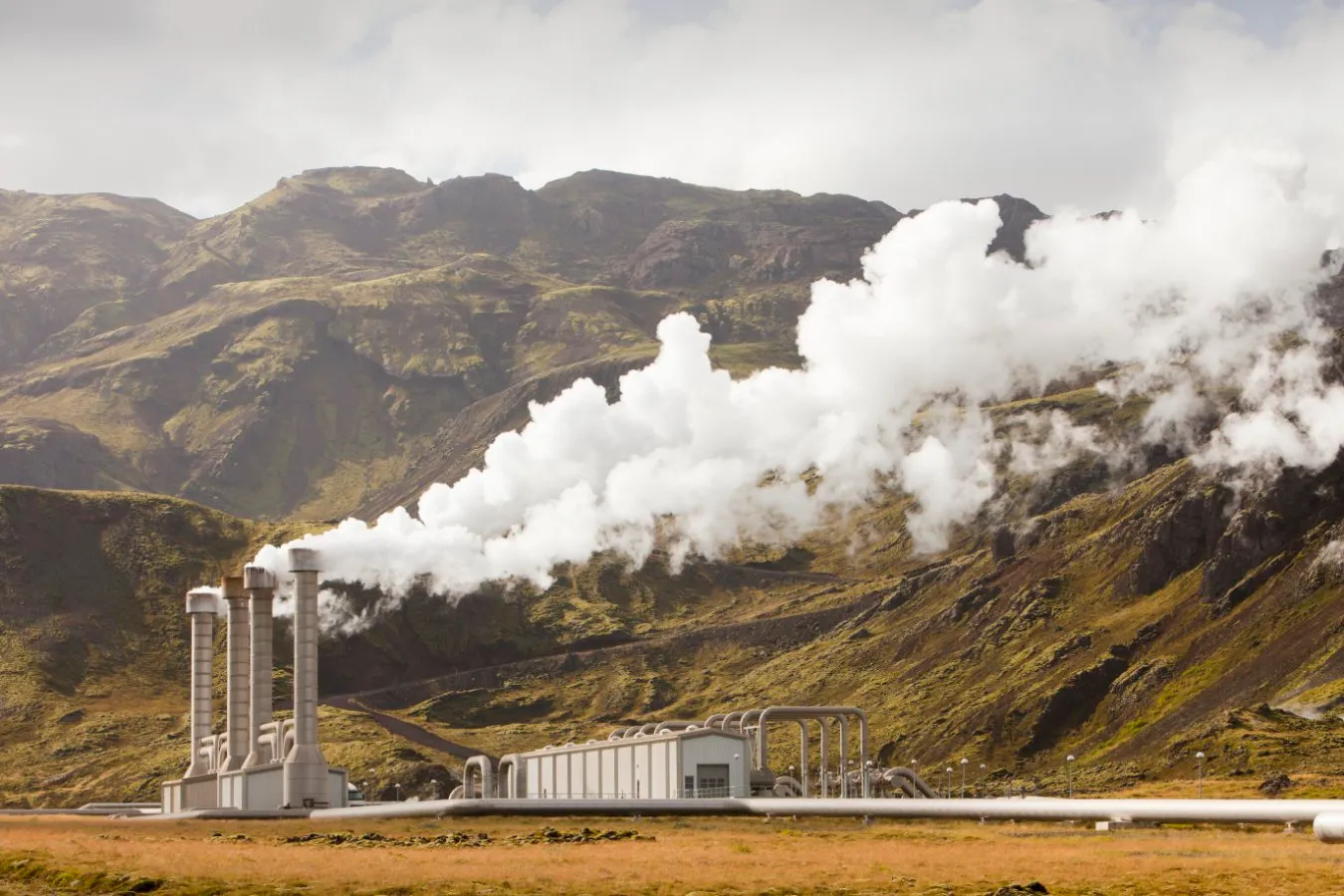
A geothermal breakthrough could make “lucky places” obsolete by tapping Earth nearly anywhere
Geothermal power already exists, but the bottleneck has been geography. The new approach aims to widen the map for clean baseload electricity.

Durham simulation study says Milky Way disk flipped over 90 degrees
Slowly rotating stellar halos make “disk flips” more likely, offering a new path to explain long-standing mysteries.