

China's $54B cash injection into banks and insurers has one goal: global financial power
The Ministry of Finance is deploying 360 billion yuan across the country's largest state-owned financial institutions, a rare direct intervention that reshapes the risk picture for China watchers.

China's Ministry of Finance on Sunday unveiled about 360 billion yuan ($54 billion) in capital injections for the country's largest state-owned insurers and state banks, including 35 billion yuan for China Life Insurance. The rare, large-scale direct intervention signals Beijing's push to build a global financial powerhouse and will ripple through lending, insurance solvency, and state-linked capital markets.
Beijing just answered the "how" question in its financial powerhouse playbook: cash. The Ministry of Finance on Sunday rolled out a package of capital injections worth about 360 billion yuan, or $54 billion, aimed at the country's largest state-owned insurers and state banks. It is a rare move by a ministry that, according to analysts, has seldom deployed capital into financial institutions at this magnitude.
The first named recipient is China Life Insurance, which said it will receive 35 billion yuan to help strengthen its capital position. That line item alone signals the target: insurers need thicker buffers to absorb risk and expand, and Beijing wants them big enough to anchor a financial system that can compete globally. For investors, the scale is the story. $54 billion is not a tune-up; it is a signal that the state is willing to put its balance sheet behind its financial sector.
The injection lands as Beijing has long flagged ambitions to become a global financial powerhouse. The plan involves building deeper capital markets, more internationally competitive institutions, and a financial system less dependent on traditional lending. By putting public money directly into the biggest state-owned names, the Ministry of Finance is acting as both regulator and backstop, a dual role that gives it unusual leverage over how these institutions deploy capital.
For state banks, fresh capital can support lending, absorb bad-debt losses, or help meet regulatory requirements. For insurers, capital injections help maintain solvency ratios, which in turn allows them to underwrite more business and invest in longer-dated assets. The timing matters: China's economy has been navigating property-sector stress, local government debt, and consumer confidence challenges, all of which put pressure on the balance sheets of state-linked financial institutions.
This is not the first time Beijing has turned to capital injections, but the scale and the lead actor matter. For context, recapitalization tools have been used in China's financial system before, but rarely at this size and rarely with the Ministry of Finance so directly in charge. Analysts read this as a more explicit fiscal commitment, one that signals Beijing sees the financial sector as strategic infrastructure rather than just a utility.
The ripple effects are likely to be felt in several places. For bond and equity investors, a better-capitalized banking system reduces tail risk of a credit event and supports the state's ability to manage local government debt rollovers. For insurance policyholders, stronger solvency buffers mean more safety, but they also raise the prospect of more aggressive investment strategies as insurers hunt for yield. For executives at non-state financial institutions, the message is starker: Beijing's champions will have the state's balance sheet behind them, making it harder for private players to compete for scale and market share.
China Life's 35 billion yuan is the named piece of a package that spans multiple institutions. For decision-makers watching China, the signal is clear: the Ministry of Finance is no longer just a passive shareholder. It is actively deploying fiscal firepower to reshape the financial system, and that changes the risk calculus for everyone with exposure to Chinese banks, insurers, and capital markets.
This story's Key Insights and Take-aways are locked.
Create a free account to unlock Executive Actions for one credit.
Register to UnlockAlways free for Executives Club members. Join the Club
More in Business

Death sentence for TV presenter Sarah Khalifa: Egypt's drug case hits media
The sentencing of Sarah Khalifa and 11 others underscores the severity of Egypt's anti-drug laws and the exposure of public figures to capital punishment.
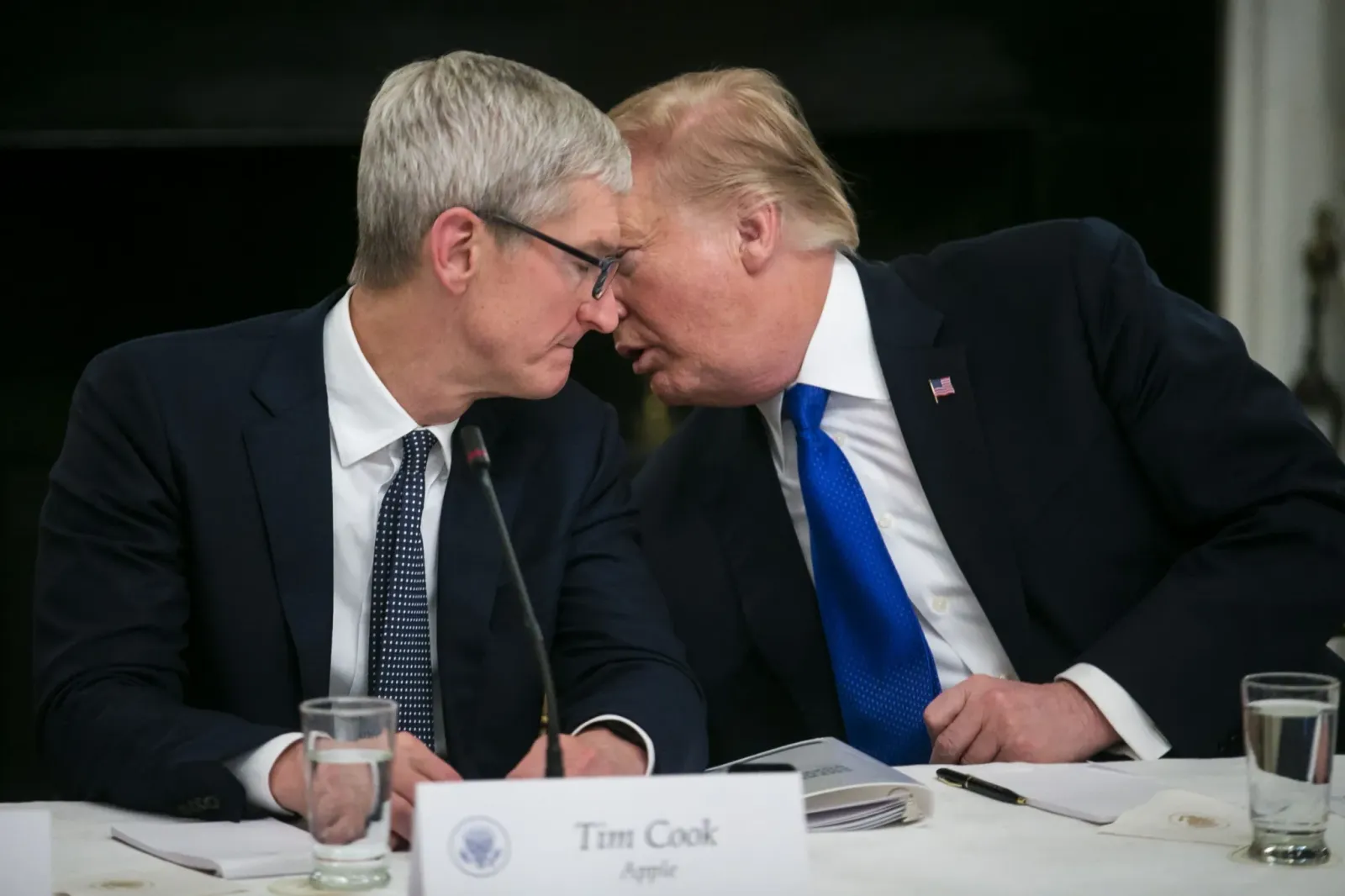
Tim Cook steps down as Apple CEO, stays on as chair with $45M equity
The 'Trump whisperer' keeps his White House and Beijing access as Apple navigates tariffs and a $4.6 trillion market cap.

Snowflake shares surge as AI data demand crushes estimates, lifting full-year forecast
Stocks jumped on stronger-than-expected guidance, signaling enterprise AI workloads are accelerating faster than Wall Street priced in.