

China's CXMT memory breakthrough puts chip rivals on the back foot
A Chinese DRAM maker just changed the competitive math for Samsung, SK Hynix, and Micron - and for every buyer of memory chips.
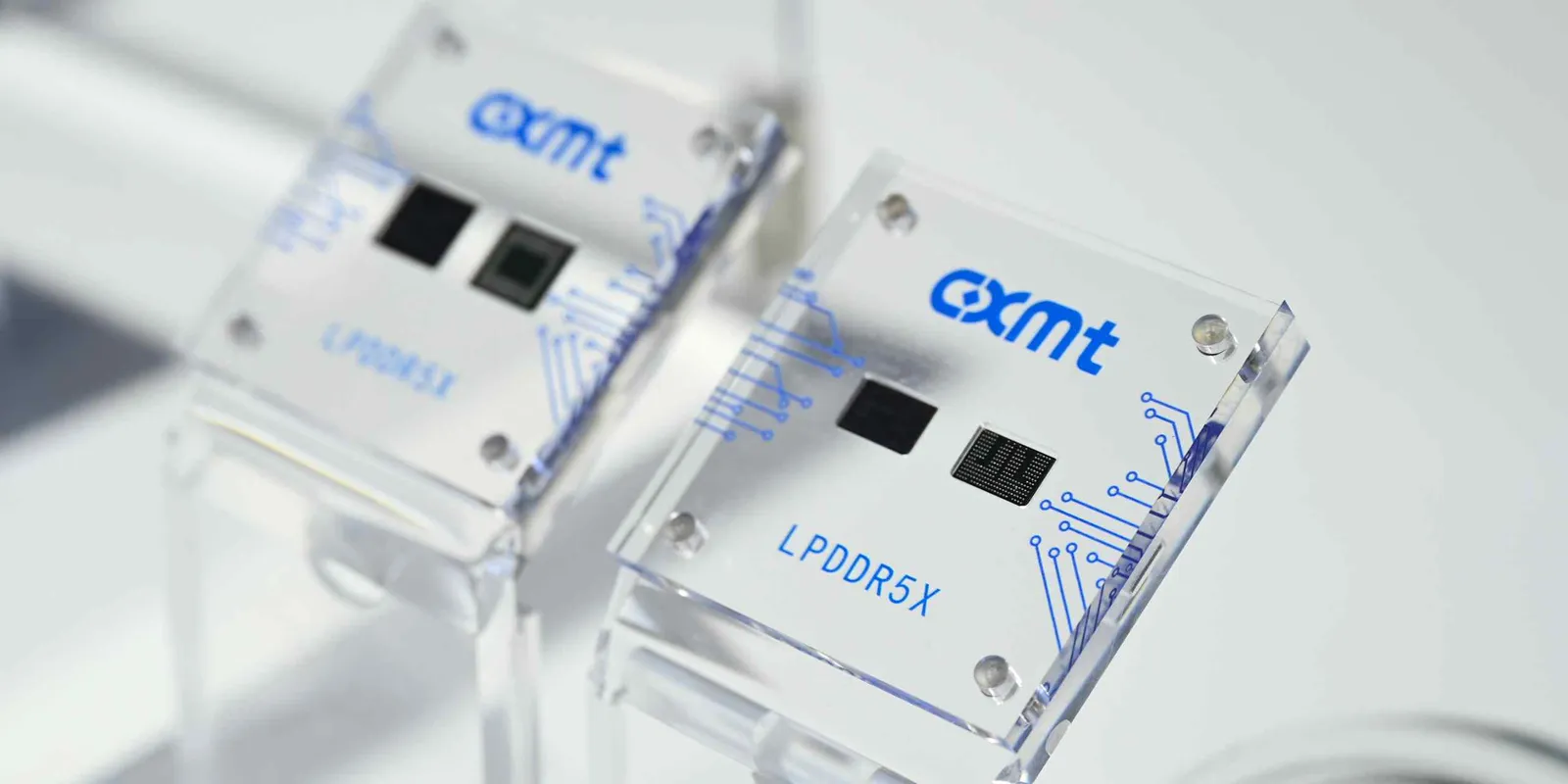
CXMT, China's leading DRAM maker, has achieved a memory technology breakthrough that puts global chip rivals on the back foot. The advance signals a shift in the memory chip competitive landscape and raises the stakes for export controls and supply-chain strategy.
China's CXMT has scored a memory breakthrough that puts chip rivals on the back foot, according to Nikkei Asia. ChangXin Memory Technologies, the country's most advanced DRAM maker, has reached a level of memory technology that narrows the gap with the global leaders - a development that could reshape the competitive order in one of the semiconductor industry's most concentrated markets. For years, the conventional wisdom held that Chinese firms were years behind in DRAM, the volatile memory that powers everything from smartphones to data centers. This breakthrough challenges that assumption directly, and it lands at a moment when memory chips have become a geopolitical battleground.
The stakes are immediate for the three companies that control the vast majority of the DRAM market: Samsung, SK Hynix, and Micron. These three have historically dominated DRAM through a combination of massive capital spending, proprietary manufacturing know-how, and tight control over the technology roadmap. A credible Chinese challenger with a genuine breakthrough does not just threaten market share - it threatens the pricing power that has made DRAM one of the most profitable corners of the semiconductor industry. The Nikkei report makes clear that CXMT's advance is significant enough to put these incumbents on the defensive, forcing them to accelerate their own technology transitions and reconsider how they compete against a state-backed player.
CXMT's rise has been closely watched by policymakers and industry executives alike. The company was founded in 2016 in Hefei, China, with the explicit mission of building a domestic DRAM industry capable of reducing China's reliance on imported chips. For years, it lagged behind the leaders by several generations, and US export controls were specifically designed to slow its progress by restricting access to advanced equipment and design tools. Those controls, imposed by the Biden administration and maintained since, were meant to keep Chinese memory makers at a permanent disadvantage. This breakthrough suggests that the strategy has not fully contained CXMT, and it raises hard questions about the effectiveness of export controls when a determined company can find alternative paths to progress.
The memory market is uniquely sensitive to shifts in supply and technology. Unlike logic chips, where performance is measured in raw computing power, DRAM is a commodity product where the winner is often the lowest-cost producer with the most advanced manufacturing process. A breakthrough that lets CXMT produce competitive DRAM at scale could flood the market with lower-priced memory, compressing margins for the incumbents and potentially triggering a price war. That is a scenario that keeps memory executives up at night, because DRAM prices are notoriously cyclical and a single new entrant with significant capacity can turn a profitable year into a brutal downturn. For buyers of memory - from smartphone makers to cloud providers - more competition could mean lower prices, but it also introduces new supply-chain risk if geopolitical tensions disrupt that supply.
The timing is particularly awkward for the incumbents. Samsung and SK Hynix are both investing heavily in next-generation memory technologies like HBM, or high-bandwidth memory, which is essential for AI accelerators. Micron is also pushing into advanced DRAM nodes. These investments assume a competitive landscape where the Chinese challenger remains several steps behind. If CXMT's breakthrough narrows that gap, the incumbents may need to spend even more to stay ahead, squeezing returns in a capital-intensive industry where the cost of a single fab runs into the tens of billions of dollars. At the same time, they face pressure from their own governments to limit technology transfer to China, which complicates any attempt to compete on cost by moving production closer to the Chinese market.
The broader implication is strategic. China has made semiconductor self-sufficiency a national priority, and memory is one of the most achievable targets because it is less dependent on leading-edge logic technology and more reliant on manufacturing scale and process refinement. CXMT's breakthrough is evidence that the Chinese approach - combining state funding, patient engineering, and a willingness to work around export controls - is yielding results. For executives in every corner of the technology supply chain, this is a reminder that the map of who can make what is being redrawn faster than many expected. Companies that source memory, design chips, or build data centers need to factor in a world where China is no longer just a buyer of memory but an emerging supplier with the potential to disrupt prices and availability.
For the incumbents, the response will likely be twofold: accelerate their own technology roadmaps and press for stronger export controls. But the Nikkei report suggests that the back foot is real, not just a rhetorical flourish. CXMT has crossed a threshold that many thought was years away, and the memory chip oligopoly is no longer as secure as it once seemed. The next few quarters will show whether this breakthrough translates into volume production and market share, or whether it remains a laboratory achievement. Either way, the competitive dynamics have already shifted, and every company that depends on memory chips should be watching closely.
This story's Key Insights and Take-aways are locked.
Create a free account to unlock Executive Actions for one credit.
Register to UnlockAlways free for Executives Club members. Join the Club
More in Business

Elon Musk unveils a flying car, and SpaceX helped build it
The Tesla CEO's showcase at a SpaceX facility signals a future where road and rocket engineering converge.

Apple's $2,000 iPhone Duo opens preorders, taking on Samsung and Google
Apple's first foldable hits the market at a premium price, reshaping a category Samsung and Google have led.

Pope Leo XIV, first American pope, diagnosed with lung cancer
The 71-year-old Chicago-born pontiff underwent successful surgery on his right lung, and his diagnosis raises new questions about his AI-focused papacy and the Vatican's future.