

China's 'Harshest Winter' Pushes BYD and Geely to Look Abroad
With domestic price wars and weak demand squeezing profits, the two EV giants are betting on global sales to carry their next growth phase.
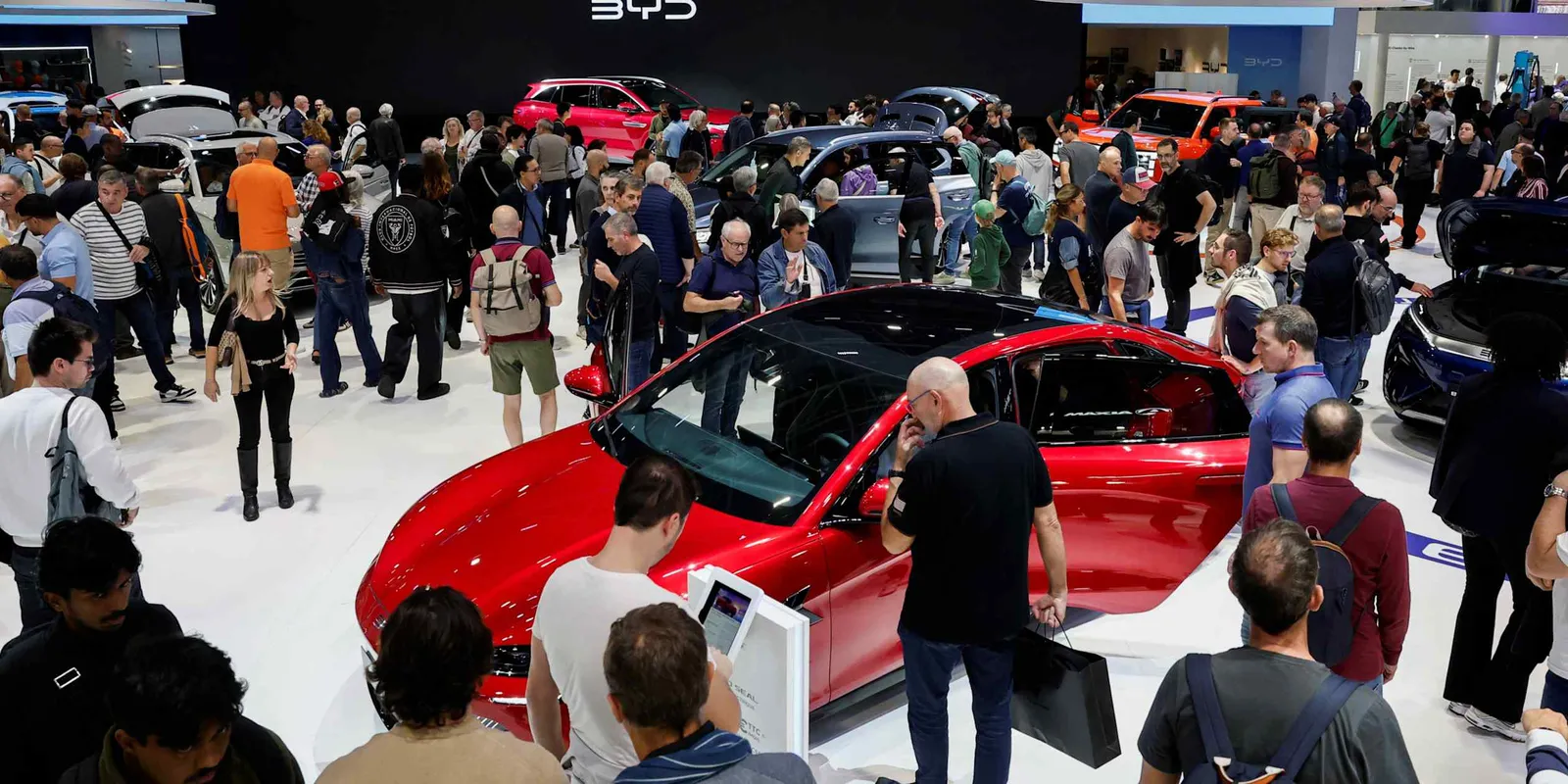
BYD and Geely are leaning on global growth as China's auto market enters what Nikkei Asia calls its 'harshest winter.' For decision-makers, the pivot signals that domestic-only strategies may no longer sustain growth, and that cross-border expansion is becoming the primary hedge against a saturated home market.
BYD and Geely, China's two largest automakers, are shifting their growth engines overseas as the domestic market enters what Nikkei Asia describes as its 'harshest winter.' The report says both companies are leaning on global expansion to offset a sharp slowdown at home - a strategic turn that speaks directly to how executives are hedging against a prolonged downturn in the world's largest auto market.
The 'harshest winter' is not hyperbole. After years of breakneck growth, China's auto market has matured into a battlefield of oversupply, aggressive price cuts, and thinning margins. Demand for new vehicles has softened as consumer confidence wavers, and the once-expected boom in electric vehicle adoption has leveled off into a brutally competitive fight among dozens of domestic and international brands. BYD and Geely, the segment's heavyweights, were among the first to feel the squeeze - and the first to respond by looking beyond China's borders.
That response is multi-pronged. BYD, already the world's largest EV maker by sales, has been expanding its footprint across Europe, Southeast Asia, and Latin America, both through exports and localized production. Geely, which owns Volvo aside from its core brand, has built a global portfolio that gives it a natural hedge against any single market's slowdown. Neither company is treating overseas sales as a nice-to-have; they are becoming the primary source of incremental volume as domestic growth stalls.
The logic is simple: while China remains the largest auto market, the profit pool has shrunk. Price wars, which erupted in 2023 and have shown no signs of easing, have pushed many players toward break-even or worse. Rather than continue fighting for share in a shrinking margin environment, BYD and Geely are racing to be the first to scale in markets where EV penetration is still rising and pricing power is healthier. For executives, this is a textbook case of diversification as a defense mechanism - one that would be wise to study even outside the automotive sector.
The ripple effects are broad. As Chinese automakers flood into emerging markets and even into Europe, they are challenging established incumbents on cost, technology, and speed. That creates a new competitive dynamic: legacy automakers in Europe, Japan, and the U.S. now face pressure not just at home but also in markets they once treated as safe. At the same time, suppliers and logistics providers tied to the automotive industry will need to recalibrate their own global strategies to follow the flow of production and assembly. The 'harshest winter' in China is effectively exporting disruption elsewhere.
For the executives directly involved, the stakes are enormous. BYD and Geely are not merely managing a cyclical downturn; they are redefining where their companies create value. Overseas expansion brings currency risk, regulatory hurdles, brand-building costs, and supply chain complexity. But it also offers the chance to emerge from this winter with a truly global footprint, while competitors who stayed home may emerge cold and fragile.
The broader lesson for CEOs and boards is that a domestic market turning hostile can be survived, but only if the pivot abroad happens early. The moment to build international revenue is before the home market freezes entirely. BYD and Geely's moves are a reminder that the most resilient companies are those that treat every market as one part of a portfolio, not a single point of failure.
As the Chinese market continues to grind through its toughest stretch, all eyes will be on whether these overseas gambits can generate enough cash to fund the next wave of technology development. The winter may not be short, but the companies that prepare now are positioning themselves to be the ones that enjoy the spring.
This story's Key Insights and Take-aways are locked.
Create a free account to unlock Executive Actions for one credit.
Register to UnlockAlways free for Executives Club members. Join the Club
More in Business

DoorDash's $17B Instacart Grab Unites Delivery Titans
The largest restaurant delivery service is buying the biggest online grocery platform, reshaping the on-demand economy and inviting antitrust scrutiny.

Anthropic Files for IPO, Ticker 'ANT' - The AI Listing to Watch
The AI company has filed for an initial public offering under the ticker 'ANT,' giving public investors a new way to bet on the generative AI boom.

Anthropic's S-1 reveals $80.7B loss as it races OpenAI to IPO
The Claude maker files publicly for a Nasdaq listing under 'ANT,' exposing staggering losses and a world-altering ambition before it can beat OpenAI to the market.