
China’s tariffs barely moved after Trump threats, yet beat Brazil and Canada
The average weighted tariff on Chinese goods stayed about the same, and now sits lower than Brazil and Canada.
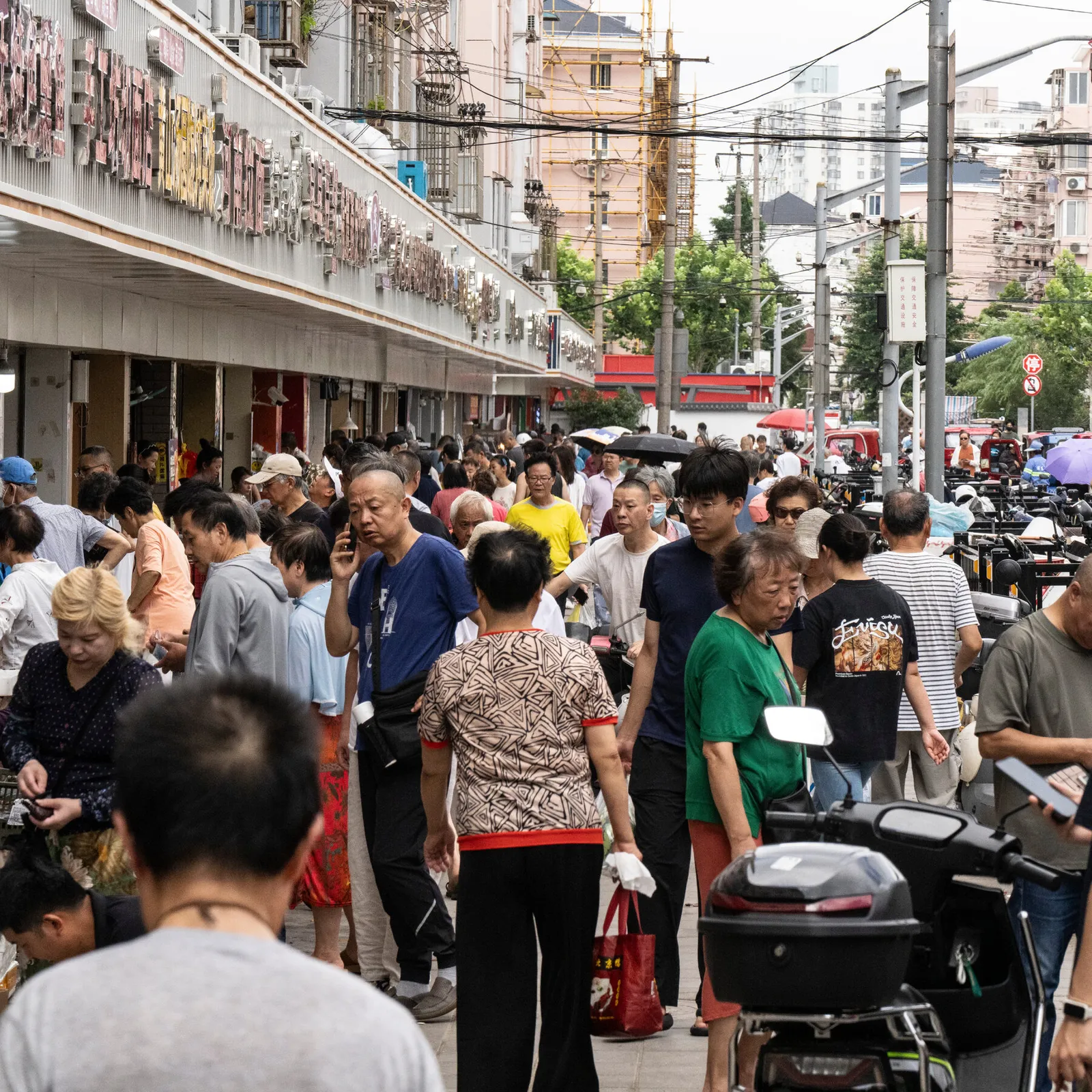
China, facing threats from President Trump, has maintained an overall average weighted tariff on Chinese goods that remained about the same. For decision-makers, the consequence is that the trade war's tariff pressure has not translated into broad, across-the-board tariff escalation against China.
President Trump threatened China in the trade war. But one of the core numbers policymakers watch has not followed the drama.
The overall average weighted tariff on Chinese goods remained about the same, and it is now lower than countries like Brazil and Canada. In other words, despite the headlines, the average tariff burden imposed on Chinese imports did not surge. That is a meaningful mismatch between political threat and economic outcome, and it changes how executives should think about second-order effects like pricing power, supply chain planning, and the relative competitiveness of different origin countries.
To understand why, you have to remember what an “average weighted tariff” is trying to capture. Tariff rates are not one single door with one single price tag. They are a patchwork across product categories, with different lines weighted by what is actually traded. So if the average weighted tariff on Chinese goods “remained about the same,” that implies either tariff increases were narrow, offset by reductions or exemptions, or both. Meanwhile, the fact that China is now lower than Brazil and Canada suggests that other countries faced changes that pushed their own average tariff burdens higher relative to China.
This is where trade policy meets corporate reality. Executives do not manage politics, they manage costs, procurement decisions, and customer price strategies. When the average tariff burden against a major supplier stays flat, CFOs and procurement leaders can model a more stable baseline for landed costs, at least at the level of “average” import exposure. That stability matters even if the trade war still creates uncertainty in specific product categories. The market often reacts to the worst-case scenario. But operating results tend to reflect the actual tariff arithmetic that shows up in financial statements.
It also changes the way boards should think about risk. Many boards have treated tariffs as an uneven but potentially accelerating form of cost shock. This development suggests a more nuanced risk profile: the political messaging may imply a broad escalation, while the measurable tariff impact on the average can be restrained. The implication is not “tariffs do not matter.” It is that executives should ask sharper questions: Which product categories are moving, how are exemptions working, and what does “weighted average” say about the cost exposure that actually drives margins?
There is also a competitive dynamic hiding in plain sight. If China’s average weighted tariff is lower than Brazil and Canada, then the relative cost advantage shifts. Companies comparing sourcing options across these origins might find that the tariff layer is not pushing them toward one alternative as aggressively as the trade-war narrative would suggest. That can influence everything from vendor negotiations to distribution planning. If tariff pressure is uneven across countries, supply chain reconfiguration becomes more about product fit and logistics than about pure tariff arbitrage.
Finally, this is a signal about how trade negotiations and enforcement can work in practice. Tariffs are often adjusted through lists, policy tweaks, and implementation choices, which can lead to outcomes that look contradictory to the overarching rhetoric. The headline takeaway here is simple: despite threats from President Trump, the average weighted tariff on Chinese goods did not rise materially, and it is now lower than countries like Brazil and Canada. For executives, the strategic stakes are clear. You cannot budget off the loudest threat. You budget off what tariffs actually average out to, and you monitor how the relative tariff positions among supplier countries evolve.
If you are running finance, procurement, or strategy for a company exposed to global import costs, this is a prompt to re-check your tariff models against the most current, weighted reality. In a world where tariff policy can sound like an on-off switch, the market answer can be closer to a dimmer. And in that dimmer world, competitive advantage can come from correctly identifying which origins are getting hit harder, and which ones are not.
This story's Key Insights and Take-aways are locked.
Create a free account to unlock Executive Actions for one credit.
Register to UnlockAlways free for Executives Club members. Join the Club
More in Business

Anthropic’s Levant Alpöge cracks the Jacobian conjecture after 87 years
A Harvard valedictorian used Claude to hit a 1939 breakthrough, but the missing “why” is the real problem.

Uber buys Delivery Hero for nearly $15B, vaulting to top food delivery outside China
The deal doubles Uber's dual-services footprint and pushes a ride-and-eats bundling play into 50 more markets.

Epic and Google drop settlement bid, forcing rival Android app stores by July 22
Google told the court it is ready to carry third-party app stores starting Wednesday, July 22.