

Christopher Nolan earns A-list loyalty by doing the hard part first
Actors say Nolan leads by example, strips distractions, and trusts performers, creating focus on sets that run tight.
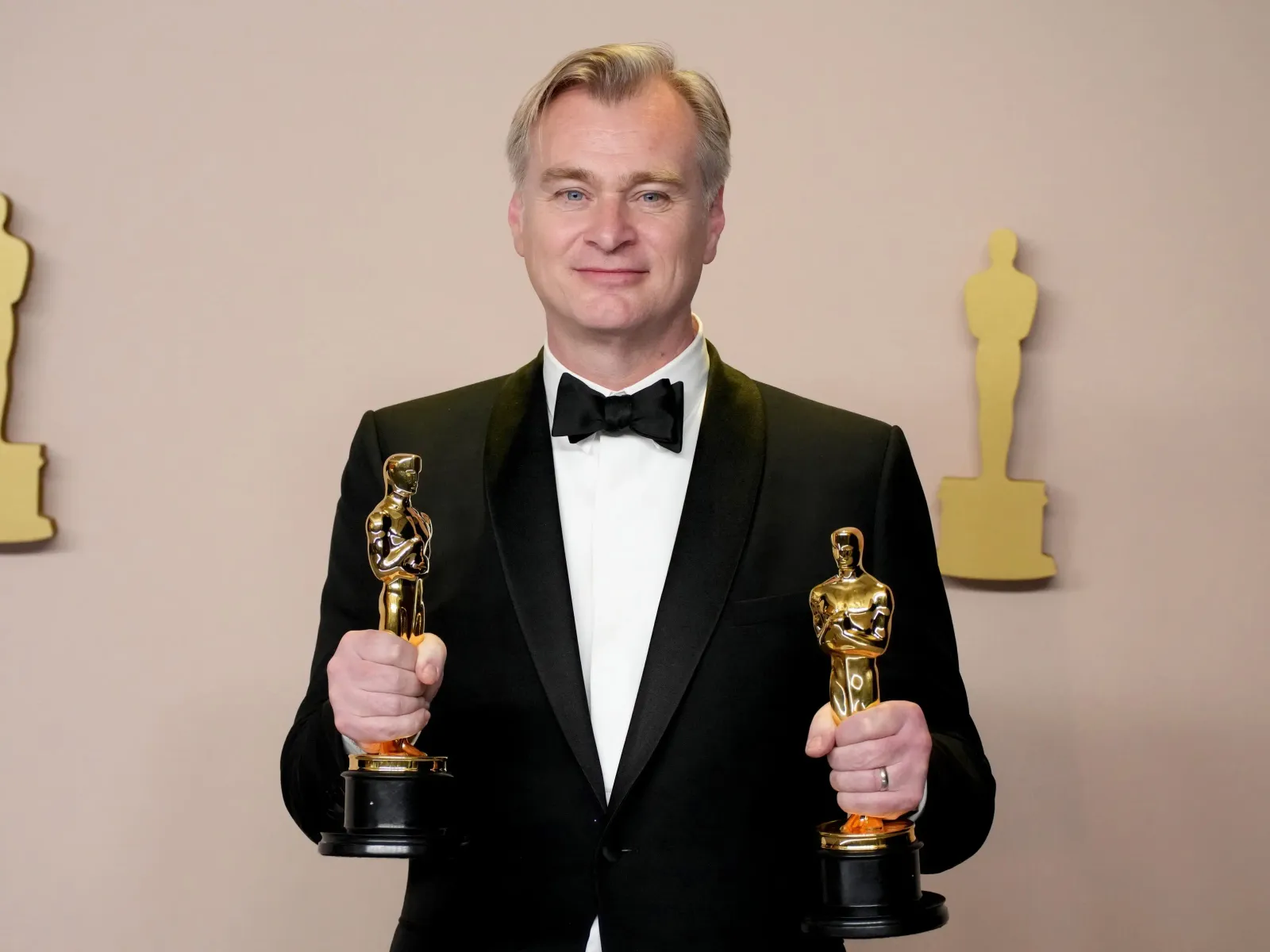
Christopher Nolan has built Hollywood’s loyalty machine by using a leadership style actors describe in interviews across Dunkirk, Oppenheimer, and more. For executives and boards, his approach is a blueprint for how culture, constraints, and trust translate into execution under pressure.
Christopher Nolan has pulled off something rare: getting major stars to say yes to physically demanding shoots, tighter timelines, and even the kind of commitments that would make most people ask, “What’s the catch?” Actors including Cillian Murphy and Robert Downey Jr. describe why they trusted Nolan enough to jump in early, take risks, and stay fully present. The headline version is simple, and it shows up again and again across the five lessons actors attribute to him: Nolan doesn’t just manage the work. He volunteers for it first.
Murphy offered one of the clearest examples. During filming of a scene for “Dunkirk,” his character was found on the bow of a sunken vessel. Bad weather made the Marines and stunt team hesitant to let Murphy climb aboard. Nolan didn’t send someone else to test the risk. Murphy says Nolan got up there himself first, did it, and then only after that did the team put Murphy on the vessel: “OK, put Cillian up there then.” It’s the kind of detail that matters because it’s not symbolic. It’s operational. It signals to the entire production that safety, effort, and execution are being handled by the person at the top, not pushed down the chain.
That same “lead by example” theme extends beyond stunts into how Nolan approaches the daily grind of production. Murphy said Nolan also continued living that leadership while filming “ The Odyssey.” Rather than taking a helicopter, he made the same 1,000-foot hike to set as the rest of the cast and crew. In other words, Nolan’s credibility is not just earned in one high-drama moment. It’s reinforced every day through choices that cost him time and comfort, the exact things teams often rely on leaders to protect.
If you’re thinking, “Cool story, but what does that have to do with performance?” The next lesson is about distractions, and it’s where Nolan’s culture gets very practical. Anne Hathaway, who has acted in three Nolan films including “The Odyssey,” said Nolan keeps his sets chair-free. Her reasoning is blunt: chairs encourage people to sit, and if people are sitting, they are not working. Hathaway also noted that despite the scale of Nolan’s productions, he wraps up “under schedule and under budget.” She adds, “I think he’s onto something with the chair thing.” Another actor, Mark Rylance, told The Independent in 2017 that Nolan is “very particular,” specifically mentioning that he doesn’t allow chairs or water bottles on set. Barry Keoghan, also in the film, framed it in terms of constant readiness, saying the lack of chairs keeps you on your toes, literally.
This is the same strategic pattern executives recognize in high-performing teams: remove the “default behaviors” that quietly drag productivity down. Nolan doesn’t just set goals. He designs the environment to keep attention where it belongs. Chairs and water bottles are small objects, but the message is big: the production is not a social event with tasks attached. It is work, and work requires uninterrupted focus.
Next comes the modern-tech version of that same focus. Robert Downey Jr. said Nolan does not own a smartphone and does not use email; he writes scripts on a computer with no internet connection. Downey also described Nolan’s set expectations in a way that’s hard to ignore: “If I see Chris Nolan, I throw my phone. And this is even when we’re not shooting.” Emily Blunt added “Still - to this day!” Nolan’s relationship with phones is not just personal preference. In a 2017 interview with Esquire Middle East, Nolan said mobile phones create “an illusion of multitasking.” He explained that there’s a belief that if you’re texting, you’re not interrupting the conversation, but in reality it can still be disruptive.
For boards and operators, this matters because distraction is not neutral. In any large operation, fragmentation of attention leads to slower decisions, more rework, and higher coordination costs. Nolan’s answer is not a productivity hack. It’s a cultural rule, enforced through norms that actors appear to internalize quickly. Phones off, chairs off, water bottles off. It’s not minimalism for aesthetics. It’s a system for maintaining momentum.
Then Nolan balances the ambition with grounded behavior, which is another theme actors raise. Michael Caine, who has been in more Nolan films than any other actor, said in a 2014 Guardian interview that success hasn’t changed the director. Caine described Nolan living exactly the same way despite “all these millions of dollars,” including using the same watch and wearing the same clothes. Later, Samantha Morton, who plays Circe in “The Odyssey,” described Nolan as a “master, but he doesn’t profess to be a master.” She said she learned from his humility and decency, specifically praising how he carries himself with those traits and that he is the first on set every day and the last to leave.
Why include this in a leadership memo? Because once you scale, the risk is that your people start optimizing for appearances instead of results. The actors’ accounts suggest Nolan’s leadership prevents that drift. Humility doesn’t reduce performance. It makes it more stable, because the team doesn’t have to spend energy guessing what impresses the boss. They know what matters: effort, preparation, and craft.
Finally, Nolan earns more loyalty by trusting people to do their jobs, rather than micromanaging. Gary Oldman, who has acted in four Nolan films including “Dark Knight” and “Oppenheimer,” said Nolan gave him only two acting notes over the seven years working on the trilogy. One note was essentially: “Let’s do that one more time. There’s more at stake.” Oldman described it as freedom with responsibility, saying Nolan leaves you alone and expects you to do your work. Matt Damon, who stars as Odysseus in “The Odyssey,” similarly said Nolan gives actors “ creative freedom ” to shape their own performances.
In boardroom terms, that’s the tension all leaders manage but few execute well. Trust is not the absence of standards. It’s the presence of clarity. Nolan’s style appears to combine three things at once: he signals expectations through example, he protects focus through environmental constraints, and he avoids drowning talent in process. That combination helps explain how he convinces many top actors to return film after film, persuade them to sign on before reading a full script, and, in some cases, even take pay cuts to work with him.
Zoom out and the strategic stake becomes obvious. Productions, like companies, run on morale, attention, and decision speed. Nolan’s leadership lessons show how culture can reduce friction without reducing excellence. For executives in any high-pressure field, the playbook is less about filmmaking mystique and more about what drives execution when stakes are high: show up, remove distractions, stay grounded, and trust people to deliver while you hold the line.
This story's Key Insights and Take-aways are locked.
Create a free account to unlock Executive Actions for one credit.
Register to UnlockAlways free for Executives Club members. Join the Club
More in Business

Anthropic’s Levant Alpöge cracks the Jacobian conjecture after 87 years
A Harvard valedictorian used Claude to hit a 1939 breakthrough, but the missing “why” is the real problem.

Uber buys Delivery Hero for nearly $15B, vaulting to top food delivery outside China
The deal doubles Uber's dual-services footprint and pushes a ride-and-eats bundling play into 50 more markets.

Epic and Google drop settlement bid, forcing rival Android app stores by July 22
Google told the court it is ready to carry third-party app stores starting Wednesday, July 22.