

Climate researcher's Sun-dimming war game: 'Boy, was I wrong'
War game on dimming the Sun: geopolitics, not science, will decide Earth's thermostat.
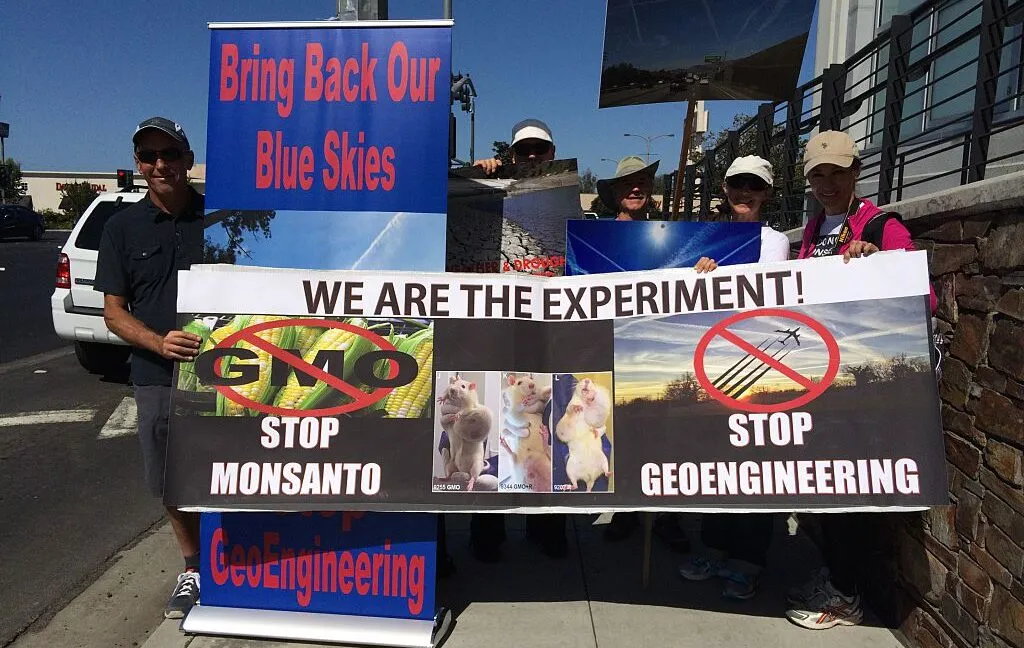
Colleen Golja, a climate researcher, participated in a solar geoengineering war game in London that simulated an uncontrolled global race to cool the planet. The exercise showed that geopolitical conflict, not scientific consensus, will dominate decisions about dimming the Sun, leaving executives and policymakers with a stark warning about ungoverned climate tech.
Colleen Golja, a climate researcher, walked into a London war game last September expecting science and reason to guide the room. By the end, she was proven spectacularly wrong. "I thought that would be such an easy thing. Like, we can all agree to do ethical research and make sure it's for the better of all humans," she told WIRED. "And boy, was I wrong."
The simulation, titled Exploring Geopolitical Tipping Points and Climate Cooling Strategies, brought together a couple dozen foreign-relations experts, scientists, military personnel, and former government officials at Queen Mary University of London. It was the first in a series of war games, according to Golja. They sat at tables arranged in a square, each representing national governments, climate NGOs, indigenous groups, and tech companies. Golja's role was to provide technical advice to help participants make scientifically literate decisions. The goal: prevent an uncontrolled global race to develop solar geoengineering - a technology that could cool the planet but carries vast, unknown risks.
The exercise was designed to explore what happens when geopolitics takes over. And by all accounts, it went worse than anyone expected. The premise was simple: a single nation or company might decide to deploy solar geoengineering unilaterally, triggering a cascade of responses from rivals who fear being left behind or outmaneuvered. The war game simulated those tipping points, and the result was a stark illustration of how international competition could override any hope of coordinated, ethical research. The participants, representing national governments, climate NGOs, indigenous groups, and tech companies, were forced to confront the reality that their interests often diverged sharply.
Solar geoengineering, often called "dimming the Sun," involves techniques like injecting aerosols into the stratosphere to reflect sunlight. It is a real, debated proposal, but it is not governed by any international treaty. The London simulation is part of a growing effort to understand the governance vacuum around this technology. Historically, solar geoengineering has been a topic of academic debate, with no binding framework to prevent unilateral action. The war game's findings, while not yet published in full, align with a broader consensus among scholars that the technology's risks are as much political as physical. The inclusion of military personnel and former government officials underscores the security dimensions that are often overlooked in climate discussions.
For business leaders, the war game is a warning about the governance vacuum around climate tech. If solar geoengineering becomes viable, it will not be a purely scientific decision. It will be a geopolitical chess move, with companies potentially caught in the middle. Tech companies were explicitly represented at the table, reflecting the reality that private capital is already exploring these frontiers. The exercise suggests that any firm involved in climate intervention should expect not just regulatory scrutiny, but geopolitical blowback. The stakes are not hypothetical: the technology is being researched by universities, startups, and even governments, and the race to be first could easily become a race to the bottom.
Golja's reaction - "Boy, was I wrong" - captures the central lesson. She expected that ethical research would be a shared goal. Instead, the war game showed that national interests, mistrust, and the desire for strategic advantage would likely dominate. For anyone who believes that science will lead the way on climate intervention, the exercise is a cold shower. The war game did not produce a happy ending, and that is precisely the point: it was designed to reveal the failure modes before they happen in the real world.
The takeaway for executives and boards is that climate technology is not just a technical or market opportunity; it is a geopolitical minefield. Companies that develop or invest in solar geoengineering must prepare for a world where their actions are interpreted through the lens of international competition. The war game suggests that the first mover may not be the hero, but the villain - or the target. The smartest play may be to invest in governance and transparency, not just technology. For now, the only certainty is that the Sun will keep rising, but who controls the dimmer switch is very much an open question.
This story's Key Insights and Take-aways are locked.
Create a free account to unlock Executive Actions for one credit.
Register to UnlockAlways free for Executives Club members. Join the Club
More in Science

Alaska's 1,580-foot tsunami had warning signs. Scientists just found them.
Rapid glacier retreat, heavy rainfall, and thousands of tiny tremors preceded Alaska's 1,580-foot tsunami, a warning for every coastal community in a warming world.

The rare mutation that lets high-risk brains dodge Alzheimer's
Scientists found a natural defense against protein buildup, opening a new path to preventive treatments.

3,000 steps a day may halve Alzheimer's decline, study finds
New research links a modest daily walk to less tau buildup and nearly half the cognitive and functional decline, even for those with early signs.