

CMA probes Ryanair's £8 parent fee to seat children, and Ryanair calls it “bogus”
The watchdog says Ryanair’s terms force a parent to pay to sit with their child, including disabled passengers.
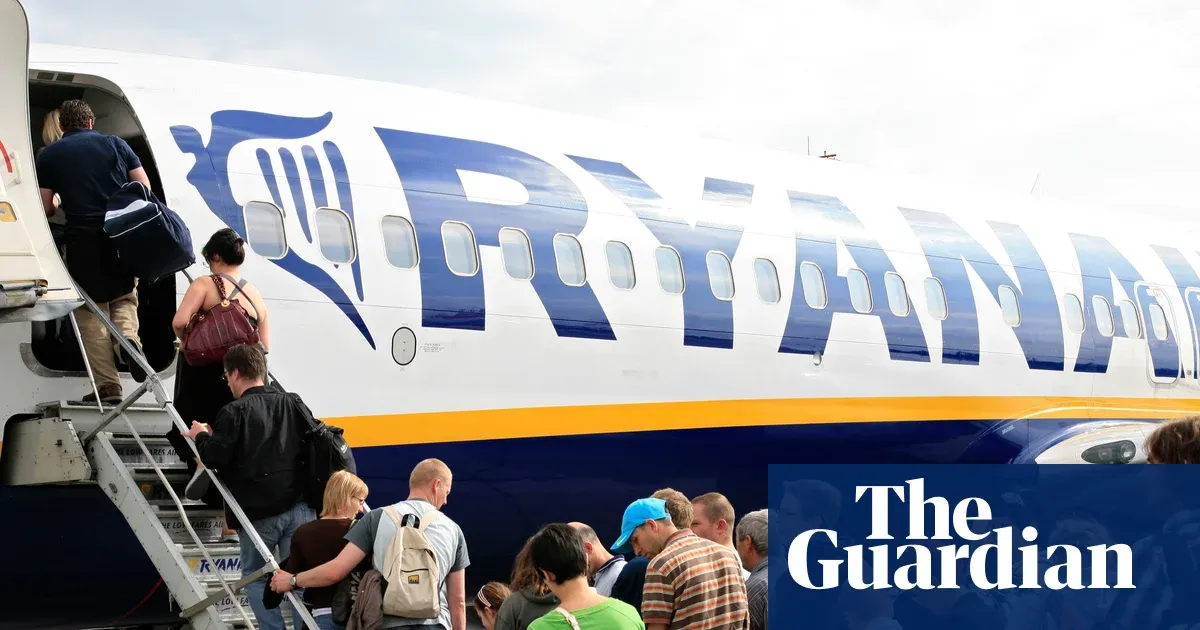
The Competition and Markets Authority (CMA) is investigating Ryanair over a mandatory fee it charges parents to sit with their children. Ryanair has described the inquiry as “bogus,” setting up a direct showdown over airline seating policies and pricing rules.
Ryanair is now in the CMA’s crosshairs over a fee it charges parents for one simple thing: sitting next to their child. The Competition and Markets Authority says Ryanair’s terms and conditions require at least one parent to sit with their children, including those with disabilities, and that it bills them about £8 per flight to do so.
Ryanair’s response is immediate, and it is not subtle. The budget airline describes the investigation as “bogus,” arguing against the premise that the charges are unfair or improperly structured. In other words, the fight is not over whether parents want to sit with their kids. It is over whether Ryanair can mandate (and monetize) that seating arrangement in the way it does, and whether the charge is compliant with competition rules and consumer protection standards the regulator is responsible for.
To understand why this matters beyond one airline and one fee, zoom out to how low-cost carriers make money. Ryanair, like other large budget players, sells travel as a modular product. Base fares are only the starting point. Seats, bags, and specific preferences are typically monetized as add-ons. The business model is built on unbundling, and it works because customers accept tradeoffs in exchange for low ticket prices.
But regulators can still intervene when a company’s “add-on” behaves less like an optional preference and more like a requirement. The CMA’s framing is the key detail here. It says Ryanair’s terms require a parent to sit with their children. If a policy effectively removes choice for a meaningful group of passengers, then an associated fee stops looking like a normal upsell and starts looking like a compulsory charge tied to compliance with the airline’s own rules.
The CMA also highlights an especially sensitive category: children with disabilities. If Ryanair’s terms require a parent to sit with the child, and the airline bills about £8 per flight to do so, then the charge has additional consumer impact. This is not only about cost. It is about access and the conditions under which a family can travel. Even in markets where pricing is competitive, regulators tend to take extra interest when policies touch protected needs or reduce practical alternatives for vulnerable customers.
Ryanair’s “bogus” characterization signals it believes the CMA’s position misunderstands the airline’s obligations or the structure of what is being charged. In competition investigations, the core question usually becomes: are the terms fair and transparent, and is the charge proportionate and justified relative to what the customer must do or receive? The CMA may also examine how the policy operates in practice. For example, when airlines require specific arrangements, regulators often look at whether the rule is necessary, whether customers are clearly informed upfront, and whether the company is using packaging choices to force value transfer without genuine customer choice.
For decision-makers watching this case, the second-order risk is broader than Ryanair. If the CMA determines that a “mandatory” seating rule bundled with a per-flight fee creates an unfair competitive outcome or harms consumers, other airlines operating similar unbundled models could face scrutiny of their own fees and conditions. Boards do not need to be emotionally invested in parent-child seating. They do need to understand that regulators can treat certain unbundled charges as disguised compulsion, especially when the company’s terms dictate who must be where.
There is also reputational gravity. Low-cost carriers trade on simplicity and price discipline. A public investigation over parent seating charges can trigger a wider debate about what customers actually agreed to at booking time, how “optional” add-ons feel when policies are framed as requirements, and whether the airline is exploiting information asymmetry. In the short run, the inquiry can mean more legal and compliance work. In the long run, it can push airlines to redesign terms and pricing structures to reduce regulatory exposure.
So the strategic stakes are straightforward: Ryanair is challenging the CMA’s premise while the regulator presses the argument that Ryanair’s terms impose a parent-sitting requirement that comes with a fee of about £8 per flight. If the CMA’s view prevails, this could become a blueprint for how regulators interpret compulsory conditions in unbundled airline pricing. And for peer executives, it will be a reminder that the next “add-on” that looks normal in an airline business model may turn into a compliance problem the moment it starts to feel mandatory for customers who have the least flexibility to absorb it.
This story's Key Insights and Take-aways are locked.
Create a free account to unlock Executive Actions for one credit.
Register to UnlockAlways free for Executives Club members. Join the Club
More in Business

Anthropic’s Levant Alpöge cracks the Jacobian conjecture after 87 years
A Harvard valedictorian used Claude to hit a 1939 breakthrough, but the missing “why” is the real problem.

Uber buys Delivery Hero for nearly $15B, vaulting to top food delivery outside China
The deal doubles Uber's dual-services footprint and pushes a ride-and-eats bundling play into 50 more markets.

Epic and Google drop settlement bid, forcing rival Android app stores by July 22
Google told the court it is ready to carry third-party app stores starting Wednesday, July 22.