
Colombia’s disappearance conflict spans decades. One film captures the human math of grief
Five years, four months, and the tension control behind a grieving Colombian mother portrait that refuses to let time blur harm.
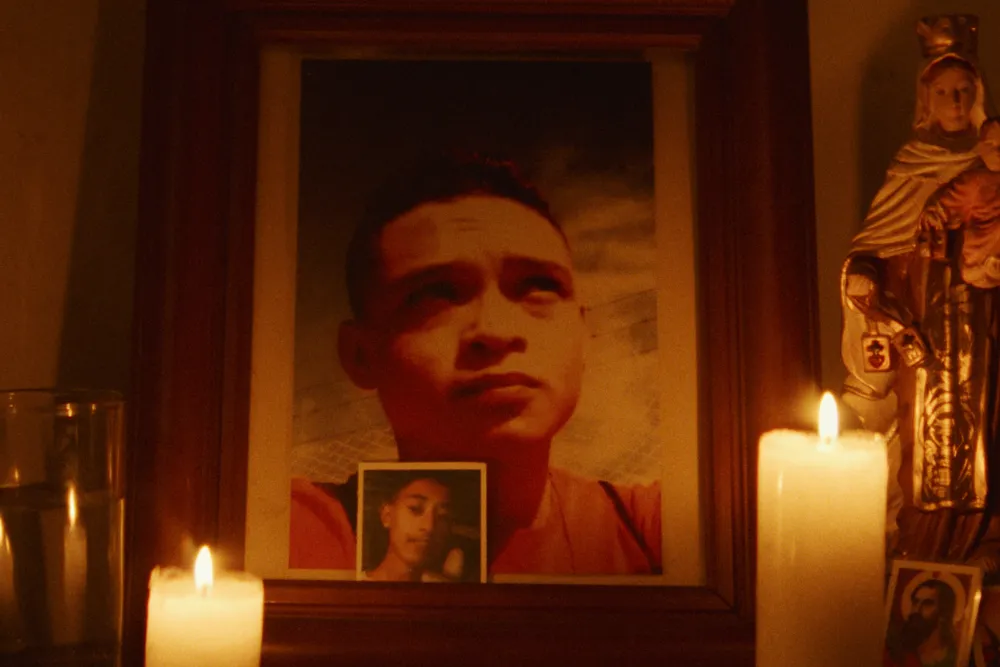
Variety reviews 'Five Years, Four Months,' a moving film following a grieving Colombian mother. It lands against the backdrop of Colombia's decades-long conflict and thousands of people forcibly disappeared since the mid-1960s.
Variety’s review of 'Five Years, Four Months' zeroes in on a single grief story while pointing back to a far larger reality: thousands of people in Colombia have been “forcibly disappeared” since conflicts began in the mid-1960s between the Colombian government and various paramilitary and guerilla groups. The premise is not new information for many viewers, but the film’s power, as Variety frames it, is how it keeps the awareness from going soft over time. That is the tension the movie controls. It turns what can become an abstract statistic into a lived, time-bound experience.
The title itself signals duration, and Variety’s description highlights that the film is a “moving portrait of a grieving Colombian mother,” which matters because grief is measurable even when politics tries to blur it. Thousands of disappearances across decades are the backdrop. But in the film, the clock is inside the home, in the body, in the daily aftermath of people being taken and never returned. Variety also flags the film’s “impressive control of tension,” meaning it does not just depict suffering. It engineers attention, holding viewers in place long enough to understand what delayed consequences do to families.
For decision-makers, this is a reminder that mass harm and institutional conflict do not only play out in court filings and policy paragraphs. They compound in households, community networks, and cultural memory. When Variety notes that the reality of forced disappearances has been “well-known” for a while, it is also warning about a common drift in governance and oversight: when the facts are familiar, responsibility can erode into bureaucracy. Films like this push against that drift by making the familiar feel urgent again.
There is also an important second-order implication for anyone thinking about risk, compliance, or responsible investing in places touched by long-running internal conflicts. Forced disappearances are often discussed in terms of historical record, legal frameworks, and human rights reporting. But the social and reputational costs can remain “unresolved” in the way grief remains unresolved. Even when the original conflict ebbs and flows, the harm persists. That persistence can affect how organizations operate in those regions, how they partner with local institutions, and how they respond when allegations surface. The film’s focus on one mother’s grieving process underlines why those costs do not expire just because a news cycle moves on.
Variety’s review situates the disappearance conflict in Colombia’s mid-1960s start, with the Colombian government on one side and various paramilitary and guerilla groups on the other. That framing matters, because it shows the conflict as multi-sided and prolonged, not a single episode with a clean ending. In policy and compliance terms, prolonged, multi-actor conflicts create messy lines of accountability. When multiple groups are involved, the incentives to deny, delay, or dispute facts can be structurally reinforced. That can slow investigations and prolong uncertainty for families, which is exactly the emotional terrain a grief portrait needs to make believable.
The entertainment industry implication is just as real. A film that demonstrates “impressive control of tension” does something that many awareness projects struggle to do: it sustains attention without turning suffering into background wallpaper. Variety’s mention of this control suggests deliberate craft, not just subject matter. That is crucial if you want viewers to stay engaged long enough to process what “forcibly disappeared” actually means in human terms. The risk for the genre is that familiarity becomes fatigue. The reward is that narrative discipline can break that fatigue.
At a strategic level, 'Five Years, Four Months' offers a broader governance lesson: time itself can become a shield. When people have been disappearing “since conflicts began in the mid-1960s,” the passage of years can turn ongoing harm into a historical footnote. Variety’s review implies the film fights back against that shield by keeping the focus on the experience of one grieving mother and by sustaining tension rather than letting the story dissolve into sentiment.
For executives, board members, investors, and operators watching global human rights and political risk, the takeaway is not to treat art as a substitute for policy. It is to recognize how narratives influence attention, and how attention influences accountability. If the public and institutional systems lose urgency, the incentives to act weaken. A film like this demonstrates how to keep harm from becoming normal. In a world where compliance dashboards can dull perception, that matters.
This story's Key Insights and Take-aways are locked.
Create a free account to unlock Executive Actions for one credit.
Register to UnlockAlways free for Executives Club members. Join the Club
More in Entertainment

12TB Steam 'teraleak' goes beyond Valve: GTA 3, Mafia 2 prototypes exposed
A 12-terabyte dump of Steam data reveals prototypes and builds of third-party classics like GTA 3 and Mafia 2, plus unreleased Valve content, rewriting game history.

LinkedIn's romance problem: 1 in 4 workers say dating on it is fair game
A new survey shows a quarter of U.S. employees treat the professional network as fair game for romance, even as LinkedIn bans it and removes hundreds of thousands of offending posts.

Enhypen's first No. 1 album breaks K-pop's Billboard 200 streak
The K-pop group's 98,000-unit debut tops the chart while Dolly Parton's catalog reentry shows how death reshapes streaming.