

Commonwealth Fusion Systems raises $1B more, hitting $4B total and bankrolling AI-era power demand
The best-funded fusion startup just added $1 billion, pushing its funding share to about 30% and sharpening competition.
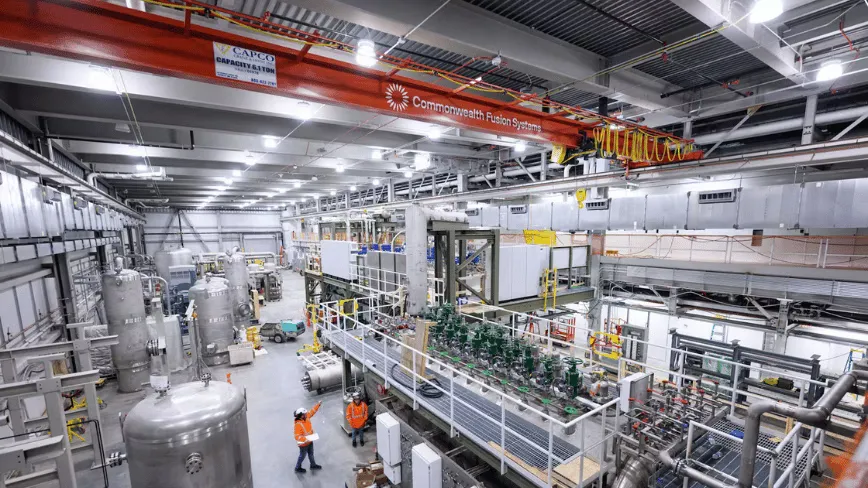
Commonwealth Fusion Systems, a Massachusetts-based fusion company, said it raised another $1 billion, bringing its total to $4 billion. For decision-makers, the move signals fusion is becoming a capital concentration game tied directly to AI's electricity appetite.
Fusion has spent decades as the punchline. The dream has always been the same: clean power without the long-term waste and risk profile of some alternatives. But “30 years away” became a kind of running joke, reinforced every time timelines slipped. Now, the punchline is starting to look expensive.
The reason is brutally practical. The AI boom needs colossal amounts of electricity. That demand is turning fusion into one of the hottest bets in tech, not because the physics changed overnight, but because the constraints around power generation tightened dramatically. In that context, Commonwealth Fusion Systems (based in Massachusetts) just raised another $1 billion. The company says the round takes its total to $4 billion, roughly 30% of all the money raised in the category.
That “about 30%” matters more than it sounds. In early, high-risk industries, capital is more than runway. It is leverage: leverage in hiring scarce talent, leverage in building and operating complex infrastructure, and leverage in negotiating partnerships that can shave years off execution. When one player is funded at that scale, it can reshape timelines for everyone else, because the “best funded” company gets to iterate faster, test more hardware, and pressure the ecosystem to line up behind it.
Commonwealth Fusion Systems’ position also reflects how fusion has been reorganized by modern incentives. Instead of waiting for a perfect breakthrough, the bet is on engineering milestones and system scaling. Fusion is a “long-duration” technology in theory, but the funding model is evolving toward “progress-under-pressure.” When AI is pulling forward electricity demand, the market stops caring only about distant potential and starts valuing near-term credibility. Even if fusion is still not a public utility replacement tomorrow, massive capital can turn early-stage proof work into a more competitive race.
This is where the governance of boards and investors comes in. A $1 billion round is not just a cash infusion. It is a signal about confidence and control. Large rounds typically involve decisions about who gets access to information, what milestones are tracked, and how quickly the company can pivot when experimental results land one way or another. For peers, the implication is clear: if one company can put $4 billion behind its plan, other teams may face a harder choice. Either they find similarly large sources of capital, accelerate partnerships, or risk falling behind in the very work that would later justify their valuation.
There is also a regulatory and permitting gravity around grid-scale power that decision-makers should keep in mind, even in this “AI needs more electricity” moment. Fusion developers still have to fit into real-world systems: environmental oversight, site approvals, safety considerations, and ultimately grid interconnection. The details vary by jurisdiction and project design, but the key point is that money does not remove regulatory friction. What it can do is help companies build the evidence base regulators and utilities will eventually require, including the kind of operational data that turns a concept into an actionable application.
From a second-order perspective, Commonwealth Fusion Systems raising $1 billion to reach $4 billion total may also influence where other risk capital flows. When one firm becomes the focal point for “best funded” status, investors often rebalance portfolios around it, either to participate in the upside or to hedge against losing the race for credibility. That can concentrate attention, talent, and corporate partnerships. It can also squeeze competitors into narrower fundraising windows, raising the stakes for their next milestones.
For executives tracking power, tech infrastructure, or strategic investments tied to AI, the strategic takeaway is simple: the electricity bottleneck is no longer abstract. It is forcing capital to move into power generation bets that used to be dismissed as far-off. Fusion may still be early, but a $1 billion add-on that brings total funding to $4 billion, with about 30% of category money, is a sign that “30 years away” is losing its power as a default narrative.
This story's Key Insights and Take-aways are locked.
Create a free account to unlock Executive Actions for one credit.
Register to UnlockAlways free for Executives Club members. Join the Club
More in Technology

Google quietly links your phone number to every Android account on your SIM
Adding a SIM now ties your phone number to all Google accounts - and future accounts inherit it. Here's the security and privacy stakes.

Hijacker AI 'Skynet mode' runs 100,000 attack steps against exposed models
Symantec caught a criminal AI agent that borrows other models, steals data, and mines crypto; the only relief is no confirmed victims yet.

Nvidia's AI-financier shift faces its first big test as neoclouds stumble
A rout in neocloud stocks is forcing investors to weigh Nvidia's hidden exposure as both supplier and lender to the AI buildout.