

Dubai’s property confidence hit hard in March: UAE transactions fell 37% YoY, 49% MoM
A headline record AED400m land deal couldn’t mask a credit and demand stress test for Dubai’s real estate machine.
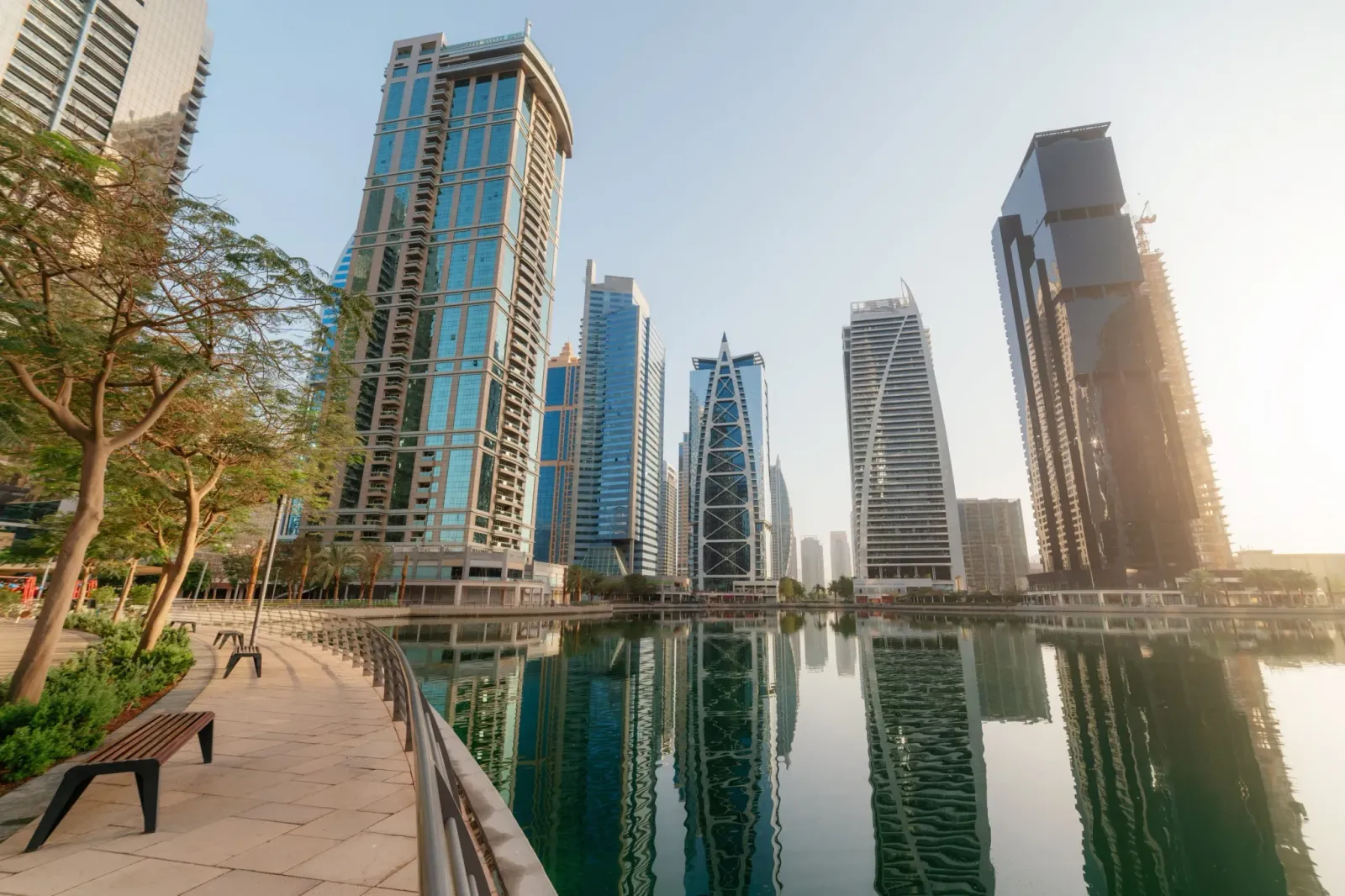
Dubai’s residential market posted a record early-March residential land transaction worth AED400m ($100m), but Goldman Sachs data shows a sharp drop in UAE transaction activity. For executives, the mix of conflict-driven sentiment shock, loan structure risks, and upcoming supply creates a near-term absorption and credit-quality watchlist.
Dubai set an early-March “record” moment, closing a massive residential land deal valued at AED400m ($100m) shortly after the Iran conflict began. The celebratory framing was loud. The numbers underneath were louder, and they point to something more serious than a quick blip: real estate transaction volumes in the UAE fell 37% year-on-year in the first 12 days of March and 49% month-on-month, according to analysis by Goldman Sachs. That disconnect matters for anyone underwriting risk in a market that has historically defied expectations.
To understand why this is a big deal, zoom out to what Dubai recently looked like. Dubai’s residential property prices surged by roughly 60% between 2022 and early 2025, a historic boom fueled by tax-free incentives, liberalized visa policies, and a heavy influx of high-net-worth individuals. Fitch had already been forecasting a correction before the conflict started, calling for a 15% correction during the period from July 2025 until the end of 2026, following the post-pandemic rally. But Fitch’s updated warning is that weaker economic activity, reduced tourism, and slower population growth will add pressure across both residential and commercial real estate, resulting in a larger correction than initially forecast.
Credit is where this stops being “just real estate news” and starts becoming a balance-sheet problem. Fitch told Fortune that it had analyzed the loan books of all rated UAE banks, and that corporate real estate poses the biggest risk among the areas of the economy most sensitive to conflict-related spillovers. The reason is structural, not vibes. Corporate real estate loans often have longer terms, for example 5-10 years, and are frequently structured as “balloon” or “bullet” loans. That means borrowers are required to pay off a massive, localized lump sum at maturity. These loans are typically secured by real estate, and loan-to-value ratios also increase when market prices decline.
Fitch also put real estate’s footprint on the table. Corporate real estate accounted for 13% of UAE banks’ total loans at year-end 2025, and Fitch estimates it was around the same level at the end of Q1 2026. Retail mortgage lending compromised around 10% of total loans. Meanwhile, other high-risk areas such as tourism, hospitality, and aviation together account for less than 5% of total bank loans. Put simply: if stress is coming, corporate real estate is the heavy hitter on the bank ledger.
Fitch said it does not see “a big pressure being exerted on the banking sector’s asset quality for now.” But it also warned that corporate real estate loans are likely to be the main source of new Stage 3 loans if the conflict is prolonged. Stage 3 loans are credit-impaired or defaulted loans. Fitch explicitly noted that this pattern showed up in previous crises, including the global financial crisis and, more recently, the pandemic, when both periods led to a rise in Stage 3 loans. For executives, the takeaway is that timing matters: the market can look merely “cooling” while the loan book starts quietly deteriorating underneath.
Now add the demand side, and the story gets sharper. The impact of the war on the residential off-plan market was immediate. Off-plan deals accounted for 69% of sales transactions and 65% of value in Dubai last year, according to the Dubai Land Department. In March, off-plan deals fell 21% month-on-month to 9,368 transactions, amid a sharp shift in investor sentiment. Industry practitioners told Fortune that the correction has been most pronounced in off-plan secondary sales, especially in areas with significant new inventory. In those cases, off-plan secondary apartments are trading 10% to 15% below original values.
That spread between original pricing and what the market will actually pay creates a very specific behavioral trap: buyers who jumped in believing prices would keep rising monthly are more likely to be exposed when cash flows and sentiment change. Mario Volpi, senior sales manager at Eva Real Estate agency in Dubai, told Fortune that “Lots of opportunistic investors jumped on the off-plan bandwagon, assuming that prices would keep going up on a monthly basis, and are now super exposed.” He also said many of those buyers lack the inclination, money, or stomach to pay the next instalment(s). At the same time, he said buyers looking for distressed sales can find deals in that space.
Price cuts are already showing up, too. At the end of May, sellers had cut listed prices by a combined AED2.36bn ($643 million) across 3,292 properties, according to data from LuxuryPriceDrops.com, which tracks daily price reductions on around 27,000 premium Dubai property listings. The biggest recorded drop was a property in Damac Lagoons, a Mediterranean-inspired villa community with 5km of waterfront space, down 61.2%, shaving AED300m ($82m) off its value in the process.
The next phase is supply and absorption. Incoming waves of new supply could drive prices down further. Dubai’s development pipeline remains substantial, with an additional 65,000 apartments and 12,500 villas scheduled for delivery by year-end, though a considerable number are now expected to be delayed to 2027 due to severe supply chain bottlenecks. Moody’s said in a research note published 7 May that “a sharp slowdown or reversal in population inflows would exacerbate absorption risks at a time of rising completed supply.” Moody’s framing is basically the board-level version of “too many units chasing too few net new buyers.” And that can feed into developers’ credit profiles.
Dubai has also tried to stimulate demand. It scrapped the AED 750,000 ($204,184) minimum property value previously required for individual buyers to be eligible for a two-year residency visa, aiming to attract buyers at the lower end of the market and jumpstart that segment. But the longer-term threat is still the one most executives cannot control: the Iran conflict could reduce Dubai’s appeal to expatriate workers and firms looking to establish operations in the region, potentially deflating the real estate market further.
For decision-makers watching the emirate’s ecosystem, the most consequential second-order risk is how government-related entities carry exposure. Capital Economics warned that a downturn in Dubai’s real estate market would threaten Dubai’s government-related entities, especially Dubai World, which is heavily exposed to property development through its property arm Nakheel, and Dubai Holding, which manages one of the largest real estate and land bank portfolios in the UAE, including holding major equity in Emaar Properties. This is not abstract history. The 2009 debt crisis made Dubai synonymous with what happens when ambitious projects meet financing stress. Capital Economics said the risk that severe debt problems emerge remains low for now, estimating that the three GREs have about $11.5bn in debt maturing this year, including $3.7bn in bonds, and that banks would likely step in if bond refinancing was too expensive.
Dubai, for its part, has tried to prevent a repeat. After 2009, authorities implemented stricter regulations, increased market transparency, and established the Real Estate Regulatory Authority (RERA) to oversee developers and manage disputes over canceled projects. Fitch’s Anton Lopatin, a Senior Director covering UAE banks at Fitch Ratings, based in Dubai, said that Dubai’s property market is more mature now with better oversight and that the government would step in if needed, because investor confidence is crucial.
So the war is the headline catalyst. The risk map is broader. It runs through transaction volumes, off-plan secondary pricing, loan structures, Stage 3 potential, absorption against a delivery pipeline, and the balance between short-term demand stimulus and longer-term expatriate inflows. If you run a board risk committee, or you lend to developers, or you build a strategy around “Dubai always bounces,” this is the moment where you stop relying on momentum and start stress-testing cash flows, maturities, and the next wave of supply.
This story's Key Insights and Take-aways are locked.
Create a free account to unlock Executive Actions for one credit.
Register to UnlockAlways free for Executives Club members. Join the Club
More in Business

Anthropic’s Levant Alpöge cracks the Jacobian conjecture after 87 years
A Harvard valedictorian used Claude to hit a 1939 breakthrough, but the missing “why” is the real problem.

Uber buys Delivery Hero for nearly $15B, vaulting to top food delivery outside China
The deal doubles Uber's dual-services footprint and pushes a ride-and-eats bundling play into 50 more markets.

Epic and Google drop settlement bid, forcing rival Android app stores by July 22
Google told the court it is ready to carry third-party app stores starting Wednesday, July 22.