

Eddie Smith at Grady-White pledged future profits to charity after his heir died
Grady-White’s owner turned loss into a legacy plan, mirroring Patagonia’s playbook and reshaping how family businesses can exit.
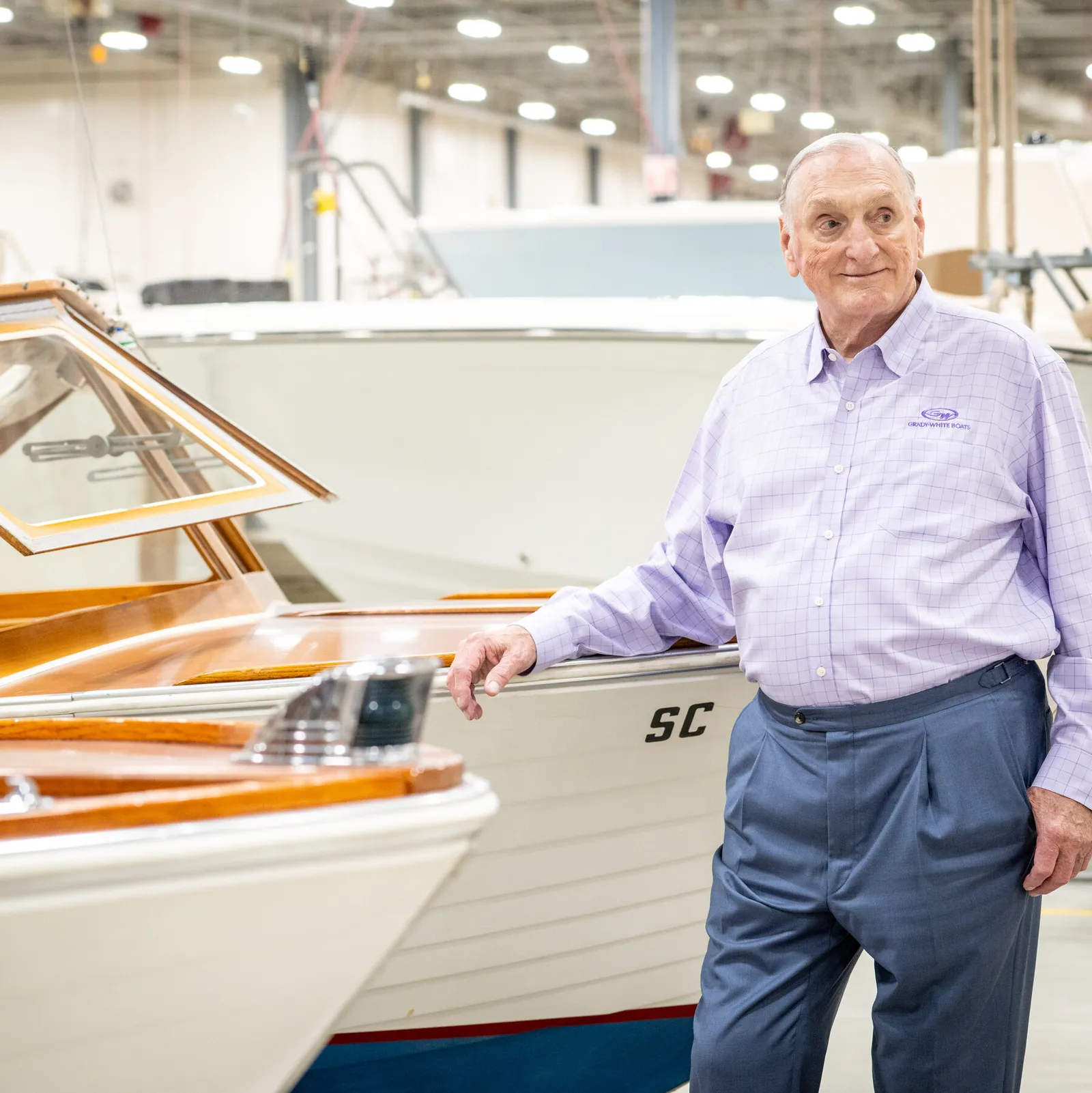
Eddie Smith, the owner of Grady-White Boats, looked for a way to pass on his legacy after his sole heir died. Inspired by Patagonia, he pledged future profits to charity, using profits as the vehicle for giving.
Eddie Smith, owner of Grady-White Boats, didn’t look for a traditional “sell the company” route after his sole heir died. Instead, he turned the moment into a legacy mechanism, pledging future profits to charity. And he did it because he was inspired by Patagonia, a company that made profit-with-purpose part of its brand story and, over time, part of how it structured its commitments.
That matters because it flips the usual order of operations for family-owned businesses. When the next generation is gone, the default script is often liquidation, a sale, or whatever estate planning can minimize disruption. Smith’s choice says something different: keep the operating engine running, but route the economic upside of that engine toward a charitable destination. In other words, he is trying to make “what the business produces next” more important than “what the business fetches today.”
To understand why that is a big deal, zoom out for a second on the incentives and constraints behind legacy planning. A boat manufacturer like Grady-White is not a software company where the value is mostly in a platform and a few headcount decisions. It is an industrial business with manufacturing realities, a customer base, and a reputation that has to be earned again every season. When you pledge future profits, you are not just writing a check. You are effectively binding your future cash flow to a stated purpose, which can influence how a board, executives, and owners think about reinvestment, pricing, and even how conservative or aggressive the company can be during downturns.
Patagonia’s influence is the clue to what “future profits” can mean operationally. Patagonia has long been associated with donating a portion of profits and tying spending decisions to mission alignment. Smith’s inspiration indicates he is borrowing the same behavioral model: define the promise, then run the business in a way that makes the promise credible over time. The strategic twist is that this approach does not require a one-time transaction. It can be implemented while the company continues to operate, which is particularly relevant when an owner’s personal story changes abruptly.
Regulatory framing is also an important practical dimension for anyone watching this kind of plan. In the United States, charitable giving structures can range from outright donations to more complex arrangements that depend on how the promise is implemented. The source does not spell out the exact legal mechanism Smith used, but the key point for decision-makers is that “pledging future profits” is not the same as “donating cash once.” It raises questions about enforceability, accounting treatment, tax implications, and governance. In a closely held company, these questions usually land on the shoulders of the owner, their advisors, and any board members who must ensure the plan does not destabilize operations.
There are also second-order effects that can surprise boards and leadership teams. A profit-to-charity pledge can become a constraint in busy years. If profits fall because of demand shocks, input costs, or supply chain disruptions, the charitable outcome tied to those profits changes too. That can create pressure to protect earnings, which may tilt management toward short-term performance management, or it may force executives to communicate clearly with stakeholders about variability. Conversely, if the pledge strengthens employee pride, customer goodwill, or brand differentiation, it can support resilience. The source confirms the intent is legacy-driven and inspiration-driven, but the broader implication is that mission-aligned economics can change how everyone inside the company experiences tradeoffs.
For peers in similar situations, the lesson is not “copy Patagonia” in a superficial way. The lesson is that legacy can be engineered, not just inherited or sold. Smith’s decision after his sole heir died shows a third option: stay in the game, define a recurring economic commitment, and let the business itself become the inheritance. For executives, board members, and investors watching family businesses, that changes how you think about succession planning. Sometimes the most consequential transaction is not between buyer and seller. It is between the business’s future cash flow and the purpose it is pledged to serve.
And for anyone who cares about how corporate culture and capital allocation intersect, this is the human part behind the spreadsheet. Smith’s inspiration was triggered by a personal loss. His response was structural: redirect future profits to charity. It is a reminder that the “why” can directly shape the “how,” and that legacy planning can be as much about governance and economics as it is about sentiment.
This story's Key Insights and Take-aways are locked.
Create a free account to unlock Executive Actions for one credit.
Register to UnlockAlways free for Executives Club members. Join the Club
More in Business

Anthropic’s Levant Alpöge cracks the Jacobian conjecture after 87 years
A Harvard valedictorian used Claude to hit a 1939 breakthrough, but the missing “why” is the real problem.

Uber buys Delivery Hero for nearly $15B, vaulting to top food delivery outside China
The deal doubles Uber's dual-services footprint and pushes a ride-and-eats bundling play into 50 more markets.

Epic and Google drop settlement bid, forcing rival Android app stores by July 22
Google told the court it is ready to carry third-party app stores starting Wednesday, July 22.