
Elon Musk says SpaceX will attempt tower catch after Starship Flight 13 splashed down intact
After a rare, intact water landing, SpaceX is aiming to catch Starship at the launch site on its next flight.
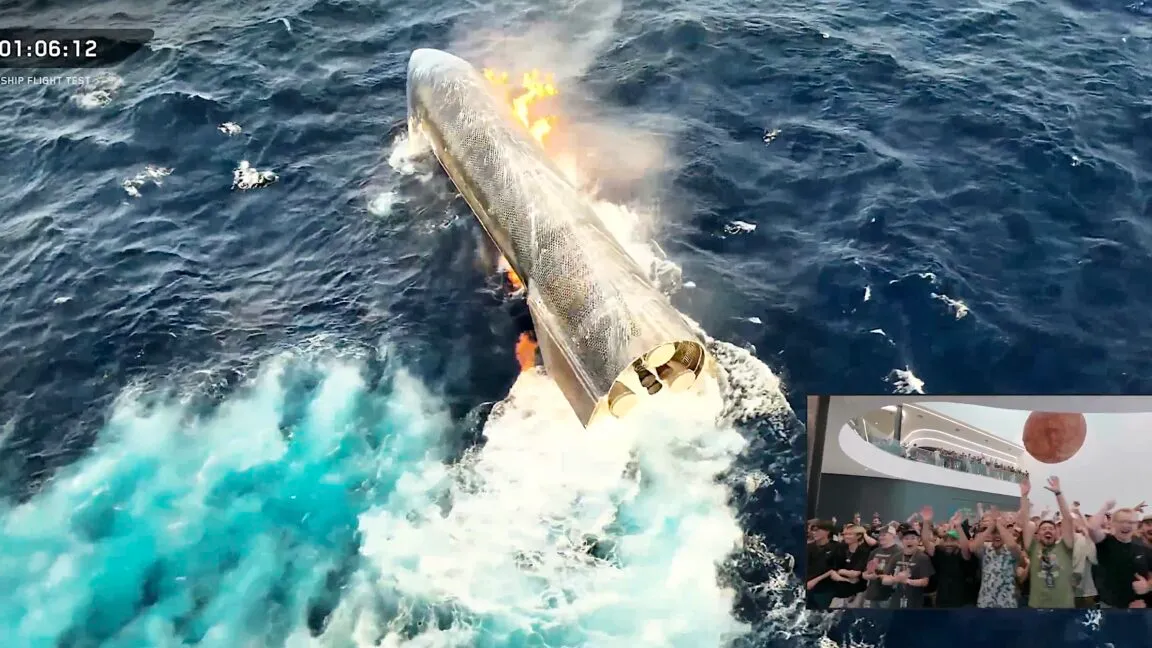
Elon Musk, SpaceX founder and CEO, wrote on X that unless SpaceX finds problems in mission data review, it will attempt to catch Starship with the launch tower on the next flight. The payoff is data on Starship’s heat shield and a faster path toward returning the spacecraft to Starbase.
SpaceX’s Starship just pulled off something it really needed: Flight 13 ended with an on-target, intact splashdown in the Indian Ocean, and Elon Musk says the company is now likely to take the next step by trying to catch it back at the launch site with the tower. Musk wrote on X Friday evening, “Unless we discover problems after mission data review, SpaceX will attempt to catch the ship with the tower on next flight.”
That’s not a trivia win. It is a workflow win. The plan would mean launching Starship on a longer-range trajectory, potentially into low-Earth orbit, and then bringing it back to the pad. Instead of hoping for another ocean landing that might be brutal to the vehicle, SpaceX would use mechanical arms on the launch tower to capture Starship as it slows to a hover, similar to how the tower has already been used to capture Super Heavy.
Let’s zoom in on why Flight 13 matters so much. SpaceX sent the 13th full-scale Starship test flight from South Texas to an on-target, intact splashdown in a remote stretch of ocean west of Australia. Starship has made precise splashdowns before, but previous water landings ended with conflagrations, an outcome SpaceX officials have come to expect with each water landing of Starship. This time, the ship “gently tipped over and came to rest floating” in the water. SpaceX then flew drones over the vehicle to inspect its heat shield, getting its best look yet at how more than 18,000 ceramic tiles insulating the stainless steel airframe weathered reentry.
Those tiles are a core constraint for Starship. They are designed to survive temperatures up to 2,600 degrees Fahrenheit (1,430 degrees Celsius) as Starship streaked back into the atmosphere, ending an hour-long flight that lifted off from Starbase, Texas at 5:51 pm CDT on July 24, 2026. In other words, SpaceX isn’t just looking for “it didn’t explode.” It is looking for the durability signal that would let the company push toward rapid turnaround, and eventually multiple flights per day. For that to be real, the heat shield cannot be refurbished or replaced after every flight, and this was, per Dan Huot (SpaceX communications manager), “the first time we’ve put an intact Starship in the water.” Huot called it a “dream scenario for the team that’s trying to get this heat shield data.”
The intact splashdown also changes what SpaceX might do next with the wreck-avoidance, inspection, and reuse timeline. Huot said the company could tow the vehicle back to shore for more detailed inspections, probably somewhere in Australia, even though Starship is designed for reuse but not after exposure to salt water. That tension matters: you get better inspection visibility when you can physically recover the craft, but salt water adds its own stressors, so the company will still need to translate what it learned into the next flight’s operational goals.
Meanwhile, engineers were not waiting around for the ocean to do the thinking. SpaceX received signals from Starship after splashdown through its Starlink satellite broadband network. A camera onboard Starship showed no signs of external damage to the six Raptor engines as water lapped against the lens. That matters because it helps separate “heat shield survived” from “the landing environment destroyed everything else.” And it matters for what the program needs to learn to climb toward orbital operations.
Flight 13 was also a stepping stone in a different direction: deploying the first of SpaceX’s upgraded Starlink V3 model. After the payload bay door opened and Starship began deploying a stack of 20 Starlink satellites, the satellites used the same arcing suborbital trajectory and were designed to burn up as they fell back into the atmosphere less than an hour after launch. Still, SpaceX ground teams established contact via radio and laser communication links and “downloaded key telemetry” before their fiery demise. The company used this to get its first look at Starlink V3 performance in space, and those satellites are larger and heavier than Starlink V2s, which is why they will not fit on Falcon 9.
Zooming out to the business and mission strategy, the next big leap is orbital, and the reason is simple: revenue and mission capability arrive when you can put satellites and payloads into orbit reliably and then return the vehicle for reuse. Starship’s next steps are getting to orbit and returning to the launch site. Those achievements would enable operational Starlink V3 satellite launches, unlocking higher-speed direct-to-device connectivity for consumers and the US military, and also create the revenue stream SpaceX needs to keep funding and scaling the system. For NASA, an orbital flight is a path toward orbital refueling, vital for any Starship flight beyond low-Earth orbit, including missions to the Moon in support of NASA’s Artemis program.
This is also part of a broader competitive and regulatory reality. NASA is working with SpaceX and Blue Origin to develop human-rated versions of Starship and the Blue Moon lander for ferrying astronauts. In that environment, “we will attempt a tower catch” is more than an engineering note. It is a signal about whether SpaceX is inching toward the operational cadence that would make long-duration, high-stakes missions more feasible.
And for executives watching from the sidelines, Musk’s condition is the tell: the tower catch depends on mission data review. The company is effectively running a fast internal gate between “rare win in the water” and “safe to attempt the next, more complex recovery approach.” If the data holds, Starship moves from splashdown learning to pad return learning, which is the kind of compounding advantage spaceflight programs chase for years. If it does not, the program resets, and the runway to frequent, operational flights gets longer. Either way, Flight 13 just delivered a very expensive-looking lesson for the next board-level decision: how much faith to place in the heat shield data before the next big mechanical gamble.
This story's Key Insights and Take-aways are locked.
Create a free account to unlock Executive Actions for one credit.
Register to UnlockAlways free for Executives Club members. Join the Club
More in Business

Anthropic’s Levant Alpöge cracks the Jacobian conjecture after 87 years
A Harvard valedictorian used Claude to hit a 1939 breakthrough, but the missing “why” is the real problem.

Uber buys Delivery Hero for nearly $15B, vaulting to top food delivery outside China
The deal doubles Uber's dual-services footprint and pushes a ride-and-eats bundling play into 50 more markets.

Epic and Google drop settlement bid, forcing rival Android app stores by July 22
Google told the court it is ready to carry third-party app stores starting Wednesday, July 22.