

Enid has to argue with the oil regulator that approved the Flying Monkey
The city says state rules were bypassed in 2018, and the fight lands in an administrative court later this year.
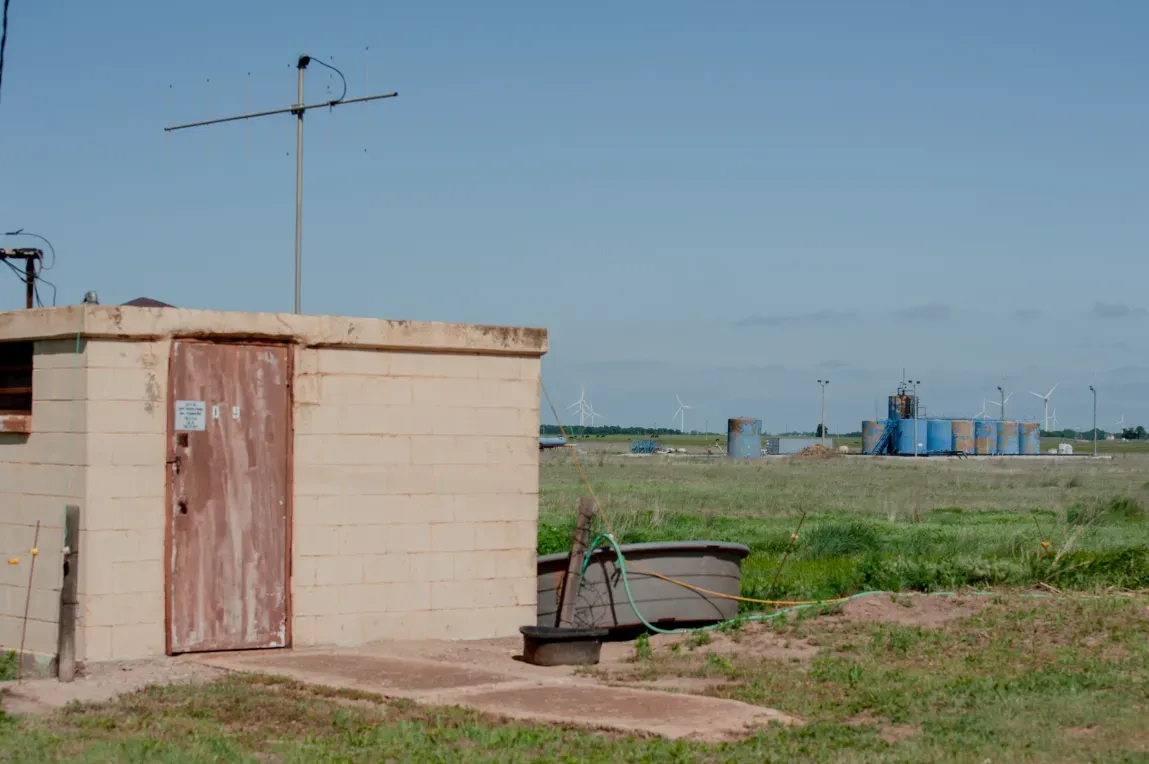
Enid, Oklahoma is appealing to the Oklahoma Corporation Commission, the agency that approved the “Flying Monkey” injection well without a hearing in 2018. The dispute could reshape how regulators handle wastewater injection near drinking water wells, after years of waivers and exceptions.
Enid, Oklahoma is taking on the Oklahoma Corporation Commission, the same state regulator that cleared the “Flying Monkey” oil wastewater injection well in 2018. The city argues that regulators approved injection despite a state rule requiring a hearing when injection sites are within half a mile of public water wells. Enid says that proximity was ignored, and it wants the permit revoked and stronger protections added as oil and gas companies continue seeking permission to dispose of wastewater near municipal water sources.
The stakes are not theoretical. The Flying Monkey sits less than a quarter-mile from Enid’s public water supply wells, and it has repeatedly failed structural integrity tests, signaling a potential leak. ProPublica and The Frontier mapped injection wells across Oklahoma and identified at least 114 injection wells in communities around the state that are located within a half-mile of a public water supply well. More than 300,000 Oklahomans rely on these water wells, according to the outlets’ analysis.
Why this case matters for executives and operators is simple: the “rules” for managing risk in oilfield wastewater injection are supposed to trigger extra scrutiny right where communities are most exposed. Under the state rule, injection operations are banned within a half-mile of public water wells unless regulators hold a hearing to ensure the activity will not pollute drinking water. Enid’s complaint is that the hearing never happened, even though the well was, by publicly available data, inside the protected radius.
In 2018, a small company named Hinkle Oil & Gas applied for a permit for the Flying Monkey less than a quarter-mile from two of the city’s water wells. In its application, the company checked a box attesting that the injection well was not within a half-mile of a public water supply well, the distance that should have triggered a hearing under state rules. Enid’s lawyers argued in a September 2025 court filing that this was “demonstrably false.” ProPublica reports that the commission approved Hinkle’s application without a hearing, giving the company the green light to inject more than 800,000 gallons of wastewater into the earth each day.
After approval, the regulatory story did not stabilize it just changed hands. Later in 2018, Hinkle transferred the well to another small company, which applied for a new permit to convert the Flying Monkey to a commercial well to dispose of wastewater produced by other oil companies. Enid contends that by approving this conversion permit, regulators allowed another violation of a state rule designed to protect public water wells from commercial disposal sites. ProPublica says the new company’s application also failed to acknowledge the close proximity of the public water supply well, and that the company has since filed for bankruptcy.
Both permits were signed by Patricia Downey, the manager of the agency’s underground injection control program, and both read “decision without hearing.” Neither city leadership nor their attorney agreed to be interviewed before the matter is resolved. The Oklahoma Corporation Commission declined to comment for this story, citing the ongoing case, as did BCE-Mach III Midstream Holdings LLC, the Flying Monkey’s current operator. The silence from the agency is telling, but the structure of the fight is even more so: Enid’s case will be heard in the agency’s administrative law court later this year.
If you are on a board, in-house counsel, or a senior operator tracking regulatory risk, the broader pattern here is what tends to repeat. ProPublica reports that the Oklahoma Corporation Commission has approved thousands of orders for waivers or adjustments to state rules in recent years, using its administrative court database. The outlets identified nearly 400 orders granting exceptions to injection regulations since 2022. Earlier reporting by ProPublica and The Frontier found the agency chose not to pursue stronger rules for wastewater injection following industry opposition. In response to that earlier reporting, the agency told ProPublica and The Frontier it is committed to “doing the right thing, holding operators accountable, protecting Oklahoma and its resources, and providing fair and balanced regulation.”
And then there is the “ground truth” beyond Oklahoma. ProPublica notes that Midland, Texas is still cleaning up groundwater polluted by a leaking injection well more than two decades ago. That is the part of these cases executives cannot outsource. The lead time between a permit decision and the downstream consequences can be long, and by the time the mess is obvious, communities, regulators, and operators all have to live with the same aquifer.
Enid officials are also up against a limit in what local government can control under state law. Enid complained to the state about the threat to its water, but under state rules the city is largely powerless to pass its own requirements governing these wells. That is why the case is, in effect, an appeal to the same regulator that previously approved the permits without a hearing. Ben Ezzell, a former Enid city commissioner, said he hopes the state recognizes that the community is asking for “reasonable” protections against catastrophic long-term damage to its water supplies, arguing that “It’s ultimately all one big aquifer,” and that “You can’t just pee in part of the pool. If any of the aquifer is tainted, all of the aquifer will be tainted.”
For Oklahoma peers, this is more than one city versus one well. It is a stress test of how hearing requirements work in practice, how distance-based triggers are handled in applications, and how consistently the system enforces protections when industry seeks exemptions. If Enid succeeds in reversing the Flying Monkey’s operating path and tightening protections for proximity to drinking water, the decision could echo across other communities that rely on groundwater while sitting near oilfield wastewater injection sites.
This story's Key Insights and Take-aways are locked.
Create a free account to unlock Executive Actions for one credit.
Register to UnlockAlways free for Executives Club members. Join the Club
More in Politics

12,000 tourists evacuated from Le Porge as wildfire rages in southwest France
A fire starting midday Wednesday triggered a Thursday evacuation, with heatwave conditions since May worsening wildfires nationwide.

Andy Burnham will court social media creators to spread his prime minister message
The UK prime minister plans influencer collaboration, raising questions about platform power, credibility, and political compliance.

Zinedine Zidane ends Deschamps era: signs four-year France deal until 2030 World Cup Tuesday
A new Les Bleus chapter starts Tuesday, with Zidane replacing Didier Deschamps after 2012.