
Epic CEO Tim Sweeney: 'Survive the AI revolution' as Star Wars-Marvel game goes AI-first
Epic's unannounced Star Wars-Marvel shooter is delayed indefinitely as the company retools around AI-first production - a bet with big implications for game development.
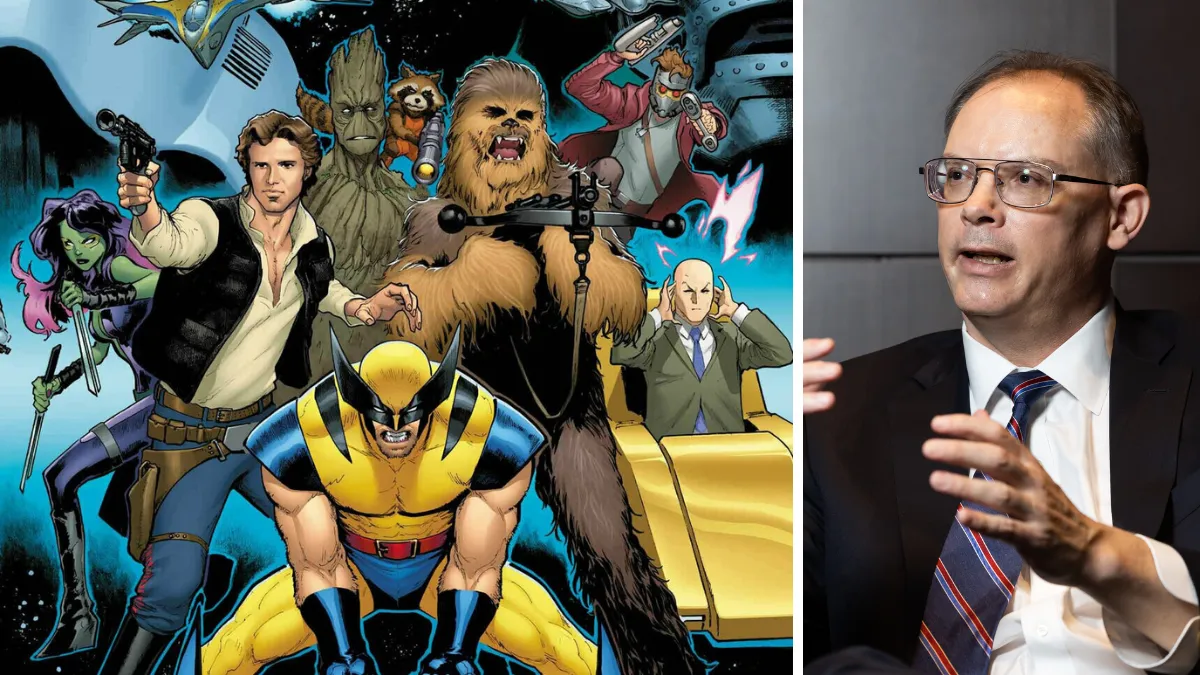
Epic Games CEO Tim Sweeney confirmed a company-wide pivot to 'AI first' development, delaying an unannounced Star Wars-Marvel shooter indefinitely and instructing staff to use Anthropic's Claude and full AI workflows for art. For decision-makers, this signals that even the most iconic IP is being subordinated to AI acceleration, forcing studios to weigh efficiency gains against consumer backlash and creative risk.
Epic Games has indefinitely delayed its unannounced Star Wars-Marvel crossover shooter, and CEO Tim Sweeney is framing the move as a survival strategy. "Our more modest aim is to survive the AI revolution," he wrote on X. The project, which had been targeting a March 2027 release, was paused last week after staff were told to adopt an "AI first" production model using tools such as Anthropic's Claude, with art "generated with full AI workflows," according to a Bloomberg report. The instructions are comprehensive: AI is not a helper tool but the default pipeline for one of the most anticipated crossovers in gaming, even though it was never officially announced.
Sweeney confirmed the broader shift in a series of posts, calling it "a huge pivot underway here at Epic, moving developers around to retool for maximum AI acceleration." He insisted the goal isn't to do the same work with fewer people, but to enable everyone to build more and better stuff, and to bring the benefits to all teams using Unreal. The instructions to the Star Wars-Marvel team, however, leave little doubt about the direction: AI is not an optional assist but the default production pipeline. For a company that built its reputation on hand-crafted, visually stunning worlds, this is a philosophical and operational break.
Sweeney also addressed consumer skepticism, saying "Much of the room wants it to be 2016 again, but it's not." He framed AI adoption as inevitable, arguing that Epic's role as a tool provider means designing for "the present that is and the future that will soon be." He projected efficiency gains ranging from 20% in the most technical areas of Unreal Engine development to 5x in web dev, and predicted that by next year, "very little will be less than 3x of January 2026 efficiency." Those numbers are staggering for an industry that has struggled with ballooning budgets and multi-year development cycles.
Perhaps the most strategic claim: "The biggest change will be much faster time from having an idea to playtesting it." Sweeney tied this directly to recent AAA failures, saying "most of the recent AAA failures can be attributed to game systems going through far too much of their development process without being able to playtest." That's a pointed argument for AI as a fix for an industry-wide problem, not just a cost-cutting tool. If AI can compress the loop from concept to playable build, it could address the root cause of many high-profile flops, from rushed launches to systems that never quite click.
The pivot comes after Epic laid off over 1,000 employees in March, citing declining console sales, ongoing legal disputes with Apple and Google, and difficulty delivering "consistent Fortnite magic with every season." The AI-first mandate is thus not a luxury experiment; it's a response to real margin pressure and a crowded, expensive content arms race. Epic is betting that AI can help it do more with less, even as it insists the goal is not headcount reduction but creative amplification. The layoffs, though, hang over that promise, and employees may be forgiven for reading the pivot as a way to stretch thinner teams further.
The Star Wars-Marvel crossover is a fascinating test case because it sits at the intersection of two of the most ubiquitous pop culture franchises. As PC Gamer notes, AI-generated content already often resembles Fortnite, Star Wars, and Marvel, so the AI origins may be less detectable than in other projects. That raises the stakes for Epic: if this experiment produces something players love, it could normalize AI-first AAA production; if it flops, it becomes a cautionary tale. The project is also a bellwether for how far AI can go in narrative-driven, IP-heavy games where fans have strong expectations for visual fidelity and authorial intent.
For executives across gaming and media, Epic's move is a signal that AI adoption is moving from experimental to structural. The company is not just using AI to accelerate a single title; it is reorganizing development teams around AI acceleration. That will pressure competitors to follow suit, even as consumer sentiment remains skeptical. The tech industry has a history of pushing through resistance - from Facebook's "likes" to algorithmic feeds - and Sweeney's comments suggest he expects the same here. His dismissal of the "2016" mindset is a direct challenge to the creative community that has loudly opposed generative AI in art and writing.
The question is whether "survive the AI revolution" means surviving the transition without losing the creative spark that made Fortnite a phenomenon. Sweeney's bet is that faster iteration and broader tooling will unlock better games, not just cheaper ones. For peers in similar roles, the lesson is clear: AI is no longer a side project; it's becoming the production line. The winners will be those who can integrate it without alienating the talent and audiences who still crave human craft. The losers may be those who wait for consumer sentiment to catch up, because by then the competitive landscape will have already shifted.
This story's Key Insights and Take-aways are locked.
Create a free account to unlock Executive Actions for one credit.
Register to UnlockAlways free for Executives Club members. Join the Club
More in Business

Elon Musk unveils a flying car, and SpaceX helped build it
The Tesla CEO's showcase at a SpaceX facility signals a future where road and rocket engineering converge.

Apple's $2,000 iPhone Duo opens preorders, taking on Samsung and Google
Apple's first foldable hits the market at a premium price, reshaping a category Samsung and Google have led.

Pope Leo XIV, first American pope, diagnosed with lung cancer
The 71-year-old Chicago-born pontiff underwent successful surgery on his right lung, and his diagnosis raises new questions about his AI-focused papacy and the Vatican's future.