
EU telcos could face up to €40B to rip and replace Huawei and ZTE gear
Cybersecurity Act 2 deadlines push a costly, fast purge, while equipment prices may jump 24% for mobile networks.
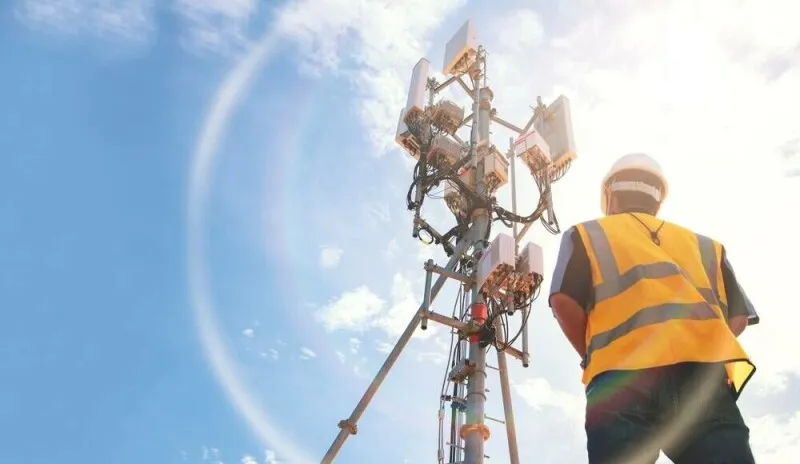
GSMA Intelligence, the research arm of the GSMA, estimates proposed EU Cybersecurity Act 2 rules could cost European telcos up to €40 billion to remove “high-risk vendors” like Huawei and ZTE. For decision-makers, the threat is not just capex, but higher equipment costs, delayed 5G/6G, and broader economic hit claims up to €370 billion by 2030.
European telcos may be staring at a potential bill of up to €40 billion to rip out and replace network equipment from “high-risk vendors” like Huawei and ZTE. That figure comes from GSMA Intelligence and it is tied directly to the European Commission’s proposed Cybersecurity Act 2, or CSA2, which would require member states to remove and replace critical telecoms infrastructure supplied by designated high-risk vendor (HRV) suppliers.
The timing matters almost as much as the price. The GSMA says mobile operators would have just three years to remove the targeted equipment, and that creates a nasty planning problem because other deadlines for other networks and assets could differ. In plain terms: even if a company wants to spread spending out, the regulation could force a fast “close the gap now” replacement cycle. GSMA’s estimate, based on a survey of seven EU operator groups, lands at €30 billion to €40 billion, with a midpoint of €35 billion. On that midpoint, mobile networks would account for €19 billion, fixed infrastructure for €5 billion, and transport elements for €11 billion, including optical backbones and subsea cables.
Why does Brussels think this is worth it? The GSMA frames the rationale around the increasing importance of digital infrastructure to economies and everyday life, and the policymaker push toward security and resilience. The Commission’s “high-risk vendor” concept, as described in a speech by former European Commissioner Thierry Breton several years ago, points at China-based suppliers such as Huawei and ZTE. Under CSA2, the mechanism is regulatory: member states would designate HRVs and then require operators to remove and replace critical equipment supplied by those vendors. So this is not a voluntary vendor diversification strategy. It is compliance-driven replacement.
But the report’s core warning is that the uncertainty is not just “how much does it cost,” it is also “what else does it break.” The GSMA says banning those high-risk suppliers would restrict competition in the telecoms equipment marketplace, which likely means higher costs for operators. It estimates equipment prices could rise 24 percent for mobile kit. Fixed network gear could see increases up to 19 percent, while transport network equipment prices could rise around 10 percent. The analysis relies on an approach favored by the European Commission itself, using diversion ratios, which measure the proportion of sales lost by one firm that might be captured by another, combined with margins. In other words, the report is trying to translate “fewer eligible vendors” into “here is what it does to prices.”
That matters for budgets between now and the actual replacement wave. Based on anticipated investment between 2027 and 2030, the GSMA estimates an incremental cost to network operators of about €8.5 billion, or $9.7 billion, from the higher equipment pricing environment. And once you add that on top of the headline €30 billion to €40 billion rip-and-replace range, you start to see why boardrooms will care. GSMA expects operators will respond to these additional costs by reviewing investment and market strategies, potentially increasing access charges for customers or scaling back spending on network upgrades and service improvements, possibly both.
Then there is the performance and timetable risk. The GSMA warns that slower or more expensive 5G/6G deployment could hinder the EU’s ability to meet its Digital Decade 2030 targets, because high-quality, affordable network infrastructure is described as a foundational general-purpose technology that underpins productivity gains, innovation, and economic growth. That is the “second-order” framing: even if a regulator wants security outcomes, the network spend trade-offs can ripple into national competitiveness.
If you want a real-world test case, the report points to the UK. It forced operators to remove Huawei kit from the country’s 5G networks in response to pressure from the first Trump administration, which threatened to cut Britain out of intelligence sharing if it did not comply. The report notes that an investigation found no technical justification for such a ban. It then claims that the UK’s 5G networks are among the worst in Europe for performance and quality of service, directly linked with the Huawei replacement decision, when British operators should have been putting cash toward ramping up 5G rollouts. The report also says some telecoms networks in the US still use Huawei equipment, refusing to replace it unless the government pays. And it adds that Huawei was reported as the supplier of nearly 60 percent of the installed network kit operating Germany’s 5G infrastructure a few years ago.
The bottom line for EU decision-makers, and for executives watching from other regions, is simple. CSA2 could force a rapid equipment purge with a price tag measured in tens of billions, plus higher equipment costs from reduced competition, plus potential delays or cutbacks to 5G/6G investment. GSMA references a KPMG study, produced in collaboration with the China Chamber of Commerce to the EU, claiming cumulative economic losses up to €370 billion, or $422 billion, across the EU between now and 2030. Whether that maximum number holds or not, the immediate problem is already concrete: the combination of replacement deadlines and market pricing effects could reshape capex plans across the telecom stack, from mobile and fixed networks to optical backbones and subsea transport. For boards, this is the kind of regulatory move that turns “risk management” into “capital allocation, pricing power, and growth timeline” all at once.
This story's Key Insights and Take-aways are locked.
Create a free account to unlock Executive Actions for one credit.
Register to UnlockAlways free for Executives Club members. Join the Club
More in Business

Anthropic’s Levant Alpöge cracks the Jacobian conjecture after 87 years
A Harvard valedictorian used Claude to hit a 1939 breakthrough, but the missing “why” is the real problem.

Uber buys Delivery Hero for nearly $15B, vaulting to top food delivery outside China
The deal doubles Uber's dual-services footprint and pushes a ride-and-eats bundling play into 50 more markets.

Epic and Google drop settlement bid, forcing rival Android app stores by July 22
Google told the court it is ready to carry third-party app stores starting Wednesday, July 22.