
Europe EV sales cross 25% in June 2026 as registrations jump nearly 40%
Battery-electric registrations in 17 markets hit 275,060, forcing a new reality for automakers, investors, and policy risk.
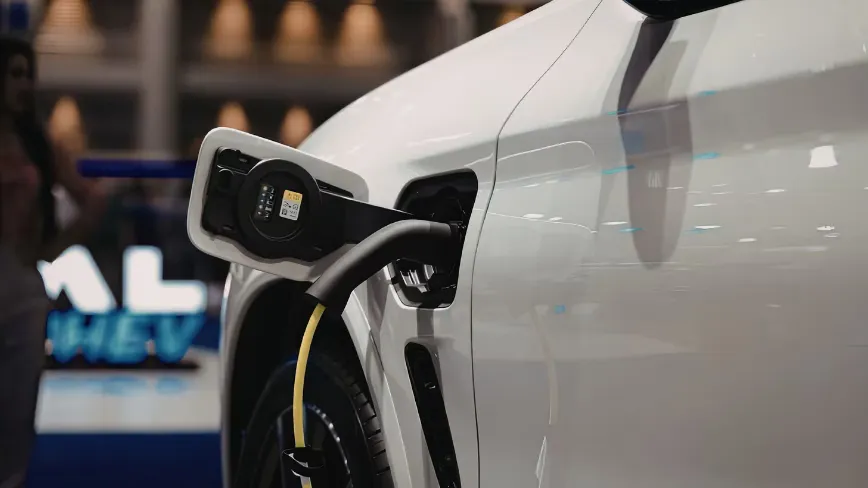
New AutoMotive's E-Mobility Europe bulletin reports that battery-electric registrations across 17 European markets reached 275,060 in June 2026, up nearly 40% year over year. That surge pushed EVs past 25% of all new car sales for the first time in those markets, changing what “early” means for strategy and capital.
Battery-electric registrations across 17 European markets hit 275,060 in June 2026, according to the E-Mobility Europe bulletin published by New AutoMotive. That number is a jump of nearly 40% compared to June of the prior year.
The important part is what the surge did, not just how big it was. Those registrations pushed EVs past 25% of all new car sales in those markets for the first time, meaning the EV market is no longer a “niche with momentum.” It is now a quarter of new vehicle demand, all in a single month.
This is the kind of threshold move that executives feel in the financials. When EVs pass 25% of new sales, the implications spread outward from factory floors to pricing power, procurement plans, and fleet commitments. Automakers typically plan production and component purchasing on the expectation of gradual growth, not a one-month leap that alters mix fast enough to force revisions to supply and cost assumptions. Even if June is not the entire year, it signals that demand can accelerate quickly when multiple factors align.
The next question for boards and leadership teams is what “nearly 40%” implies for forecasting. A year-over-year jump of that size suggests the EV ramp is not purely replacement-driven. It points to increasing customer adoption or improving commercial conditions, both of which make future quarters less forgiving for companies that treat EVs as optional capex. In practical terms, higher registrations can translate into higher utilization of EV-specific capacity, sooner-than-expected take-rates on incentives and financing offers, and faster shifts in dealer inventory dynamics.
Regulation is the backdrop, even when the data point is purely registration volume. Across Europe, policy pressure has generally been aimed at accelerating battery-electric adoption through emissions rules, infrastructure support, and vehicle standards. When EVs reach new market share milestones, it reduces the likelihood that policymakers will be satisfied with “steady progress” instead of “faster transition.” In other words, the market is proving regulators’ direction of travel correct, which can increase the odds that the regulatory environment tightens rather than loosens.
There is also a second-order effect that matters to investors: market share gains can change the competitive math across the entire value chain. Battery supply, power electronics, charging networks, and aftersales ecosystems all benefit when EVs become a larger fraction of new cars. When EVs move from below-25% to above-25% share, incumbents with strong EV programs may gain even more leverage through scale, while laggards can face higher per-unit costs and tougher margin defense. That can lead to faster strategic reshuffling, including supplier renegotiations, platform prioritization, and regional production adjustments.
For executives at automakers, suppliers, and fleet operators, this is a planning signal with teeth. A quarter of new sales in 17 markets in a single month changes how quickly the market can normalize around EVs. For those making capital allocation decisions, the headline is not just the 275,060 registrations. The real message is the speed at which market mix is changing. If the quarter becomes a sustained band, it can compress the runway for internal debates about when to commit more heavily to EV product, battery-related investments, and service capacity.
And for everyone watching the competitive landscape across Europe, this June result sets a new benchmark. EVs topping 25% of new car sales for the first time means you can start to model the EV transition as mainstream at least in these 17 markets, not as a future promise. The strategic stakes are straightforward: capture share while demand accelerates, or be forced into catch-up when the market decides it has already moved.
This story's Key Insights and Take-aways are locked.
Create a free account to unlock Executive Actions for one credit.
Register to UnlockAlways free for Executives Club members. Join the Club
More in Business

Anthropic’s Levant Alpöge cracks the Jacobian conjecture after 87 years
A Harvard valedictorian used Claude to hit a 1939 breakthrough, but the missing “why” is the real problem.

Uber buys Delivery Hero for nearly $15B, vaulting to top food delivery outside China
The deal doubles Uber's dual-services footprint and pushes a ride-and-eats bundling play into 50 more markets.

Epic and Google drop settlement bid, forcing rival Android app stores by July 22
Google told the court it is ready to carry third-party app stores starting Wednesday, July 22.