
Evergrande liquidators ask for judicial review over SFC-PwC deal costing creditors HK$1 billion
In a Hong Kong High Court writ, the liquidators claim the Securities and Futures Commission settlement leaves creditors HK$1 billion worse off.

China Evergrande Group liquidators have filed a writ with Hong Kong's High Court seeking leave to pursue judicial review of the Securities and Futures Commission's agreement with PwC Hong Kong. They argue the settlement leaves creditors HK$1 billion (US$128 million) worse off, according to a court document released Monday.
China Evergrande Group liquidators are taking the fight to Hong Kong’s High Court. In a court document released on Monday, the liquidators said they want permission to seek judicial review of the Securities and Futures Commission (SFC) agreement with PwC Hong Kong, claiming the settlement leaves creditors HK$1 billion (US$128 million) worse off.
This is not a generic complaint. The writ, filed with Hong Kong’s High Court, specifically asks the court for leave to apply for judicial review of that SFC-PwC agreement, and it also seeks an order preventing the agreement from moving forward in the way it is currently structured, according to the document. The liquidators are essentially arguing that a regulator-backed settlement with PwC has a measurable negative impact on what creditors recover, and the figure at the center of the dispute is HK$1 billion.
To understand why this matters beyond Evergrande, it helps to remember what a market regulator settlement is supposed to do. The SFC is the market regulator in Hong Kong, and when it settles with a professional services firm like PwC Hong Kong, the objective is typically to resolve issues without prolonging proceedings. But in complex corporate collapses like Evergrande, “resolution” can look very different from the perspective of creditors trying to maximize recoveries. The liquidators’ claim is that the deal does not just close a regulatory file, it also shifts the financial outcome for insolvency stakeholders.
Evergrande’s liquidation has been a years-long stress test for how capital markets, regulators, and insolvency systems interact. When a large issuer fails, the fallout tends to spread across multiple dimensions: filings, audits, disclosures, enforcement, and compensation. Professional services firms can end up in crosshairs because their work sits close to where investors and creditors decide what to trust. That is why an SFC settlement with PwC Hong Kong can become a lightning rod. It can signal how regulators interpret responsibility, and it can also change the practical economics of who pays what, when, and under which framework.
What the liquidators are seeking is also procedurally important. The writ filed with the High Court is designed to request leave to apply for judicial review. Judicial review is a mechanism courts use to assess whether a public authority’s decision was made lawfully, and that means the dispute is not simply about whether a settlement feels fair. Instead, it is about whether the agreement, as made by the SFC with PwC Hong Kong, was appropriate from a legal process standpoint given its impact on creditors.
The second-order implication is that this could change how future regulator settlements are negotiated in markets where insolvency claims intersect with enforcement. If a liquidators’ group can credibly argue that a regulator agreement leaves creditors worse off by HK$1 billion, then regulators and counterparties may face more scrutiny about how insolvency stakeholders fit into the settlement logic. Even if the SFC agreement is intended to settle enforcement issues, insolvency constituencies will likely watch the outcome closely because it affects recoveries, not just compliance headlines.
For decision-makers at boards and in finance functions, this is a reminder that settlements are not standalone events. They can ripple into claims strategy, negotiation leverage, and stakeholder expectations when companies are in or near distress. The Evergrande liquidation case also highlights a structural risk for creditors and auditors: when a regulator resolves a matter, the resolution might not align neatly with insolvency timelines and outcomes. The liquidators’ move suggests they believe the alignment is off by a very specific amount: HK$1 billion (US$128 million).
Peers should pay attention because this case could shape how regulators, firms, and insolvency actors coordinate during the most chaotic part of a crisis. If the court grants leave to pursue judicial review and considers whether the SFC settlement’s effects on creditors were legally or procedurally sound, it could set expectations that extend well beyond Evergrande. For executives, that means the question is no longer only “what did the regulator decide?” It is also “how does that decision land on the balance sheets of the people owed money?”
This story's Key Insights and Take-aways are locked.
Create a free account to unlock Executive Actions for one credit.
Register to UnlockAlways free for Executives Club members. Join the Club
More in Business

Gina Rinehart backs SpaceX with a $1B+ stake after its $2.5T debut valuation
The Aussie mining billionaire just put Hancock Prospecting behind Musk's rocket-and-satellite combo, and markets noticed.

Fox agrees to buy Roku for $22B, paying $160.00 per share
What looks like a simple streaming bet is actually a $22 billion corporate reshuffle with board and regulatory gravity.
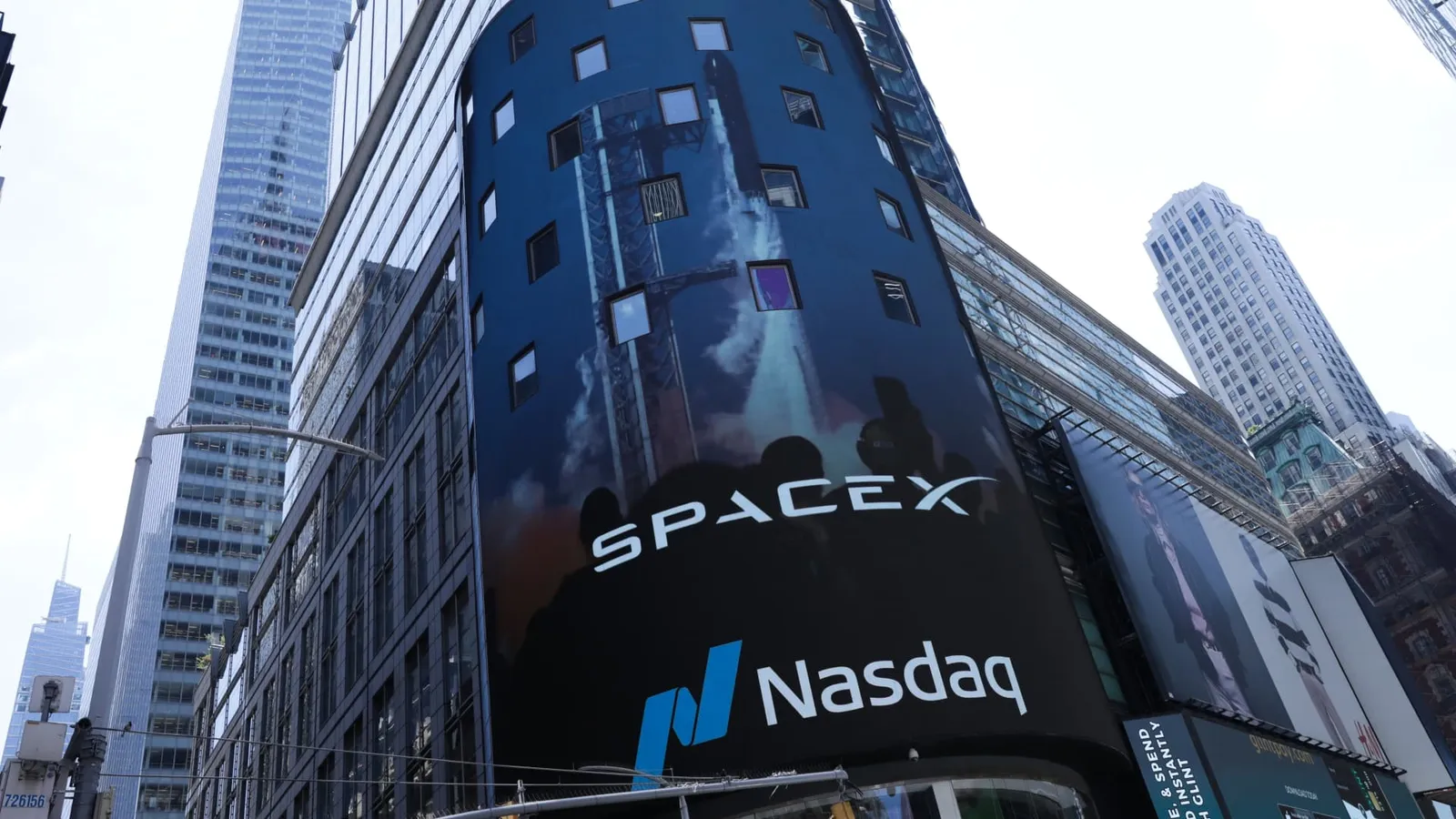
SpaceX jumps 6% in premarket, valuing the company at $2 trillion+ after its debut
The stock’s first-day surge pushes SpaceX past $2 trillion, reshaping how investors and regulators think about private space risk.