

FDA calls its baby botulism investigation ongoing, but still can't name the cause
After tracking spore contamination in ByHeart formula, the agency says it doesn't yet know how it happened or how to stop it.
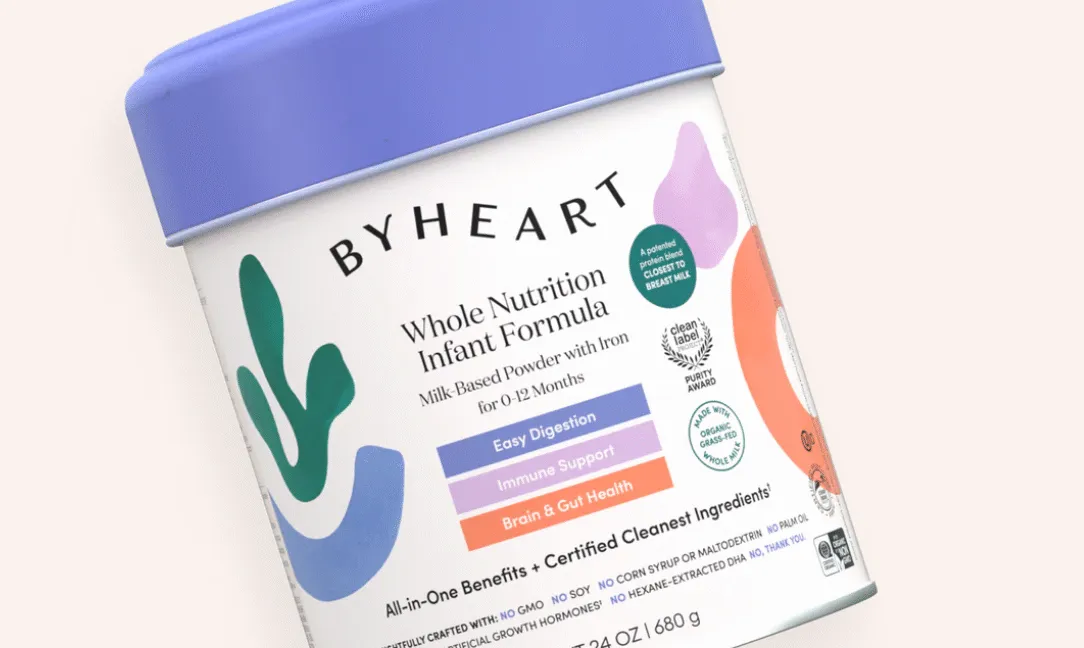
The FDA posted an epilogue to the baby botulism outbreak linked to spore-contaminated formula made by ByHeart, and the root-cause probe is still ongoing with a focus on ingredients. For decision-makers at consumer-health companies, the gap between confirmed contamination and prevention-ready conclusions is a governance and risk-management problem.
The FDA’s latest update on the baby botulism outbreak tied to spore-contaminated infant formula made by ByHeart lands like a shrug: the regulator still does not know the root cause, or how to prevent it from happening again.
In its posted report this week, the FDA said, “The FDA's investigation into the root cause is ongoing with a focus on ingredients.” That sentence is doing a lot of work. It confirms the contamination was tracked with enough clarity to connect the outbreak to formula from a specific manufacturer, but it does not close the loop on the critical question leaders and boards are actually judged on: where the spores came from in the first place, and what control will stop the next batch from carrying the same hazard.
For families, the timeline is personal and frightening. For executives, it is also a spotlight on process reliability. Botulism in babies is devastating precisely because it is not a typical “food quality” issue. It is an extreme outcome tied to a specific biological risk, and the nature of spore contamination means the remedy cannot be only an after-the-fact recall. Regulators and companies need a defensible prevention chain: sourcing, handling, processing, testing, and decision rules for what counts as unacceptable risk. The FDA update, according to Ars Technica, is that the investigation is still in that stage.
And in the void, blame becomes a strategy, even when no one says the strategy out loud. Ars Technica reports that three companies at the center of the investigation are “left pointing fingers at each other,” with none publicly taking responsibility for the contamination. That dynamic matters because the most expensive part of incidents like this is not only remediation. It is how long the uncertainty lasts, and who controls the narrative while facts are still being gathered. When everyone is litigating causality rather than aligning on corrective actions, regulators get more data they cannot easily validate, and internal stakeholders get more questions they cannot answer.
This is where regulatory framing turns into business risk. The FDA’s wording emphasizes ongoing investigation and ingredient focus. That is not automatically bad. Investigation takes time, and ingredient-level inquiries can be the right path when contamination appears consistent across products or lots. But for boards, the issue is what “ongoing” means operationally. Investors and internal audit teams will ask: What has changed today to reduce the probability tomorrow? Are the ingredient suppliers under additional screening? Are there interim controls while root cause remains unknown? Are there testing protocols that detect spores reliably enough to prevent an incident, not just to confirm it after symptoms appear?
The market context makes the stakes higher. Infant formula is a high scrutiny category because it is essential, regulated, and politically visible. When an outbreak involves a specific brand, the reputational impact can be immediate even before the technical cause is fully understood. That creates a pressure loop where companies may move fast on recalls and communications, but still get stuck arguing about prevention. The result is a dual track: one track for consumer safety actions, and another track for investigations, documentation, and accountability. The Ars Technica report suggests the second track has not yet converged.
There is also a second-order implication for peers. Outbreaks like this do not just prompt a one-time response, they change what regulators look for in “ingredient controls” across the supply chain. If the FDA cannot yet say how spores got into formula, it still can set expectations for what it will want next time. That affects compliance costs and supplier relationships for other formula makers, as well as adjacent consumer health companies that rely on similar processing and ingredient sourcing patterns. Executives should assume that ingredient traceability, incoming material verification, and robust corrective action plans will get heavier scrutiny.
For decision-makers watching this from the next board meeting, the real lesson is the gap between confirmed contamination and prevention-ready certainty. The FDA update keeps the investigation open. Meanwhile, the companies involved are publicly at odds, with no clear party stepping forward to fully own the contamination. Until the regulator can name the cause and the prevention strategy, leaders will have to operate with incomplete answers, and that is exactly when governance, cross-functional accountability, and risk communications get tested the hardest.
This story's Key Insights and Take-aways are locked.
Create a free account to unlock Executive Actions for one credit.
Register to UnlockAlways free for Executives Club members. Join the Club
More in Business

Anthropic’s Levant Alpöge cracks the Jacobian conjecture after 87 years
A Harvard valedictorian used Claude to hit a 1939 breakthrough, but the missing “why” is the real problem.

Uber buys Delivery Hero for nearly $15B, vaulting to top food delivery outside China
The deal doubles Uber's dual-services footprint and pushes a ride-and-eats bundling play into 50 more markets.

Epic and Google drop settlement bid, forcing rival Android app stores by July 22
Google told the court it is ready to carry third-party app stores starting Wednesday, July 22.