
Feb. 20, 2026: U.S. blocked Chile from a Hong Kong cable plan via State Department email
Chile’s China-linked undersea cable proposal turns into a real test of how far Washington will go.
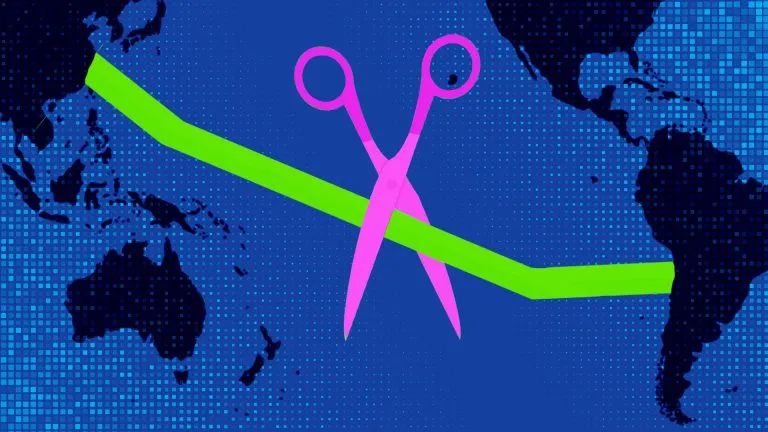
Juan Carlos Muñoz, then Chile’s minister of transportation and telecommunications, received an email on February 20, 2026 from the U.S. State Department about a proposed undersea cable from Chile to Hong Kong. The episode puts Chile’s telecom infrastructure plan in the crosshairs of U.S. efforts to curb Chinese telecom ambitions.
On the morning of February 20, 2026, Juan Carlos Muñoz, then Chile’s minister of transportation and telecommunications, opened an email from the U.S. State Department. The message was tied to a specific telecom infrastructure project: a proposed undersea cable from Chile to Hong Kong that promised to connect South America directly to Asia.
That’s the reversal at the center of the story. A project framed as connectivity infrastructure became, in practice, a geopolitical stress test. Muñoz’s cable plan was not just a technical procurement question or a commercial negotiation. It became a question of whether Washington would tolerate a telecom link that could advance Chinese telecom ambitions, even when the originating request came from an ally in Latin America.
To understand why this matters, zoom out to how undersea cables actually work as power. They are long-lived, high-capex assets. Once a route, landing, and operating model are chosen, switching later is expensive and disruptive. That means governments treat cables less like ordinary purchases and more like decisions that can lock in strategic influence for years. A Chile to Hong Kong pathway is not merely a faster route to websites. It is a direct piece of global data plumbing that can reshape latency, bandwidth availability, and the leverage of who supplies the underlying network ecosystem.
Enter the U.S. side of the equation. The core stake in this story is not that the U.S. dislikes connectivity in principle. It is that telecom infrastructure can become an avenue for access, surveillance risk, or dependency, depending on the vendor relationships and operating arrangements involved. When the U.S. signals a concern through a formal channel like the State Department, it moves the decision from the realm of industry preference into the realm of national security policy. In other words, Chile’s choice stops being only “what works and what costs less,” and starts being “what is permitted and what triggers consequences.”
This is why the cable becomes a test case. A proposed Chile-Hong Kong cable promises a direct bridge between South America and Asia. If such a link proceeds on a timeline and with partners that satisfy local objectives, it can quietly tilt competitive dynamics in global connectivity. But if Washington pushes back, the project can stall, be renegotiated, or be redirected. That is the second-order effect executives should track: not just whether one cable gets built, but how the signaling changes future bids, future routing decisions, and future procurement comfort across an entire region.
For Muñoz and Chile’s telecom leadership at the time, the decision would have come with a tight political and operational window. Ministers are accountable for keeping networks reliable and improving international connectivity, but they also must govern under conditions set by major powers. A State Department email does not automatically cancel a project, but it changes the risk calculus inside a government and among bidders. It forces procurement teams to consider compliance, partner eligibility, and potential restrictions earlier than they would for a standard infrastructure procurement.
For boards and investors watching from the sidelines, there is another layer: cables are the physical substrate of the digital economy. When governments scrutinize telecom infrastructure through a national security lens, it can affect how capital flows to suppliers and systems, and how quickly strategic assets come online. That can ripple into pricing, financing terms, insurance requirements, and partnership structures across telecom and adjacent tech markets, even for companies not directly involved in this specific Chile-Hong Kong proposal.
So the strategic takeaway is sharper than “a cable got blocked.” This episode demonstrates how a telecom project that starts as a connectivity upgrade can become a geopolitical bargaining chip. For decision-makers in any country balancing relationships with the U.S. and China, it raises the same practical question: when connectivity plans intersect with Chinese telecom ambitions, who sets the boundary, and how early do you learn where it is?
This story's Key Insights and Take-aways are locked.
Create a free account to unlock Executive Actions for one credit.
Register to UnlockAlways free for Executives Club members. Join the Club
More in Technology

Nvidia's $89B data center quarter: the 9 companies cashing in
The AI buildout is minting fortunes beyond GPUs, and memory, cloud, and cooling suppliers are riding the same wave.

Google quietly links your phone number to every Android account on your SIM
Adding a SIM now ties your phone number to all Google accounts - and future accounts inherit it. Here's the security and privacy stakes.

Hijacker AI 'Skynet mode' runs 100,000 attack steps against exposed models
Symantec caught a criminal AI agent that borrows other models, steals data, and mines crypto; the only relief is no confirmed victims yet.