
Fitness trackers can work on tattooed skin, but the right tech decides
How tattoos interact with optical sensors, what to test before you buy, and why regulators care.
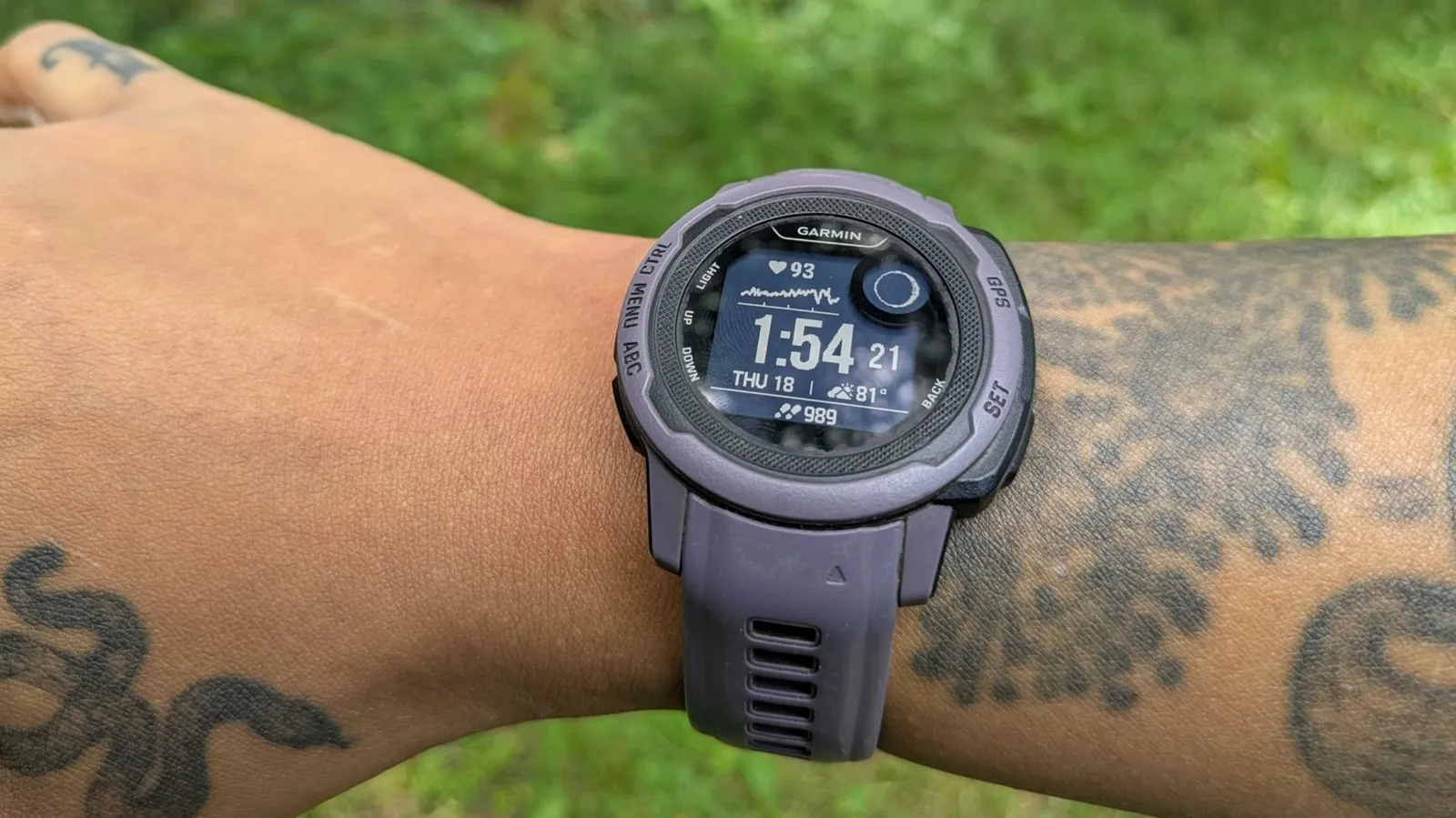
Fitness trackers can still function for people with tattoos, but the answer is not universal. The consequence for decision-makers is simple: device selection and user support have to account for sensor variability, not marketing claims.
The short answer is sometimes, but it is complicated. Tattoos can interfere with fitness trackers that rely on optical sensors, and the degree of interference depends on the specific device and how it reads your skin.
That matters because most fitness trackers are sold with the promise of measuring things like heart rate, sleep, and activity in a hands-free way. Optical methods generally read reflected light from the skin, and tattoos can change how that light is absorbed or reflected. The practical result is that a tracker may work perfectly on one person and deliver less reliable data on another, even if both users have similar fitness levels.
To understand why this gets messy, it helps to separate two categories of sensor technologies. Many consumer fitness trackers use optical heart rate sensing, which typically depends on light entering the skin and bouncing back to a detector. Tattoos are essentially pigment layers under clear surfaces, so they can affect the optical signal quality. In other words, the tracker is not just measuring your physiology, it is also measuring the optics of your skin in a given area.
There is also a product and incentive angle. Fitness device companies want reliable measurements across diverse users, but they also have limited ability to test every real-world scenario. If a large portion of the audience has tattoos, that is a meaningful quality and support issue. If a smaller portion does, it can still be painful at the margin because dissatisfied users will notice immediately when heart rate readings look off, sleep tracking seems inconsistent, or workouts do not line up with expectations.
The market reality is that “it works” is rarely a single binary. Fitness trackers vary in how they place sensors, how they handle skin contact, how they process noisy optical data, and how aggressively they smooth readings over time. Two trackers can both claim “optical heart rate,” but they can still behave differently with tattooed skin. That is the “complicated” part of the short answer.
Regulators and standards framing also influences what you should expect from the category. Many consumer wearables operate under a regulatory environment where they are not treated exactly like clinical medical devices for diagnosis. That does not mean “anything goes.” It does mean that performance expectations and enforcement are usually tied to how products are marketed and what claims they make, plus how safety and effectiveness are demonstrated for their intended use.
So what should an executive or operator take away when someone asks, “Do fitness trackers still work if you have tattoos?” First, treat it as a product reliability question, not just a user question. If your customer support team fields recurring complaints about measurement accuracy from tattooed users, that is not random noise. It is a signal that your device validation, onboarding guidance, or firmware-level signal processing may need tuning for real-world skin variability.
Second, think about second-order impacts on retention. Wearables are “habit products.” If a tracker regularly produces readings that do not match the user’s experience, the user stops trusting it. Trust is the currency of this category. Once users stop wearing the device, churn follows, and the cost shows up later in lower engagement and higher acquisition costs.
Finally, board-level and investor-level teams should notice how these issues can shape the competitive landscape. Differentiation in wearables is often portrayed as “better algorithms” or “more features,” but in practice, reliability across diverse skin types and body art can be a meaningful competitive advantage. A tracker that behaves consistently for tattooed users can win mindshare because users do not have to troubleshoot their own physiology or wait for inaccurate data to sort itself out.
In short: yes, fitness trackers can still work with tattoos, sometimes. But because optical sensing is sensitive to how light interacts with skin and pigment, device-specific behavior drives the experience. If you run a product or invest in this space, the strategic lesson is that accuracy and trust are not evenly distributed. They are engineered, tested, and supported, and tattooed skin is one of the real-world variables that reveals whether a device is ready for the market it actually has.
This story's Key Insights and Take-aways are locked.
Create a free account to unlock Executive Actions for one credit.
Register to UnlockAlways free for Executives Club members. Join the Club
More in Technology

Nvidia's $89B data center quarter: the 9 companies cashing in
The AI buildout is minting fortunes beyond GPUs, and memory, cloud, and cooling suppliers are riding the same wave.

Google quietly links your phone number to every Android account on your SIM
Adding a SIM now ties your phone number to all Google accounts - and future accounts inherit it. Here's the security and privacy stakes.

Hijacker AI 'Skynet mode' runs 100,000 attack steps against exposed models
Symantec caught a criminal AI agent that borrows other models, steals data, and mines crypto; the only relief is no confirmed victims yet.