

Ford, Rivian, GM quietly 'democratize 3D printing' to slash costs
The shift from prototypes to factory tools and low-volume parts is compressing timelines and cutting costs across the auto industry.
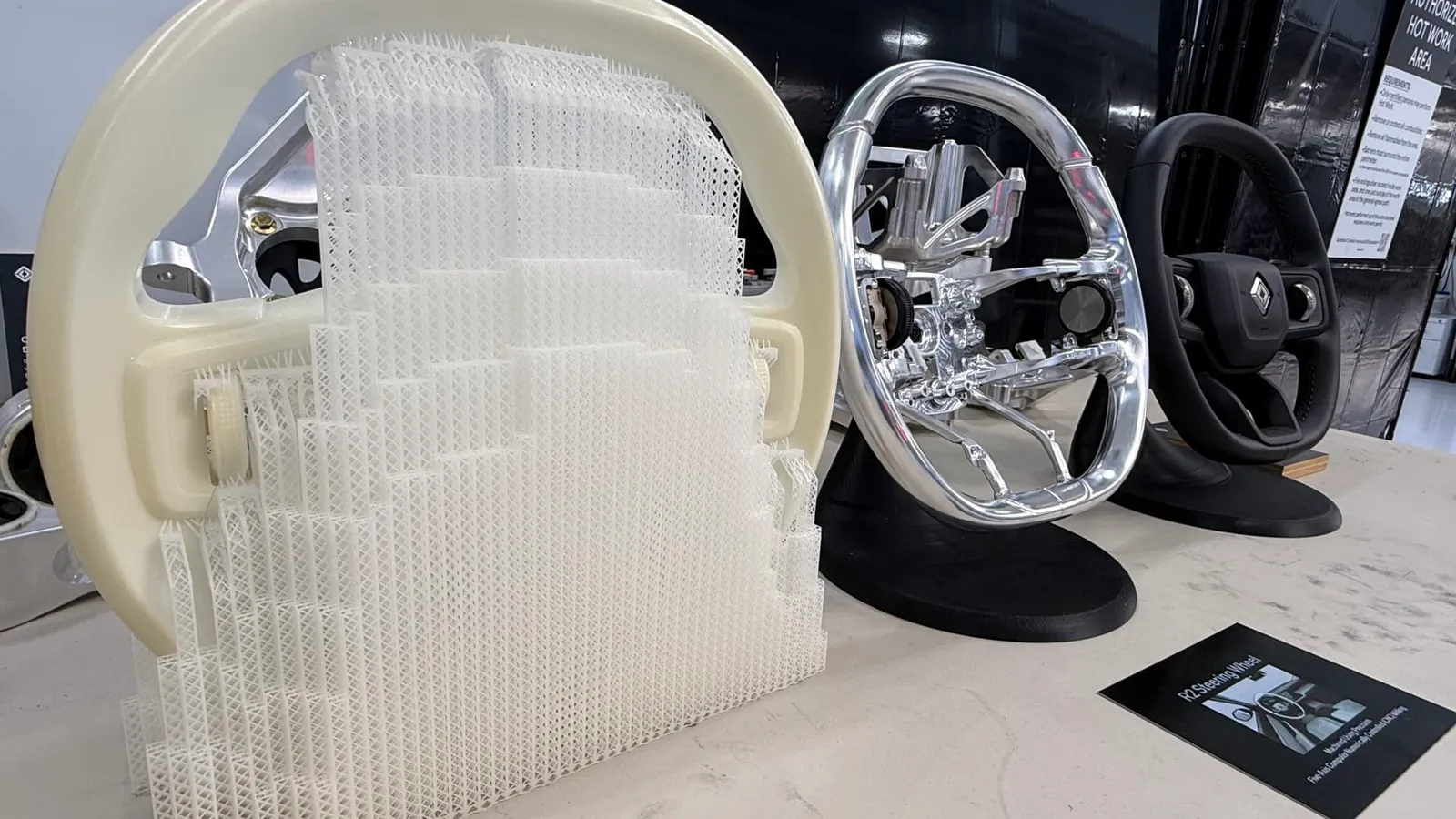
Ford, Rivian, and GM are expanding 3D printing into factory tools and low-volume parts to cut costs and speed up production. Manufacturing leaders should treat additive manufacturing as a core operational lever, not a design lab experiment.
The next industrial revolution is happening on the factory floor, not in a lab. Ford, Rivian, and GM are expanding 3D printing beyond prototypes to make factory tools and low-volume parts faster and at lower cost, according to CNBC. The strategy, described as 'democratizing 3D printing,' puts additive manufacturing in the hands of engineers and line workers, not just specialized technicians. For decision-makers, the implications are immediate: shorter lead times, lower inventory costs, and the ability to iterate designs without retooling an entire production line.
3D printing, also known as additive manufacturing, has historically been used for one-off prototypes. Now automakers are deploying it for factory tools, jigs, fixtures, and low-volume parts. The cost savings come from eliminating traditional tooling and machining steps, and the speed comes from printing parts on demand rather than waiting for suppliers. In an industry where supply chain disruptions have become routine, the ability to print a replacement tool or a low-volume part in-house reduces dependence on external suppliers. For legacy automakers like Ford and GM, this is a way to modernize aging manufacturing processes. For startups like Rivian, it is a way to scale production without the capital intensity of traditional tooling.
The 'democratizing' label matters because it signals who gets to use the technology. Historically, 3D printing required specialized engineers and expensive machines. Now, with more accessible software and hardware, design engineers can print parts directly from CAD files, and factory workers can print tools on the spot. That lowers the barrier to experimentation and accelerates the cycle from idea to physical part. It also changes the economics of low-volume production. Instead of paying for expensive molds that take months to produce, automakers can print a part overnight and test it the next day. That kind of speed is a competitive advantage in an industry where time-to-market can make or break a vehicle launch.
For the broader manufacturing economy, the trend reinforces a larger move toward digital manufacturing. Companies that master additive manufacturing can compress product development cycles, customize parts for niche markets, and respond faster to changing demand. The auto industry, with its high-volume production and complex supply chains, is an early proving ground. What works in Detroit and Irvine today could spread to aerospace, medical devices, and consumer goods tomorrow. The competitive stakes are real. If Ford, Rivian, and GM can reduce costs and speed up production with 3D printing, they gain an edge over rivals that are slower to adopt. For suppliers, the shift is a warning: as automakers bring more part production in-house, traditional machining and tooling orders could shrink. For investors, the signal is that additive manufacturing is no longer a niche technology story; it is becoming a mainstream operational strategy.
None of this means 3D printing will replace mass production. High-volume parts will still be made with traditional methods like injection molding and stamping, which are cheaper at scale. But for prototypes, factory tools, and low-volume parts, additive manufacturing is becoming the default choice. The result is a hybrid production model where digital and traditional manufacturing coexist, and the winners will be those who know when to use each. For executives across manufacturing, the takeaway is to audit your own operations. Where are you waiting weeks for a tool or a part that could be printed in days? What would happen to your supply chain if you could produce critical components on-site? The automakers are showing that 3D printing is not a futuristic concept; it is a current competitive weapon. The question is whether your organization is using it or watching from the sidelines.
This story's Key Insights and Take-aways are locked.
Create a free account to unlock Executive Actions for one credit.
Register to UnlockAlways free for Executives Club members. Join the Club
More in Business

Patrick Stewart, Star Trek's Picard, dies at 86 with one final role still to come
The beloved actor's last screen appearance lands Dec. 18 in 'Avengers: Doomsday' - a posthumous curtain call that will test the pull of a two-franchise icon.

Binance scrambles to claw back $6.3B stolen in North Korea-linked hack
The world's largest crypto exchange faces the biggest heist on record, and the recovery effort will test the limits of blockchain forensics.

North Korea's TraderTraitor unit blamed for Binance's record $6.3bn heist
The largest crypto theft on record has rattled markets, slashed billions from token values, and put Binance's security revamp under the spotlight.